


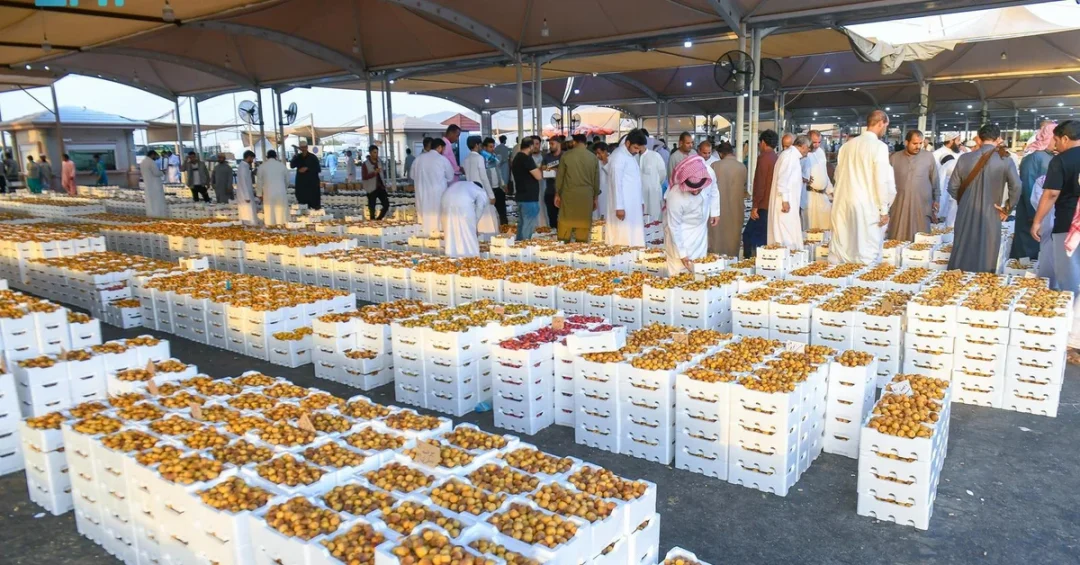
The central date market in Madinah is experiencing a remarkable economic boom during the rhutab (semi-ripe dates) harvest season, which begins in the first quarter of June each year, with 29,000 palm farms in the region supplying this bustling market, according to the Saudi Press Agency (SPA). The market’s vibrant activity highlights the importance of the date sector to the local economy and reflects the Kingdom’s broader agricultural ambitions under Saudi Vision 2030.
Context and Background
Madinah, one of Saudi Arabia’s most historically significant cities, has long been renowned for its date production. The region’s unique climate, characterized by high temperatures, plays a crucial role in the ripening process of rhutab, which initiates the harvesting period that lasts until the end of July. Following this, the date harvesting continues until the end of August, after which farmers display their produce in the market. The central date market in Madinah serves as a vital hub for farmers and traders, facilitating the trade of a wide variety of dates that are prized both locally and internationally.
Key Details
What sets the date market in Madinah apart is the wide variety of rhutab types available. Madinah and its governorates are renowned for their diverse selection, including Rotana, Rabbi, Heiliah, and other unique varieties. Later in the season, the market showcases famous date types such as Ajwa, Safawi, Amber, Medjool, Barni, and various other varieties. The Madinah branch of the Ministry of Environment, Water, and Agriculture actively monitors the central date market to maintain quality standards. They oversee technical and health requirements, ensuring that products meet the necessary standards. These efforts contribute to the growth of national date exports and emphasize the importance of the palm and date sector in agriculture.
Implications and Impact
The thriving date market in Madinah has significant implications for the local and national economy. The date industry provides employment opportunities for thousands of farmers and workers in the region, supporting rural livelihoods. Moreover, the market’s success enhances Saudi Arabia’s position as a leading producer and exporter of dates, contributing to the diversification of the national economy away from oil dependency. The Ministry’s oversight ensures that Saudi dates meet international quality and safety standards, thereby boosting export potential to global markets. This aligns with the objectives of Saudi Vision 2030, which seeks to develop non-oil sectors and promote local products.
Vision 2030 Alignment
The development of the date sector in Madinah is a clear example of how Saudi Vision 2030 is being realized at the local level. By supporting agricultural activities, enhancing product quality, and expanding export opportunities, the Kingdom is working towards a sustainable and diversified economy. The date market in Madinah not only preserves a cherished cultural heritage but also drives economic growth, creating a brighter future for the region and the nation as a whole.
20 Questions
Q1. What is the central date market in Madinah experiencing?
A1. The central date market in Madinah is experiencing a remarkable economic boom during the rhutab harvest season, which begins in early June and attracts significant activity from local farmers and traders.
Q2. How many palm farms supply the date market in Madinah?
A2. According to the Saudi Press Agency, 29,000 palm farms in the Madinah region supply the bustling central date market, contributing to its vibrant trade and economic significance.
Q3. What are rhutab dates?
A3. Rhutab are semi-ripe dates that are harvested starting in the first quarter of June each year. They are known for their unique taste and are a precursor to the fully ripe dates harvested later in the season.
Q4. Which varieties of rhutab are Madinah and its governorates known for?
A4. Madinah and its governorates are renowned for a diverse selection of rhutab, including Rotana, Rabbi, Heiliah, and other unique varieties that are highly valued by consumers.
Q5. What role does temperature play in date harvesting?
A5. High temperatures influence the ripening speed of rhutab, initiating the harvesting process that lasts until the end of July. This natural cycle is essential for the timely harvest of quality dates.
Q6. When does date harvesting begin and end?
A6. Date harvesting begins after the rhutab season and continues until the end of August. Afterward, farmers display their dates in the market for sale and distribution.
Q7. What are some of the most famous types of dates in Madinah?
A7. Some of the most famous types include Ajwa dates, Safawi dates, Amber dates, Medjool dates, Barni dates, and various other varieties that are prized for their quality and taste.
Q8. Which government body monitors the date market in Madinah?
A8. The Madinah branch of the Ministry of Environment, Water, and Agriculture actively monitors the central date market to maintain quality standards and ensure compliance with technical and health requirements.
Q9. How does the Ministry ensure quality standards?
A9. The Ministry oversees technical and health requirements, ensuring that products meet the necessary standards. This helps maintain the reputation of Saudi dates and supports export growth.
Q10. What is the significance of the date sector in Saudi agriculture?
A10. The date sector is a vital part of Saudi agriculture, providing employment, supporting rural economies, and contributing to food security. It also plays a key role in the Kingdom’s export diversification efforts.
Q11. How do these efforts align with Saudi Vision 2030?
A11. These efforts align with Saudi Vision 2030 by promoting local products, enhancing agricultural development, and contributing to economic diversification, which are core objectives of the national transformation plan.
Q12. What economic benefits does the date market bring to Madinah?
A12. The date market brings economic benefits by creating jobs, supporting local farmers, and attracting trade. It also boosts the region’s profile as a center for high-quality date production.
Q13. How does the date market contribute to national exports?
A13. The date market contributes to national exports by ensuring a steady supply of quality dates that meet international standards, thereby enhancing Saudi Arabia’s reputation as a leading exporter of dates.
Q14. What makes Madinah dates unique?
A14. Madinah dates are unique due to the region’s distinct climate and soil conditions, which produce a wide variety of dates with exceptional taste and quality, including the renowned Ajwa dates.
Q15. How long does the rhutab harvest season last?
A15. The rhutab harvest season starts in the first quarter of June and lasts until the end of July, after which the date harvesting begins and continues until the end of August.
Q16. What happens after the date harvesting season ends?
A16. After the date harvesting season ends, farmers display their dates in the market. This period is crucial for trade and allows consumers to purchase freshly harvested dates.
Q17. How does the Ministry support date farmers?
A17. The Ministry supports date farmers by monitoring market standards, providing technical guidance, and ensuring that health requirements are met, which helps farmers achieve better market access and quality.
Q18. What is the importance of the palm and date sector in Saudi Arabia?
A18. The palm and date sector is important for its cultural heritage, economic contribution, and role in achieving food security. It is a key component of the Kingdom’s agricultural strategy.
Q19. How does the date market in Madinah reflect Saudi Arabia’s agricultural modernization?
A19. The date market reflects agricultural modernization through the use of quality control measures, market oversight, and alignment with Vision 2030 goals, showcasing the Kingdom’s commitment to developing the sector.
Q20. What future prospects does the date market in Madinah have?
A20. The date market in Madinah has strong future prospects, with continued government support, growing international demand, and ongoing efforts to enhance quality and exports, all contributing to its sustained economic boom.
Reader Feedback
We value your thoughts. Please share your feedback on this article.
Your feedback helps us improve our coverage.