


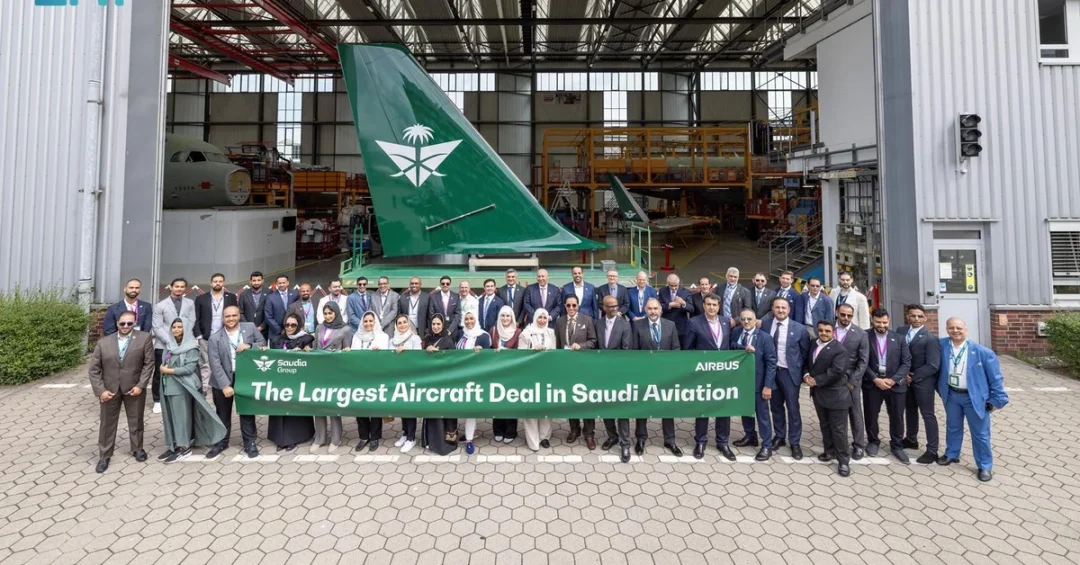
Hamburg, Germany — A high-level delegation from Saudi Arabia and Germany, including diplomats, business leaders, media representatives, and officials from the Saudia Group, visited the Airbus manufacturing facility in Hamburg on July 16, 2024, according to the Saudi Press Agency (SPA). The visit underscores the deepening aviation partnership between the Kingdom and the European aerospace giant, following the Saudia Group’s landmark agreement in May to purchase 105 aircraft from Airbus—the largest deal in Saudi aviation history.
Context and Background
The May agreement, signed between the Saudia Group and Airbus, includes 54 A321neo aircraft for Saudia and 51 aircraft for Flyadeal, comprising 12 A320neo and 39 A321neo jets. This historic order is a key component of Saudi Arabia’s ambitious plans to transform its aviation sector and support the goals of Vision 2030. The deal aims to modernize Saudia’s fleet, making it one of the most advanced in the world upon delivery completion.
Key Details
During the Hamburg visit, Khaled bin Abdulqadir Tash, Chief Marketing Officer of Saudia Group, outlined the strategic importance of the aircraft deal. He emphasized that it supports the group’s strategy of connecting the world to the Kingdom and contributes to Vision 2030 objectives. The agreement is expected to positively impact sectors such as tourism, entertainment, international sports events, conferences, and the Hajj and Umrah sectors. Furthermore, it will establish Saudia Group as a comprehensive aviation system that enhances local content and manufacturing capabilities. Notably, Saudia Aerospace Engineering Industries (SAEI), a subsidiary, will become an authorized center for maintaining these Airbus aircraft types in the Kingdom, the Middle East, and North Africa. Additionally, Saudia Academy will play a crucial role in training personnel to operate the aircraft according to international standards.
Implications and Impact
The deal is set to boost local content valued at approximately 2.5 billion riyals and foster entrepreneurship by enabling small and medium-sized enterprises to participate in Airbus’ supply chain. It also paves the way for new economic collaboration between Saudi Arabia and European countries that produce Airbus, particularly Germany, through increased investments and job creation. The introduction of a large number of aircraft will help existing supporting companies expand and lead to the creation of new companies, promoting entrepreneurship in the Kingdom. The agreement solidifies the Saudi aviation sector’s leading position regionally and globally.
Vision 2030 Alignment
This initiative exemplifies Saudi Arabia’s comprehensive investment strategy, focusing on localizing expertise and training individuals for specialized professions. It aims to foster innovation and growth across various aviation industry sectors, including manufacturing, logistics, technology, and artificial intelligence (AI), directly contributing to sustainable economic growth. By enhancing connectivity and economic diversification, the Saudia Group’s Airbus deal represents a significant step toward achieving the ambitious goals of Vision 2030, reinforcing the Kingdom’s role as a global aviation hub.
20 Questions
Q1. What was the purpose of the Saudi delegation’s visit to Airbus in Hamburg?
A1. The delegation visited to strengthen aviation ties and inspect the manufacturing facility following Saudia Group’s historic order of 105 Airbus aircraft, aiming to support Saudi Arabia’s aviation sector growth and Vision 2030 objectives.
Q2. When did the visit take place?
A2. The visit occurred on July 16, 2024, as reported by the Saudi Press Agency, involving diplomats, business leaders, and Saudia Group officials.
Q3. What was the size of the aircraft deal signed in May?
A3. The deal encompasses 105 aircraft: 54 A321neo for Saudia and 51 for Flyadeal (12 A320neo and 39 A321neo), marking the largest investment in Saudia Group’s history.
Q4. Who is Khaled bin Abdulqadir Tash?
A4. He is the Chief Marketing Officer of Saudia Group, who explained the details and strategic importance of the Airbus deal during the Hamburg visit.
Q5. How does the deal support Vision 2030?
A5. It enhances local content, boosts sectors like tourism and Hajj, and fosters economic diversification by developing a comprehensive aviation system and local manufacturing capabilities.
Q6. What aircraft types are included in the order?
A6. The order includes Airbus A321neo and A320neo aircraft, known for their fuel efficiency and modern technology, which will modernize Saudia’s fleet.
Q7. What role will SAEI play in the deal?
A7. Saudia Aerospace Engineering Industries will become an authorized maintenance center for Airbus aircraft in the Kingdom, the Middle East, and North Africa, enhancing local expertise.
Q8. How will Saudia Academy contribute?
A8. Saudia Academy will train personnel to operate and manage flights for the new aircraft, ensuring compliance with international standards and boosting local competencies.
Q9. What is the expected impact on local content?
A9. The deal is projected to contribute approximately 2.5 billion riyals to local content, supporting economic growth and local industry development.
Q10. Which sectors will benefit from the increased fleet?
A10. Tourism, entertainment, international sports events, conferences, and the Hajj and Umrah sectors are expected to benefit significantly from improved connectivity.
Q11. How does the deal promote entrepreneurship?
A11. It enables small and medium-sized enterprises to join Airbus’ supply chain and encourages the creation of new companies, fostering a culture of innovation and entrepreneurship in the Kingdom.
Q12. What economic benefits does the deal bring to Germany?
A12. The agreement boosts Germany’s economy through increased investments and job creation, as it involves the production of aircraft at Airbus facilities like the Hamburg plant.
Q13. What is the significance of the Hamburg Airbus facility?
A13. It is one of the world’s largest aircraft manufacturing sites, featuring spare-parts centers, design offices, production lines, and training facilities.
Q14. How will the deal affect Saudia’s fleet modernization?
A14. With the delivery of these new aircraft, Saudia’s fleet will become one of the most modern globally, enhancing operational efficiency and passenger experience.
Q15. What opportunities does the deal create for Saudi youth?
A15. It offers training and specialized job opportunities through Saudia Academy and SAEI, empowering youth to pursue careers in aviation and related fields.
Q16. How does the deal strengthen Saudi-European relations?
A16. It enhances economic cooperation and builds bridges of friendship, fostering mutual respect and collaboration between Saudi Arabia and European countries like Germany.
Q17. What is the expected timeline for aircraft deliveries?
A17. Deliveries will occur over several years, gradually integrating the aircraft into Saudia and Flyadeal’s fleets, with completion marking a significant milestone for Saudi aviation.
Q18. How does the deal support the Hajj and Umrah sectors?
A18. The increased fleet capacity will accommodate more pilgrims, improving travel experiences and supporting the Kingdom’s efforts to host millions of pilgrims annually.
Q19. What technological advancements are associated with the new aircraft?
A19. The A321neo and A320neo feature advanced engines, reduced fuel consumption, and lower emissions, aligning with global sustainability goals and Vision 2030’s environmental objectives.
Q20. What does this deal signify for Saudi Arabia’s global aviation standing?
A20. It solidifies the Kingdom’s position as a leading aviation hub, showcasing its commitment to modernization, economic growth, and international connectivity under Vision 2030.
Reader Feedback
We value your thoughts. Please share your feedback on this article.
Your feedback helps us improve our coverage.