


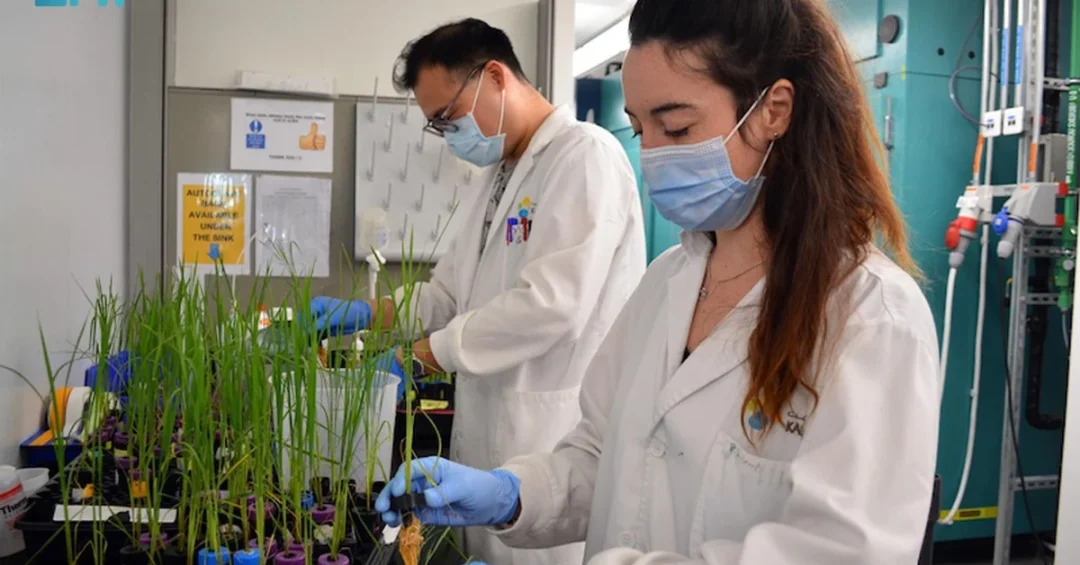
King Abdullah University of Science and Technology (KAUST) has enhanced its research capabilities by developing an artificial intelligence-based tool called “SeedQuant” and introducing the Thya Technology platform, which automates the analysis of large image and video datasets. The announcement, released via the Saudi Press Agency (SPA), highlights KAUST’s commitment to innovation in agricultural science and artificial intelligence, aligning with Saudi Arabia’s Vision 2030 objectives to diversify the economy and foster technological leadership.
Context and Background
KAUST, a leading research university located in Thuwal, Saudi Arabia, has long been at the forefront of scientific innovation. The development of SeedQuant and the Thya Technology platform represents a significant leap in applying AI to biological research, particularly in the study of Striga, a parasitic plant that threatens food security in sub-Saharan Africa and other regions. Dr. Justine Braguy, a researcher at KAUST, collaborated with computer vision specialists to create SeedQuant, which automatically counts Striga seeds from microscopic images. This innovation eliminates the tedious and time-consuming manual counting process, accelerating research that could lead to better control of this parasitic weed. The Thya Technology platform, meanwhile, allows users to upload and label images to create AI detection models without programming, democratizing access to advanced image analysis.
Key Details
SeedQuant, developed by Dr. Justine Braguy and a team of computer vision specialists, uses artificial intelligence to count Striga seeds from microscopic images with high accuracy. The tool drastically reduces the time and effort required for seed counting, enabling researchers to focus on analysis and experimentation. The Thya Technology platform is an internet-based solution that automates the analysis of large image and video datasets. It has partnered with research laboratories at KAUST, including the former Braguy Laboratory and the Center for Desert Agriculture (CDA). Users can upload and label images to train AI models for detection tasks without any programming knowledge, making it accessible to a wide range of researchers. These AI tools significantly reduce time and effort in biological studies, enhancing research productivity.
Implications and Impact
The introduction of SeedQuant and the Thya Technology platform has profound implications for agricultural research and beyond. By automating seed counting, SeedQuant enables faster screening of Striga-resistant crops, which is crucial for improving food security in regions affected by this parasitic plant. The Thya platform’s ability to analyze large datasets without programming empowers researchers across disciplines to leverage AI, fostering interdisciplinary collaboration. These innovations position KAUST as a global leader in AI-driven research and support Saudi Arabia’s goals of becoming a hub for technology and innovation. Furthermore, the tools have the potential to be applied in various fields, from biology to environmental monitoring, further demonstrating the versatility of AI.
Vision 2030 Alignment
These developments are directly aligned with Saudi Arabia’s Vision 2030, which aims to diversify the economy away from oil and invest in technology, education, and research. KAUST’s advancements in AI and agriculture support the Vision’s objectives of enhancing food security, promoting sustainable development, and fostering a knowledge-based economy. By pioneering tools like SeedQuant and the Thya platform, KAUST not only contributes to global scientific progress but also reinforces the Kingdom’s position as a leader in cutting-edge research and innovation. This initiative underscores Saudi Arabia’s commitment to leveraging technology for the betterment of society and the world.
20 Questions
Q1. What is SeedQuant?
A1. SeedQuant is an artificial intelligence-based tool developed by KAUST that automatically counts Striga seeds from microscopic images. It eliminates manual counting, saving time and effort in research.
Q2. Who developed SeedQuant?
A2. Dr. Justine Braguy, in collaboration with computer vision specialists at KAUST, developed SeedQuant to improve and streamline seed counting using AI.
Q3. What is the Thya Technology platform?
A3. The Thya Technology platform is an internet-based tool that automates the analysis of large image and video datasets. Users can upload and label images to create AI detection models without programming.
Q4. How does SeedQuant help researchers?
A4. SeedQuant automates the counting of Striga seeds, reducing the tedious manual process. This allows researchers to focus on analysis and experimentation, accelerating studies on parasitic weeds.
Q5. What is Striga?
A5. Striga is a parasitic plant that affects staple crops like maize and sorghum, causing significant yield losses in sub-Saharan Africa. Research on Striga is vital for food security.
Q6. How does the Thya platform benefit biology?
A6. The Thya platform’s AI tools significantly reduce time and effort in biological studies by automating image and video analysis, enabling faster data processing and model creation.
Q7. Which KAUST labs partner with Thya?
A7. The Thya Technology platform has partnered with research laboratories at KAUST, including the former Braguy Laboratory and the Center for Desert Agriculture (CDA).
Q8. Do users need programming skills for Thya?
A8. No, the Thya platform allows users to upload and label images to create AI detection models without any programming knowledge, making it accessible to all researchers.
Q9. What are the benefits of automating image analysis?
A9. Automating image analysis saves time, reduces human error, and enables researchers to handle large datasets efficiently, leading to faster scientific discoveries and innovations.
Q10. How does KAUST’s work align with Vision 2030?
A10. KAUST’s AI innovations support Vision 2030 by advancing technology, education, and research, contributing to economic diversification and food security in Saudi Arabia.
Q11. Can SeedQuant be used for other seeds?
A11. SeedQuant is specifically designed for Striga seeds, but the underlying AI technology could potentially be adapted for other seeds with further development and training.
Q12. What is the role of the Center for Desert Agriculture?
A12. The Center for Desert Agriculture at KAUST focuses on sustainable agriculture in arid environments. It collaborates on projects like Thya to enhance research capabilities.
Q13. How does Thya handle large datasets?
A13. Thya uses AI algorithms to process and analyze large image and video datasets efficiently over the internet, automating detection and classification tasks.
Q14. Is SeedQuant available for public use?
A14. SeedQuant is a research tool developed at KAUST. Its availability may be limited to collaborators, but its methodology contributes to open science.
Q15. What impact does SeedQuant have on food security?
A15. By accelerating Striga research, SeedQuant helps develop resistant crops, which can improve yields and food security in regions affected by this parasitic weed.
Q16. How does Thya reduce effort in biology?
A16. Thya automates the analysis of images and videos, eliminating manual counting and measurement tasks. This allows biologists to focus on interpretation and hypothesis testing.
Q17. What makes KAUST a leader in AI research?
A17. KAUST fosters interdisciplinary collaboration and invests in cutting-edge facilities. Innovations like SeedQuant and Thya demonstrate its commitment to AI-driven solutions for global challenges.
Q18. Can Thya be used for video analysis?
A18. Yes, Thya automates the analysis of both images and video datasets, making it versatile for various research applications, from biology to environmental monitoring.
Q19. How does KAUST collaborate with other institutions?
A19. KAUST partners with research laboratories and centers, such as the Center for Desert Agriculture, to develop and apply AI tools, fostering innovation and knowledge sharing.
Q20. What future developments can we expect from KAUST?
A20. KAUST will continue to advance AI and agricultural research, developing tools that address global challenges. Its work supports Saudi Arabia’s Vision 2030 and global scientific progress.
Reader Feedback
We value your thoughts. Please share your feedback on this article.
Your feedback helps us improve our coverage.