


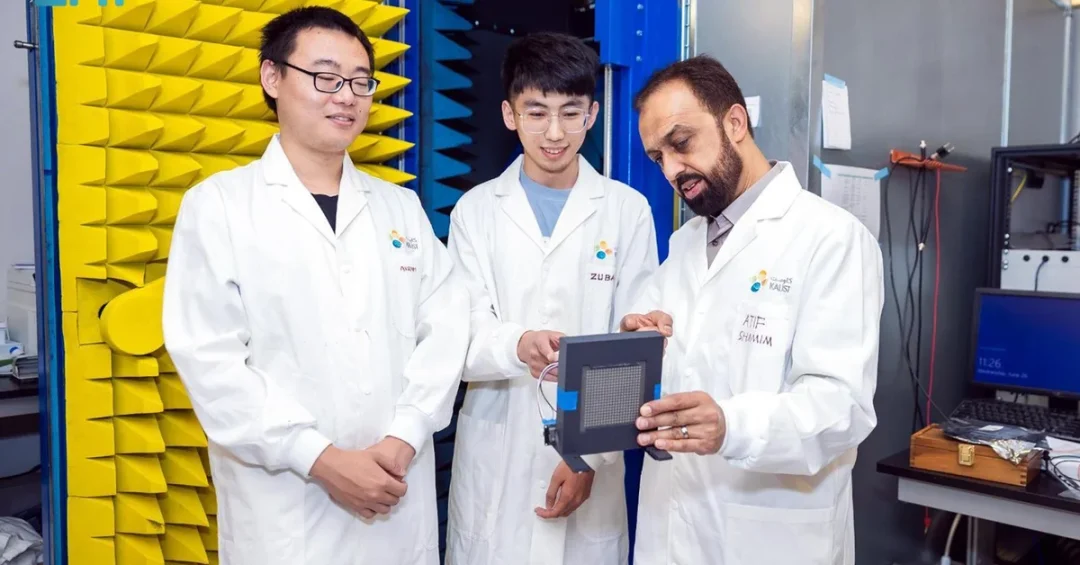
RIYADH — King Abdullah University of Science and Technology (KAUST) is accelerating Saudi Arabia’s leadership in next-generation telecommunications through pioneering research in free-space optics (FSO) and reconfigurable intelligent surfaces (RIS), according to information released via the Saudi Press Agency (SPA). With more than 50 billion devices expected to be online by 2025—ranging from electric grid controllers to personal mobile devices—the demand for ultra-high-speed, reliable connectivity has never been greater. KAUST’s work is positioning the Kingdom at the forefront of 6G development, attracting global investment and scientific collaboration.
Context and Background
The exponential growth in connected devices and data transmission was unimaginable a decade ago. The transition from 5G to 6G represents a fundamental leap in telecommunications, promising gigabytes of data at the press of a button anywhere in the world. Saudi Arabia, through KAUST, is investing in the foundational technologies that will make this vision a reality. The university’s research programs, supported by industry partnerships, are investigating two critical enablers: FSO and RIS.
FSO involves transmitting signals via laser through free space—such as outer space or the atmosphere—to a detector without cables. This technology is particularly relevant for 6G, which operates at frequencies of at least 100 GHz, where signal attenuation increases. KAUST researchers are building a comprehensive database of weather-related signal disruptions in Saudi Arabia to optimize base station placement and backup systems.
Key Details
RIS offers a complementary solution to signal loss in urban environments. Instead of relying solely on rooftop base stations, RIS uses arrays of electronically reconfigurable cells—comprising metal, insulator, and semiconductor layers—to direct signals around obstacles. This innovation is expected to play a significant role in enabling 6G access. KAUST’s dual focus on FSO and RIS underscores its commitment to solving real-world connectivity challenges.
The university’s efforts are not just academic; they are positioning Saudi Arabia as a global hub for 6G research and development. By attracting companies to invest and scientists to test their research in the Kingdom, KAUST is fostering an ecosystem of innovation that aligns with the national Vision 2030 goal of economic diversification and technological leadership.
For more information, see the Saudi Press Agency and KAUST.
Implications and Impact
The development of 6G technologies has profound implications for Saudi Arabia and the global community. Enhanced connectivity will support smart cities, autonomous systems, and the Internet of Things, driving economic growth and improving quality of life. Saudi Arabia’s early investment in 6G research positions it as a key player in setting international standards and shaping the future of telecommunications.
Regionally, KAUST’s advancements could stimulate collaboration across the Middle East, fostering knowledge transfer and joint ventures. Internationally, the Kingdom’s leadership in 6G aligns with its broader strategy to diversify its economy beyond oil and become a hub for innovation and technology.
Vision 2030 Alignment
KAUST’s 6G research directly supports Saudi Vision 2030, which aims to transform the Kingdom into a global investment powerhouse and a hub for technology and innovation. By pushing the boundaries of telecommunications, Saudi Arabia is not only enhancing its digital infrastructure but also creating opportunities for economic diversification, job creation, and international partnership. As the world moves toward 6G, the Kingdom is poised to lead, ensuring that its citizens and the global community benefit from seamless, high-speed connectivity.
20 Questions
Q1. What is KAUST’s role in 6G development?
A1. KAUST is conducting cutting-edge research in free-space optics and reconfigurable intelligent surfaces, two technologies critical for 6G. This positions Saudi Arabia as a leader in next-generation telecommunications.
Q2. What are free-space optics (FSO)?
A2. FSO is a communication method that uses lasers to transmit signals through free space, such as air or outer space, without cables. It is essential for high-frequency 6G networks.
Q3. What are reconfigurable intelligent surfaces (RIS)?
A3. RIS are arrays of electronically reconfigurable cells that redirect signals around obstacles. They help overcome signal loss in urban environments and are key to enabling 6G access.
Q4. Why is Saudi Arabia focusing on 6G?
A4. Saudi Arabia aims to diversify its economy and become a global technology hub. Leading in 6G supports Vision 2030 goals of innovation, economic growth, and international collaboration.
Q5. How many devices are expected to be online by 2025?
A5. More than 50 billion devices are projected to be online by 2025, including those controlling electric grids and personal mobile devices, driving demand for advanced connectivity.
Q6. What frequency does 6G operate at?
A6. 6G operates at frequencies of at least 100 GHz, which is higher than previous generations. This allows faster data transmission but requires solutions for signal attenuation.
Q7. How does weather affect FSO?
A7. Weather conditions such as rain, fog, and dust can attenuate laser signals in FSO. KAUST is building a database of such events in Saudi Arabia to optimize network reliability.
Q8. What is the benefit of RIS in urban areas?
A8. RIS can be mounted on buildings and electronically configured to reflect signals around obstacles, improving coverage and capacity without the need for additional base stations.
Q9. How does KAUST attract global investment?
A9. By conducting world-class research and offering testing facilities, KAUST attracts companies and scientists to collaborate in Saudi Arabia, fostering an innovation ecosystem.
Q10. What is the Saudi Press Agency’s role?
A10. The Saudi Press Agency (SPA) is the official news agency of Saudi Arabia, disseminating information about the Kingdom’s developments, including KAUST’s 6G research.
Q11. How does 6G support smart cities?
A11. 6G enables ultra-reliable, low-latency communication essential for smart cities, supporting autonomous transport, energy management, and IoT applications.
Q12. What economic benefits does 6G bring?
A12. 6G can drive economic growth by enabling new industries, creating jobs, and enhancing productivity across sectors such as healthcare, manufacturing, and entertainment.
Q13. Is KAUST collaborating with industry?
A13. Yes, KAUST collaborates with industry partners who fund its research programs in FSO and RIS, ensuring that innovations are commercially viable and aligned with market needs.
Q14. How does 6G align with Vision 2030?
A14. Vision 2030 aims to diversify Saudi Arabia’s economy and promote technological leadership. 6G research supports these goals by fostering innovation and attracting global talent.
Q15. What challenges does 6G face?
A15. Challenges include signal attenuation at high frequencies, infrastructure costs, and the need for international standards. KAUST’s research addresses these technical hurdles.
Q16. When will 6G be available?
A16. Commercial deployment of 6G is expected around 2030. KAUST’s research is laying the groundwork for this timeline by developing enabling technologies.
Q17. How does 6G improve daily life?
A17. 6G will provide faster internet, seamless connectivity for smart devices, and support for immersive technologies like virtual and augmented reality, enhancing communication and entertainment.
Q18. What is the global impact of Saudi Arabia’s 6G leadership?
A18. Saudi Arabia’s advancements in 6G can influence global standards, foster international partnerships, and position the Kingdom as a key player in the digital economy.
Q19. How can researchers get involved with KAUST?
A19. Researchers can collaborate with KAUST through joint projects, visiting scholar programs, and funding opportunities. KAUST welcomes global talent to contribute to its 6G initiatives.
Q20. What is the significance of the 50 billion devices figure?
A20. The 50 billion devices highlight the massive scale of connectivity needed, underscoring the importance of advanced technologies like 6G to handle data traffic and ensure reliable communication.
Reader Feedback
We value your thoughts. Please share your feedback on this article.
Your feedback helps us improve our coverage.