


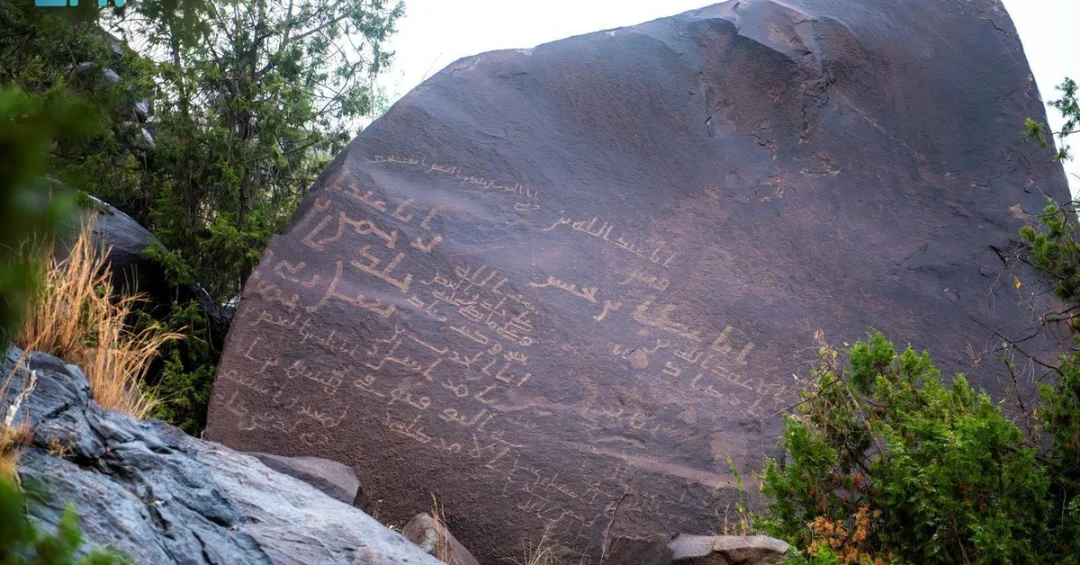
The Book Plateau in Baljurashi, a geological and historical marvel in Saudi Arabia’s Al-Baha region, has emerged as a must-visit destination for heritage enthusiasts and tourists alike. Located at the confluence of two streams at the foot of a valley, this granite rock formation resembles an open book, adorned with enigmatic inscriptions that date back over 14 centuries. According to the Saudi Press Agency (SPA), these carvings feature early Islamic writings without diacritical marks, some bearing the names of the Prophet’s companions and followers, offering a rare glimpse into the dawn of Islamic history.
Context and Background
The Book Plateau, known locally as Jabal Al-Kitab, is nestled in the heart of Al-Baha region, an area renowned for its lush landscapes and rich cultural heritage. The site’s unique appearance—resembling an open book—stems from the meticulous inscriptions carved into its granite surface. These writings are believed to be over 1,400 years old and are considered among the earliest examples of Islamic epigraphy in the Arabian Peninsula.
In 2005, the site was included in the National Antiquities Register following a comprehensive survey led by the Al-Baha Heritage Authority. According to Abdulrahman Al-Ghamdi, Director General of the Authority, the inscriptions serve as silent sentinels of the region’s cultural heritage and historical significance. “The Book Plateau is a testament to the diverse range of heritage tourism sites that define Al-Baha region,” Al-Ghamdi stated, highlighting its importance as a cultural landmark.
Key Details
The inscriptions at the Book Plateau are distinguished by their early Islamic script, which lacks diacritical marks—a characteristic of the earliest forms of Arabic writing. Some of the carvings bear the names of the Prophet’s companions and followers, adding a profound historical and spiritual dimension to the site. The plateau’s location at the meeting point of two streams further enhances its natural allure, making it a serene and picturesque destination.
Visitors to the site can explore the intricate carvings while enjoying the surrounding landscape, which includes verdant valleys and towering mountains. The Al-Baha region, often referred to as the “Al-Baha of the South,” is home to numerous heritage sites, but the Book Plateau stands out for its unique combination of natural beauty and historical significance. The site is easily accessible and offers a tranquil escape for those seeking to connect with Saudi Arabia’s deep-rooted history.
Implications and Impact
The recognition and promotion of the Book Plateau as a tourist destination align with Saudi Arabia’s broader efforts to diversify its economy and attract international visitors. Heritage tourism is a key pillar of the Kingdom’s Vision 2030 strategy, which aims to increase the tourism sector’s contribution to the GDP and create job opportunities for Saudi citizens. The Al-Baha region, with its wealth of archaeological and natural attractions, is well-positioned to benefit from this push.
Moreover, the site’s inclusion in the National Antiquities Register underscores the Kingdom’s commitment to preserving its cultural heritage. By showcasing such treasures, Saudi Arabia aims to foster a deeper understanding of its history and promote cross-cultural dialogue. International tourists, particularly those interested in Islamic history and archaeology, are likely to find the Book Plateau a compelling addition to their itineraries.
Vision 2030 Alignment
The Book Plateau exemplifies the Kingdom’s Vision 2030 goals by preserving cultural heritage while promoting tourism as a key economic driver. As Saudi Arabia continues to open its doors to the world, sites like the Book Plateau will play a vital role in showcasing the nation’s rich history and natural beauty. The Al-Baha region, with its unique blend of heritage and nature, is poised to become a prominent destination for travelers seeking authentic and enriching experiences.
20 Questions
Q1. What is the Book Plateau?
A1. The Book Plateau is a granite rock formation in Baljurashi, Al-Baha region, Saudi Arabia, that resembles an open book due to ancient inscriptions carved into its surface. These inscriptions are over 14 centuries old and feature early Islamic writings.
Q2. Where is the Book Plateau located?
A2. It is located in Baljurashi, within the Al-Baha region of Saudi Arabia, at the confluence of two streams at the foot of a valley. The area is known for its mountainous terrain and lush greenery.
Q3. Why is it called the Book Plateau?
A3. It is called the Book Plateau because its surface is covered with numerous inscriptions that make it look like an open book with writing on its pages. The carvings are arranged in lines, enhancing the resemblance.
Q4. How old are the inscriptions?
A4. The inscriptions are thought to be over 14 centuries old, dating back to the early Islamic period. They provide valuable insights into the early Islamic era and the people who lived then.
Q5. What do the inscriptions say?
A5. The inscriptions feature early Islamic writings without diacritical marks, including some names of the Prophet’s companions and followers. They are considered important historical records of the time.
Q6. Who discovered the Book Plateau?
A6. The site was known locally, but it was officially surveyed and included in the National Antiquities Register in 2005 by the Al-Baha Heritage Authority. The survey was comprehensive and documented all inscriptions.
Q7. What is the National Antiquities Register?
A7. The National Antiquities Register is a official record maintained by Saudi authorities that lists significant archaeological and heritage sites in the Kingdom. It ensures their protection and preservation for future generations.
Q8. Who is Abdulrahman Al-Ghamdi?
A8. Abdulrahman Al-Ghamdi is the Director General of the Al-Baha Heritage Authority. He has highlighted the importance of the Book Plateau as a heritage tourism site and its role in showcasing the region’s history.
Q9. Why is the Book Plateau significant?
A9. It is significant for its historical and archaeological value, offering a rare glimpse into early Islamic epigraphy. It also serves as a tourist attraction that promotes cultural heritage and supports the local economy.
Q10. Can tourists visit the Book Plateau?
A10. Yes, the Book Plateau is open to tourists and is promoted as a heritage destination in Al-Baha. Visitors can explore the site and learn about its history through guided tours and informational signage.
Q11. What is the best time to visit?
A11. The best time to visit is during the cooler months, from October to April, when the weather is pleasant for outdoor activities. Summer can be hot, so early morning or late afternoon visits are recommended.
Q12. Are there guided tours available?
A12. Yes, guided tours are available and can be arranged through local tour operators or the Al-Baha Heritage Authority. Guides provide detailed explanations of the inscriptions and the site’s history.
Q13. What other attractions are near the Book Plateau?
A13. Nearby attractions include the Al-Baha region’s mountains, valleys, and other heritage sites such as the ancient village of Dhee Ayn and the Al-Baha Museum. The region is known for its natural beauty.
Q14. How does the Book Plateau contribute to Vision 2030?
A14. It contributes by attracting tourists, diversifying the economy, and preserving cultural heritage, all of which are key goals of Vision 2030. It also creates opportunities for local businesses and jobs.
Q15. Is photography allowed at the site?
A15. Yes, photography is allowed for personal use, but visitors are encouraged to respect the site and not touch the inscriptions. Commercial photography may require permission from authorities.
Q16. What is the Al-Baha Heritage Authority?
A16. The Al-Baha Heritage Authority is a government body responsible for preserving and promoting the heritage sites in the Al-Baha region. It conducts surveys, maintains sites, and organizes tourism activities.
Q17. Are there facilities for visitors?
A17. Basic facilities such as parking, rest areas, and informational signs are available. Visitors are advised to bring water and wear comfortable shoes for exploring the rocky terrain.
Q18. How can I get to the Book Plateau?
A18. The Book Plateau is accessible by car from major cities in Saudi Arabia. It is about a 30-minute drive from Al-Baha city. Public transportation options are limited, so renting a car is recommended.
Q19. Is the site suitable for children?
A19. Yes, the site is suitable for children, but parents should supervise them closely due to the rocky terrain. It can be an educational experience for children to learn about history and nature.
Q20. What should I bring when visiting?
A20. Visitors should bring water, sunscreen, a hat, and comfortable walking shoes. A camera is recommended to capture the beautiful scenery and inscriptions. Binoculars can also be useful for viewing details.
Reader Feedback
We value your thoughts. Please share your feedback on this article.
Your feedback helps us improve our coverage.
Related articles
 Taif Summer Offers Exquisite Destinations in Mild Climate
 Holy Rawdah: A Masterpiece of Islamic Art and Architecture
 Aqabat Shaar: The Lifeline of Asir’s Rugged Beauty
 South Obhur Beach: Jeddah’s Summer Haven for Visitors
 16th International Honey Festival Opens in Baljurashi
 Saudi Arabia Welcomes Inaugural ITA Airways Flight from Rome to Jeddah