


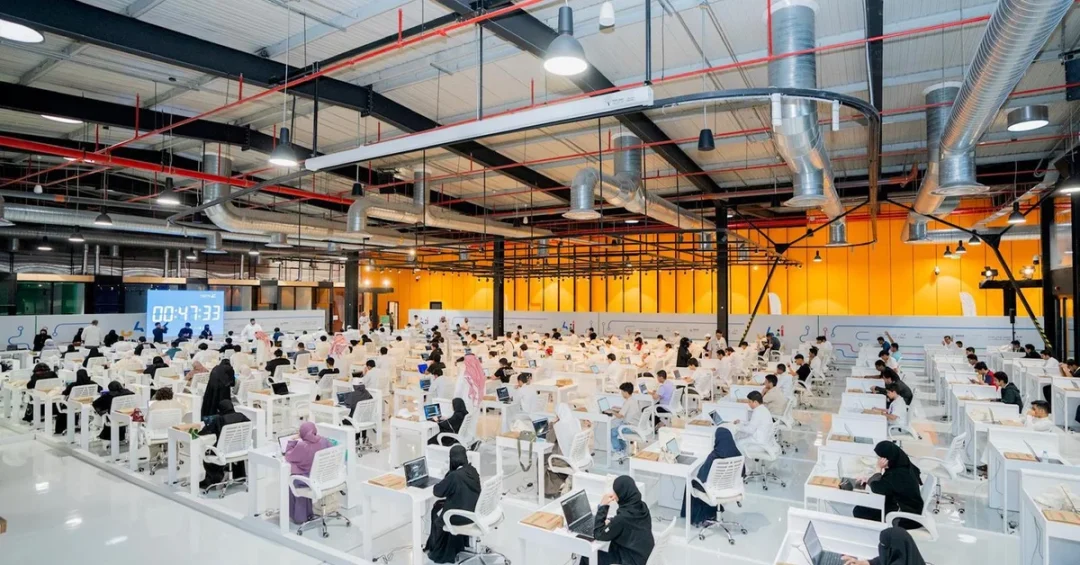
Ten Saudi teenagers, aged 14 to 18, have earned gold medals at the National Olympiad for Programming and Artificial Intelligence (ATHKA) and are now representing the Kingdom at the Oxford Scholars Programme (OSP) at the University of Oxford in the United Kingdom. The achievement, announced by the Saudi Data and Artificial Intelligence Authority (SDAIA), highlights the Kingdom’s growing commitment to nurturing young talent in advanced technologies, a key pillar of Saudi Vision 2030.
Context and Background
Investing in human capital is essential for building prosperous societies and achieving sustainable development. Saudi Arabia, under the leadership of the Custodian of the Two Holy Mosques King Salman bin Abdulaziz Al Saud and His Royal Highness Crown Prince Mohammed bin Salman bin Abdulaziz Al Saud, has placed capacity building at the forefront of its national priorities. The rapid advancement of artificial intelligence (AI) technologies demands a generation equipped to harness these tools for future progress.
In response, SDAIA launched the National Olympiad for Programming and Artificial Intelligence (ATHKA) in partnership with the Ministry of Education and the King Abdulaziz and his Companions Foundation for Giftedness and Creativity (Mawhiba), with sponsorship from the Saudi Technology and Security Comprehensive Control Company (Tahakom). ATHKA is a flagship national initiative designed to develop national capabilities in data and AI from an early age, enabling Saudi students to compete globally.
Key Details
The Olympiad attracted 260,000 registrations from intermediate and high school students across the Kingdom. After months of rigorous competition, 298 students reached the final stage. Ultimately, 10 students—aged between 14 and 18—won gold medals and are currently representing Saudi Arabia at the Oxford Scholars Programme, organized by the University of Oxford. The programme offers them an intellectually stimulating environment to enhance their programming and AI skills, interact with international peers, and gain exposure to a world-class academic setting.
Participants will receive a certificate accredited by the British Accreditation Council (BAC), which can strengthen their prospects for academic recommendation to join Oxford University. To encourage broad participation, SDAIA and its partners organized the Road to ATHKA event, which drew more than 10,000 students in Riyadh. Additionally, the Artificial Intelligence Hour initiative reached 575,000 students with the support of 9,700 teachers, introducing them to AI concepts.
Implications and Impact
This achievement underscores Saudi Arabia’s dedication to fostering a knowledge-based economy and equipping its youth with the skills needed to excel in the global digital landscape. By competing and succeeding on international platforms like the Oxford Scholars Programme, these students serve as ambassadors of the Kingdom’s burgeoning tech ecosystem, inspiring their peers and demonstrating the effectiveness of national investment in education and innovation.
Furthermore, the success of ATHKA signals the Kingdom’s proactive approach to addressing the future demands of AI and data science. It also reinforces Saudi Arabia’s position as a rising hub for technological talent, attracting global attention and potential collaborations. This aligns with the broader goals of Vision 2030 to diversify the economy and create a skilled workforce capable of driving sustainable growth.
Vision 2030 Alignment
The qualification of Saudi teenagers for the Oxford Scholars Programme directly supports the Human Capability Development Program, a key initiative of Saudi Vision 2030. By nurturing young minds in AI and programming, the Kingdom is not only empowering its future leaders but also contributing to the global advancement of technology. As these students continue their journey, they embody the aspirations of a nation committed to innovation, excellence, and a prosperous future for all.
20 Questions
Q1. What is ATHKA?
A1. ATHKA is the National Olympiad for Programming and Artificial Intelligence, launched by SDAIA in partnership with the Ministry of Education and Mawhiba to discover and nurture talented students in technology.
Q2. How many students participated in ATHKA?
A2. A total of 260,000 students registered for the Olympiad, with 298 reaching the final stage and 10 winning gold medals.
Q3. What is the age range of the winning students?
A3. The gold medalists are between 14 and 18 years old, representing the promising young talent of Saudi Arabia.
Q4. What is the Oxford Scholars Programme?
A4. The Oxford Scholars Programme is an academic initiative organized by the University of Oxford that allows high-achieving students to develop their skills in a prestigious international environment.
Q5. How are the Saudi students representing the Kingdom?
A5. They are currently in the United Kingdom, participating in the Oxford Scholars Programme, where they are honing their programming and AI abilities alongside peers from around the world.
Q6. What certificate will the students receive?
A6. They will receive a certificate accredited by the British Accreditation Council (BAC), which can enhance their chances of receiving academic recommendations for Oxford University.
Q7. Who sponsors ATHKA?
A7. ATHKA is sponsored by the Saudi Technology and Security Comprehensive Control Company (Tahakom).
Q8. What is the Road to ATHKA event?
A8. The Road to ATHKA event is an initiative organized by SDAIA to encourage students to register for the Olympiad. It attracted over 10,000 students in Riyadh.
Q9. What is the Artificial Intelligence Hour initiative?
A9. The Artificial Intelligence Hour is a training program that introduces students to AI, reaching 575,000 students with the support of 9,700 teachers.
Q10. How does ATHKA support Vision 2030?
A10. ATHKA helps develop national capabilities in data and AI, aligning with Vision 2030’s goals of economic diversification and human capital development.
Q11. What role does SDAIA play in ATHKA?
A11. SDAIA launched and oversees ATHKA as part of its efforts to build a generation skilled in data and AI technologies.
Q12. How many students were reached by the Artificial Intelligence Hour?
A12. The initiative reached 575,000 students, providing them with foundational knowledge in artificial intelligence.
Q13. What is the significance of the BAC certificate?
A13. The BAC certificate is internationally recognized and can support students’ applications to prestigious universities like Oxford.
Q14. How long did the ATHKA competition last?
A14. The competition lasted several months, starting with 260,000 registrations and culminating in the selection of 10 gold medalists.
Q15. What skills do students develop through ATHKA?
A15. Participants enhance their problem-solving abilities and learn to build solutions using AI technologies.
Q16. What is the partnership behind ATHKA?
A16. ATHKA is a collaboration between SDAIA, the Ministry of Education, and Mawhiba, with sponsorship from Tahakom.
Q17. How does ATHKA benefit Saudi Arabia’s future?
A17. By nurturing young talent in AI and programming, ATHKA contributes to a knowledge-based economy and global competitiveness.
Q18. What inspired the creation of ATHKA?
A18. The rapid development of AI technologies and the need for a skilled generation prompted SDAIA to launch this national initiative.
Q19. What opportunities await the students after the Oxford Scholars Programme?
A19. They will gain valuable experience, international exposure, and a certificate that may open doors to top universities and future careers in technology.
Q20. How does this achievement reflect on Saudi Arabia’s education system?
A20. It demonstrates the effectiveness of the Kingdom’s investments in education and its commitment to fostering innovation and excellence among its youth.
Reader Feedback
We value your thoughts. Please share your feedback on this article.
Your feedback helps us improve our coverage.