


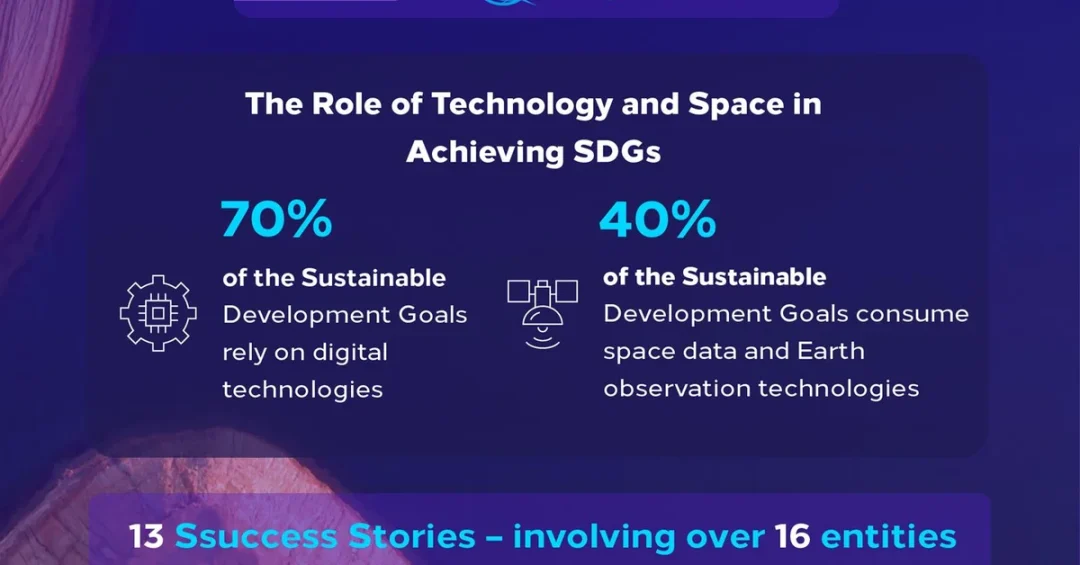
The Communications, Space and Technology Commission (CST) has released the 3rd edition of its “Digital and Space Sustainability in Saudi Arabia” report, showcasing the Kingdom’s most significant initiatives in digital sustainability. Developed in collaboration with the Ministry of Communications and Information Technology (MCIT) and the International Telecommunication Union (ITU), the report features 13 success stories from 16 public and private sector entities, highlighting progress across environmental, economic, and social sustainability.
Context and Background
The report underscores the critical role of digital and space technologies in advancing sustainable development. According to the findings, 70% of the United Nations’ Sustainable Development Goals (SDGs) are dependent on digital technologies, while 40% can benefit from space-derived data, including earth observation, positioning and navigation, satellite communications, space exploration, and gravity-related research. This aligns with global efforts to leverage innovation for a more sustainable future.
Saudi Arabia has been at the forefront of integrating technology with sustainability, guided by its Vision 2030 objectives. The CST’s digital sustainability strategy, known as C.I.R.C.L.E.S., focuses on promoting a circular digital economy, developing global guidelines for digital sustainability strategies, formulating regulations to reduce electronic waste, and co-hosting the Global Space Debris Conference with the Saudi Space Agency to raise awareness about space debris challenges.
Key Details
The 3rd edition of the report presents a comprehensive overview of the current digital sustainability landscape in Saudi Arabia. It highlights CST’s efforts to leverage modern technologies to develop innovative business models that contribute to a sustainable future. The 13 success stories from 16 entities demonstrate the Kingdom’s commitment to environmental, economic, and social sustainability.
The report also emphasizes the importance of international cooperation, as evidenced by the collaboration with the ITU. The full report can be accessed at https://www.cst.gov.sa/ar/mediacenter/Documents/sustainability_report_2024_en.pdf.
Implications and Impact
The release of this report signals Saudi Arabia’s growing leadership in digital sustainability, both regionally and globally. By documenting successful initiatives, the Kingdom sets a benchmark for other nations seeking to integrate technology with sustainability goals. The focus on space technologies also positions Saudi Arabia as a key player in the emerging space economy, with potential benefits for sectors such as agriculture, urban planning, and disaster management.
Furthermore, the report’s findings can inform policymakers and businesses about the synergies between digital innovation and sustainability, encouraging further investment and collaboration. The emphasis on reducing electronic waste and promoting a circular economy reflects a forward-thinking approach that aligns with global environmental priorities.
Vision 2030 Alignment
Saudi Arabia’s Vision 2030 aims to diversify the economy, enhance quality of life, and promote sustainable development. The digital and space sustainability initiatives highlighted in this report directly support these goals by fostering innovation, creating economic opportunities, and addressing environmental challenges. Through strategies like C.I.R.C.L.E.S. and collaborative efforts with international partners, the Kingdom is paving the way for a resilient and sustainable future, reinforcing its role as a global leader in technology and sustainability.
20 Questions
Q1. What is the title of the report released by CST?
A1. The report is titled “Digital and Space Sustainability in Saudi Arabia” and it is the 3rd edition, highlighting significant initiatives in digital sustainability across the Kingdom.
Q2. Which organizations collaborated to develop the report?
A2. The report was developed by the Communications, Space and Technology Commission (CST) in collaboration with the Ministry of Communications and Information Technology (MCIT) and the International Telecommunication Union (ITU).
Q3. How many success stories are featured in the report?
A3. The report features 13 success stories from 16 public and private sector entities, covering environmental, economic, and social sustainability aspects.
Q4. What percentage of UN Sustainable Development Goals depend on digital technologies?
A4. According to the report, 70% of the UN Sustainable Development Goals are dependent on digital technologies, underscoring the critical role of digital innovation in achieving sustainability.
Q5. What are some examples of space technologies mentioned in the report?
A5. The report mentions earth observation through satellites, positioning and navigation, satellite communications, space exploration, and gravity-related research as key space technologies that can support sustainable development.
Q6. What is the name of CST’s digital sustainability strategy?
A6. CST’s digital sustainability strategy is called C.I.R.C.L.E.S., which focuses on promoting a circular digital economy and developing global guidelines for digital sustainability strategies.
Q7. What is the goal of the Global Space Debris Conference?
A7. The Global Space Debris Conference, co-hosted by CST and the Saudi Space Agency, aims to enhance awareness about the challenges and risks posed by growing space debris and its impact on the future of space activities.
Q8. Where can the full report be accessed?
A8. The full report can be viewed at the following link: https://www.cst.gov.sa/ar/mediacenter/Documents/sustainability_report_2024_en.pdf.
Q9. How does the report contribute to Saudi Arabia’s Vision 2030?
A9. The report supports Vision 2030 by showcasing initiatives that drive economic diversification, enhance quality of life, and promote sustainable development through digital and space technologies.
Q10. What are the three aspects of sustainability covered in the report?
A10. The report covers environmental, economic, and social sustainability aspects, highlighting how digital and space technologies can contribute to each area.
Q11. What is the significance of the C.I.R.C.L.E.S. strategy?
A11. The C.I.R.C.L.E.S. strategy is significant as it promotes a circular digital economy, introduces global guidelines for digital sustainability, and includes regulations to reduce electronic waste in three countries.
Q12. How many entities from the public and private sectors contributed to the report?
A12. Sixteen entities from the public and private sectors contributed to the report, sharing their success stories and best practices in digital sustainability.
Q13. What role does the ITU play in this report?
A13. The International Telecommunication Union (ITU) collaborated with CST and MCIT to develop the report, providing international expertise and support for digital sustainability initiatives.
Q14. What percentage of UN SDGs can benefit from space technologies?
A14. According to the report, 40% of the UN Sustainable Development Goals can benefit from data obtained through space technologies, such as earth observation and satellite communications.
Q15. What are some innovative business models mentioned in the report?
A15. The report highlights CST’s efforts to leverage modern technologies to develop innovative business models that contribute to creating a sustainable future, though specific models are detailed within the success stories.
Q16. How does the report address electronic waste?
A16. The report mentions the formulation of regulations to reduce electronic waste in three countries as part of CST’s digital sustainability strategy, promoting a circular economy.
Q17. What is the significance of the report for international audiences?
A17. The report serves as a benchmark for other nations, showcasing Saudi Arabia’s leadership in digital sustainability and providing insights into how technology can drive sustainable development globally.
Q18. When was the report released?
A18. The report was released on August 05, 2024, as announced by the Saudi Press Agency (SPA).
Q19. What are the key areas of focus in CST’s digital sustainability efforts?
A19. CST focuses on promoting a circular digital economy, developing global guidelines for digital sustainability strategies, reducing electronic waste, and addressing space debris challenges through conferences and awareness campaigns.
Q20. How does the report reflect Saudi Arabia’s commitment to sustainability?
A20. The report reflects Saudi Arabia’s commitment to sustainability by documenting successful initiatives, fostering innovation, and aligning with Vision 2030 goals to create a sustainable and diversified economy.
Reader Feedback
We value your thoughts. Please share your feedback on this article.
Your feedback helps us improve our coverage.