


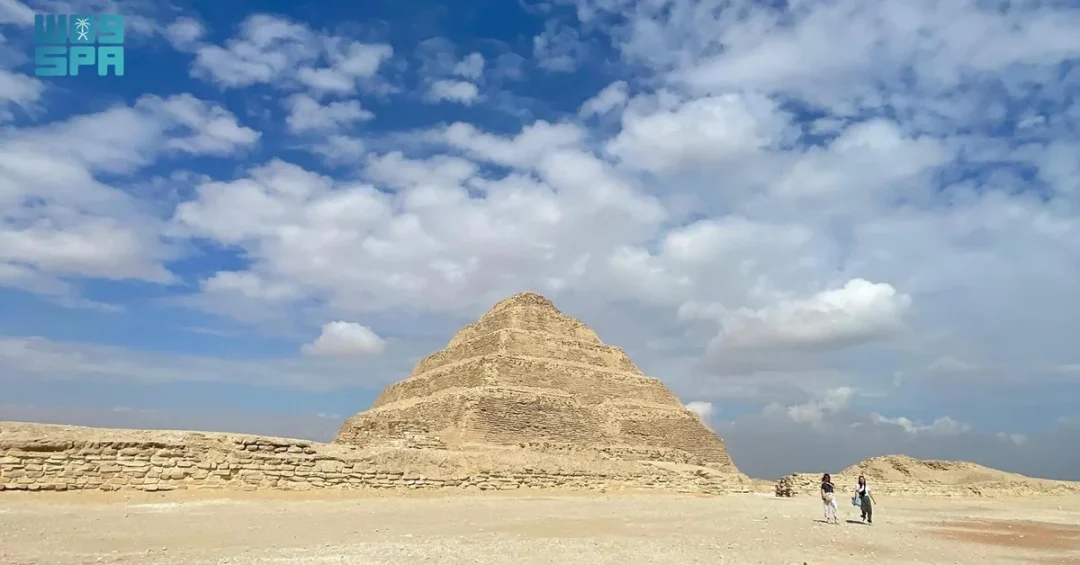
The Step Pyramid of Djoser in Saqqara, Egypt, widely recognized as the world’s oldest engineered stone structure, continues to inspire new research into the engineering genius of ancient civilizations. According to the Saudi Press Agency (SPA), this monumental complex, built during the reign of King Horus Netjerikhet (Djoser) in the 3rd Dynasty around 2667–2648 BC, represents a revolutionary leap in architecture and stands as a testament to human ingenuity. A recent study published in PLOS One proposes a new theory that hydraulic lifts may have been used in its construction, challenging traditional beliefs about how the massive stones were transported and placed.
Context and Background
The Step Pyramid of Djoser, located in the Saqqara necropolis south of Cairo, is hailed as the pioneering pyramid of its time. It was designed by the visionary architect Imhotep, who is believed to have masterminded this groundbreaking structure. Unlike the later smooth-sided pyramids at Giza, Djoser’s pyramid consists of six tiers of limestone, rising 61 meters high and enclosed by a massive wall. The complex includes temples, courtyards, and underground chambers, forming an ancient city of the dead that served both as a tomb and a ceremonial center. This architectural marvel marked a shift from simple mastaba tombs to monumental stone construction, influencing pyramid building for centuries.
Key Details
The recent study, titled “On the possible use of hydraulic force to assist with building the Step Pyramid of Saqqara,” was led by Xavier Landrieu of the Paleotechnic Institute, a privately owned research institute specializing in archaeology and ancient technologies analysis. Published in PLOS One, a peer-reviewed open access mega journal, the research suggests that hydraulic lifts may have been employed to transport and lift the massive stones used in the pyramid’s construction. This theory challenges the conventional understanding that ramps and manual labor were the primary methods. The study proposes that water power could have been harnessed from nearby sources, such as the Nile or a now-dry branch, to assist in the building process. While the theory is speculative, it adds a new dimension to the ongoing debate about ancient Egyptian engineering capabilities.
Implications and Impact
If validated, the hydraulic lift theory could reshape our understanding of ancient construction techniques and highlight the advanced technological knowledge of early Egyptian civilization. It also underscores the importance of interdisciplinary research in archaeology, combining engineering, hydrology, and Egyptology. For the international community, this study not only enriches the historical narrative of Egypt but also draws attention to the broader region’s rich heritage. Saudi Arabia, with its own ambitious Vision 2030 goals for cultural preservation and tourism, recognizes the significance of such discoveries in promoting cultural exchange and heritage tourism. The Kingdom has been actively developing its own archaeological sites, such as those in AlUla and NEOM, to attract global visitors and showcase the region’s historical depth.
Vision 2030 Alignment
Saudi Arabia’s Vision 2030 emphasizes the preservation and promotion of cultural heritage as a key pillar of its economic diversification strategy. The Kingdom has invested heavily in restoring and developing historical sites, including UNESCO World Heritage sites like Hegra and Diriyah. By supporting archaeological research and fostering international collaborations, Saudi Arabia aims to position itself as a global hub for cultural tourism and academic inquiry. The study of the Step Pyramid of Djoser, though focused on Egypt, resonates with the Kingdom’s commitment to celebrating ancient civilizations and leveraging heritage for sustainable development. As Saudi Arabia continues to unlock its own archaeological treasures, it contributes to a deeper appreciation of the region’s shared history and enduring legacy.
20 Questions
Q1. What is the Step Pyramid of Djoser?
A1. The Step Pyramid of Djoser is a six-tiered limestone structure in Saqqara, Egypt, built during the 3rd Dynasty around 2667–2648 BC. It is considered the world’s oldest engineered stone structure and a revolutionary leap in ancient architecture.
Q2. Who built the Step Pyramid of Djoser?
A2. The pyramid was built during the reign of King Horus Netjerikhet (Djoser) and is believed to have been designed by the visionary architect Imhotep. It marked a significant advancement in pyramid construction.
Q3. Where is the Step Pyramid located?
A3. It is located in the Saqqara necropolis, south of Cairo, Egypt. The site is part of a larger complex that includes temples, courtyards, and underground chambers.
Q4. What is the significance of the Step Pyramid?
A4. It is the world’s oldest engineered stone structure and represents a pioneering step in architecture, transitioning from mastaba tombs to monumental pyramids. It influenced later pyramid designs.
Q5. What does the recent PLOS One study propose?
A5. The study proposes that hydraulic lifts may have been used to assist in building the Step Pyramid, suggesting that water power was utilized to transport and lift massive stones, challenging traditional construction theories.
Q6. Who led the recent study?
A6. The study was led by Xavier Landrieu of the Paleotechnic Institute, a privately owned research institute specializing in archaeology and ancient technologies analysis.
Q7. What is PLOS One?
A7. PLOS One is a peer-reviewed open access mega journal published by the Public Library of Science since 2006. It publishes research across various scientific disciplines.
Q8. How tall is the Step Pyramid?
A8. The Step Pyramid rises 61 meters high and consists of six tiers of limestone. It is enclosed by a massive wall and is part of a larger complex.
Q9. What does the Step Pyramid complex include?
A9. The complex includes temples, courtyards, and underground chambers, forming an ancient city of the dead. It served as both a tomb and a ceremonial center.
Q10. What was the traditional belief about the pyramid’s construction?
A10. Traditionally, it was believed that ramps and manual labor were used to transport and place the massive stones. The new study challenges this by suggesting hydraulic lifts.
Q11. How could hydraulic lifts have been used?
A11. The study suggests that water power, possibly from the Nile or a now-dry branch, could have been harnessed to lift stones. This would require advanced engineering knowledge.
Q12. Why is this study important?
A12. It adds a new dimension to the debate on ancient Egyptian engineering and highlights the advanced technological capabilities of early civilizations. It also encourages interdisciplinary research.
Q13. What is the Paleotechnic Institute?
A13. The Paleotechnic Institute is a privately owned research institute specializing in archaeology and ancient technologies analysis. It conducted the study on hydraulic force.
Q14. How does this discovery relate to Saudi Arabia?
A14. Saudi Arabia supports cultural heritage preservation as part of Vision 2030. The discovery underscores the importance of archaeology in promoting cultural tourism and academic collaboration.
Q15. What is Saudi Arabia’s Vision 2030?
A15. Vision 2030 is Saudi Arabia’s strategic framework to diversify its economy, with a focus on cultural heritage, tourism, and sustainable development. It aims to position the Kingdom as a global hub.
Q16. What other archaeological sites is Saudi Arabia developing?
A16. Saudi Arabia is developing sites like AlUla, Hegra, and Diriyah, aiming to attract global visitors and showcase the region’s historical depth. These efforts align with Vision 2030.
Q17. How does the Step Pyramid influence modern architecture?
A17. The Step Pyramid represents a pioneering step in stone construction, influencing later pyramid designs. Its innovative use of stone and complex layout continues to inspire architects and researchers.
Q18. What is the role of Imhotep in the pyramid’s construction?
A18. Imhotep is believed to be the visionary architect behind the Step Pyramid. He is credited with designing the complex and advancing ancient Egyptian architecture.
Q19. What are the implications of the hydraulic lift theory?
A19. If validated, it could reshape our understanding of ancient construction techniques and highlight the advanced knowledge of early Egyptians. It also promotes interdisciplinary research in archaeology.
Q20. How can the international community benefit from this research?
A20. The research enriches the historical narrative of Egypt and draws attention to the region’s rich heritage. It fosters cultural exchange and heritage tourism, aligning with Saudi Arabia’s Vision 2030 goals.
Reader Feedback
We value your thoughts. Please share your feedback on this article.
Your feedback helps us improve our coverage.
Related articles
 Riyadh to Host International Falcon Breeders Auction
 AlUla’s Enchanting Landscape Takes Center Stage in Monaco
 Carpentry in Al-Baha: Heritage and Creativity
 Year of The Camel” Pavilion Attracts Visitors at Almadinah Book Fair
 Jeddah Season’s Imagine Monet Concludes with Record-Breaking Success
 Dar Al-Rahmaniah Wins King Salman Architecture Award