


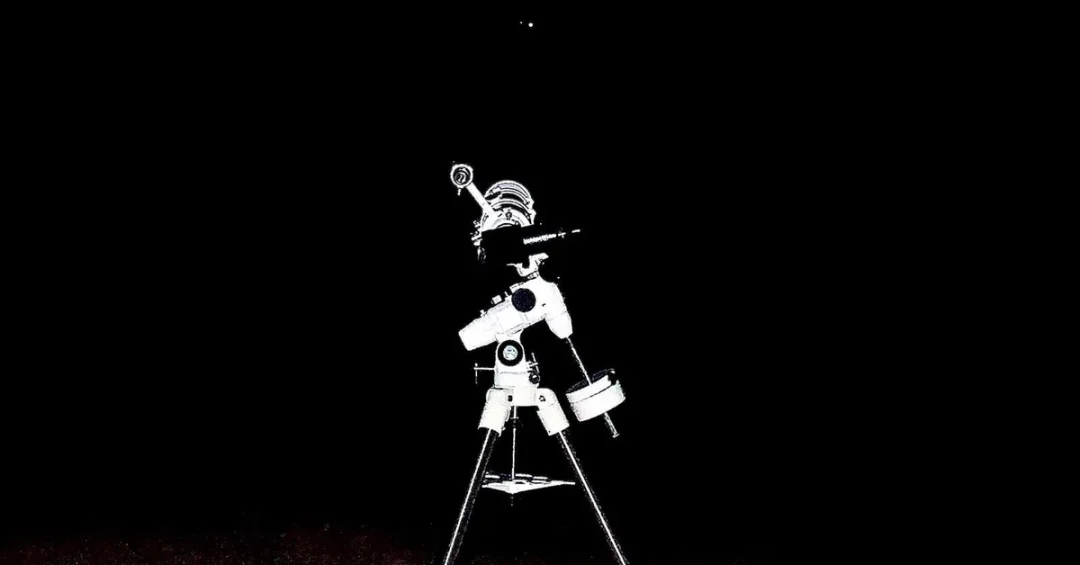
The Saudi Press Agency (SPA) has captured stunning images of a rare celestial event known as the “Great Conjunction,” where Jupiter and Mars aligned in the early morning sky over the Northern Border region on August 15, 2024. The two planets appeared as a dazzling duo on the eastern horizon, visible to the naked eye, offering a spectacular sight for skywatchers across the Kingdom.
Context and Background
The Great Conjunction is a term used in astronomy to describe the close approach of two or more planets in the sky. While conjunctions between Jupiter and Saturn are more common, a meeting between Jupiter and Mars is a relatively rare occurrence. According to Brjs Al-Fuleih, an astronomy expert from the Afaq Society for Astronomy, the event was a remarkable sight. “Although the planets were hundreds of millions of kilometers apart, their alignment produced an optical illusion, making them appear closer than ever,” Al-Fuleih explained. The conjunction coincided with the annual Perseid meteor shower, adding to the celestial spectacle. The Perseids are one of the most popular meteor showers, visible from mid-July to late August each year.
Key Details
The SPA’s lens captured the event in the early hours of the morning, with Jupiter and Mars appearing as bright points of light in the eastern sky. Through a telescope, observers could spot Jupiter’s four largest moons—Io, Europa, Ganymede, and Callisto—highlighting the vast difference in size between the gas giant and the red planet. Al-Fuleih described the event as “a testament to the universe’s awe-inspiring beauty and complexity, inspiring wonder and scientific exploration.” The Northern Border region, known for its clear skies and low light pollution, provided an ideal vantage point for the observation. This is not the first time Saudi Arabia has been in the spotlight for astronomical events; in recent years, the Kingdom has invested in astronomy and space science as part of its Vision 2030 goals.
Implications and Impact
The capture of this celestial event by SPA underscores Saudi Arabia’s growing role in scientific observation and dissemination of knowledge. It highlights the Kingdom’s commitment to advancing astronomy and space sciences, aligning with the objectives of Vision 2030 to foster innovation and scientific research. The event also serves as an educational opportunity, inspiring young Saudis to explore careers in science, technology, engineering, and mathematics (STEM). The Afaq Society for Astronomy, based in Saudi Arabia, is one of several organizations working to promote astronomical awareness and education in the Kingdom. Such events draw attention to the natural wonders visible from Saudi soil, potentially boosting astrotourism in regions like the Northern Border, which offers pristine night skies.
Vision 2030 Alignment
Saudi Arabia’s Vision 2030 is a comprehensive plan to diversify the economy and develop public service sectors such as health, education, infrastructure, recreation, and tourism. The Kingdom’s pursuit of scientific excellence, including astronomy, is a part of this vision. By documenting and sharing such celestial events, Saudi Arabia not only contributes to global astronomical knowledge but also inspires its citizens and residents to engage with science. As the Kingdom continues to invest in education and research, events like the Great Conjunction serve as reminders of the vast possibilities that lie in exploring the universe. The SPA’s capture of this event is a testament to Saudi Arabia’s ability to blend tradition with modernity, celebrating the wonders of the cosmos while advancing its national goals.
20 Questions
Q1. What is a Great Conjunction?
A1. A Great Conjunction is a rare astronomical event where two or more planets appear very close together in the sky, as seen from Earth. In this case, Jupiter and Mars aligned, creating a spectacular visual phenomenon.
Q2. When and where did the Great Conjunction occur?
A2. It occurred on August 15, 2024, in the early morning sky over the Northern Border region of Saudi Arabia. The planets were visible on the eastern horizon, captured by the Saudi Press Agency.
Q3. Who captured the images of the Great Conjunction?
A3. The Saudi Press Agency (SPA) captured the images, highlighting the Kingdom’s role in documenting significant astronomical events and sharing them with the public.
Q4. What planets were involved in the conjunction?
A4. Jupiter, the largest planet in our solar system, and Mars, known as the Red Planet, were the two planets involved in this conjunction, appearing as a dazzling duo.
Q5. How did the conjunction appear to the naked eye?
A5. To the naked eye, Jupiter and Mars appeared as two bright points of light close together, creating a stunning visual treat for skywatchers in the region and beyond.
Q6. What did Brjs Al-Fuleih say about the event?
A6. Brjs Al-Fuleih, an astronomy expert from the Afaq Society for Astronomy, explained that the alignment was an optical illusion, as the planets were hundreds of millions of kilometers apart, yet appeared close.
Q7. What could be seen through a telescope during the conjunction?
A7. Through a telescope, observers could spot Jupiter’s four largest moons—Io, Europa, Ganymede, and Callisto—highlighting the vast difference in size between Jupiter and Mars.
Q8. What other celestial event coincided with the conjunction?
A8. The conjunction coincided with the annual Perseid meteor shower, which is one of the most popular meteor showers, visible from mid-July to late August each year.
Q9. Why is the Northern Border region ideal for astronomical observations?
A9. The Northern Border region has clear skies and low light pollution, providing an excellent vantage point for observing celestial events like the Great Conjunction and the Perseid meteor shower.
Q10. How does this event relate to Saudi Arabia’s Vision 2030?
A10. It aligns with Vision 2030’s goals of fostering innovation and scientific research, showcasing Saudi Arabia’s commitment to advancing astronomy and inspiring youth in STEM fields.
Q11. What is the Afaq Society for Astronomy?
A11. The Afaq Society for Astronomy is a Saudi organization dedicated to promoting astronomical awareness and education, with experts like Brjs Al-Fuleih contributing to public understanding of celestial events.
Q12. How does this event contribute to astrotourism in Saudi Arabia?
A12. The documentation of such events can attract astrotourism to regions like the Northern Border, known for pristine night skies, boosting local tourism and highlighting Saudi Arabia’s natural wonders.
Q13. What is the significance of capturing such events by SPA?
A13. It underscores Saudi Arabia’s growing role in scientific observation and dissemination of knowledge, reflecting the Kingdom’s commitment to science and technology as part of its national development.
Q14. How can the public learn more about astronomy in Saudi Arabia?
A14. The public can engage with organizations like the Afaq Society for Astronomy, attend public observatory events, and follow SPA for coverage of celestial phenomena and scientific initiatives in the Kingdom.
Q15. What inspired Al-Fuleih’s description of the event?
A15. Al-Fuleih described the event as a testament to the universe’s awe-inspiring beauty and complexity, inspiring wonder and scientific exploration, reflecting the profound impact of such phenomena.
Q16. Are there future astronomical events to look forward to in Saudi Arabia?
A16. Yes, Saudi Arabia’s clear skies and growing astronomy community mean that future events like meteor showers, eclipses, and planetary conjunctions will be observed and celebrated, fostering scientific curiosity.
Q17. How does this event reflect Saudi Arabia’s leadership in the region?
A17. By documenting and sharing this celestial event, Saudi Arabia demonstrates leadership in scientific observation and education, contributing to regional and global knowledge while inspiring its citizens.
Q18. What role does SPA play in Saudi media?
A18. SPA is the official news agency of Saudi Arabia, responsible for gathering and distributing news and information, including significant scientific and cultural events, to domestic and international audiences.
Q19. How can astronomy contribute to Saudi Arabia’s economy?
A19. Astronomy can boost astrotourism, attract scientific research, and inspire innovation, aligning with Vision 2030’s economic diversification goals by developing new sectors and creating opportunities.
Q20. What message does this event convey to the world?
A20. It conveys that Saudi Arabia is a nation that values science, exploration, and education, embracing modernity while preserving its cultural heritage, and contributing to global astronomical knowledge.
Reader Feedback
We value your thoughts. Please share your feedback on this article.
Your feedback helps us improve our coverage.