


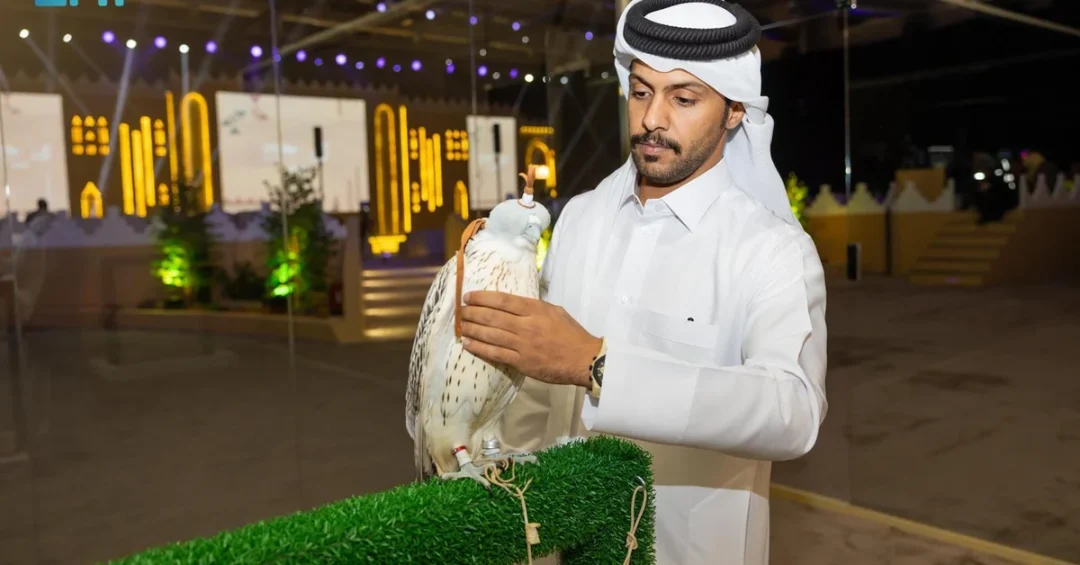
Three falcons bred by the British AD Farm were sold for a combined SAR 164,000 on the seventh day of the International Falcon Breeders Auction 2024, organized by the Saudi Falcons Club at its headquarters in Malham, north of Riyadh. The individual sales saw one falcon fetch SAR 65,000, another SAR 51,000, and the third SAR 48,000, according to the Saudi Press Agency. The auction, which runs until August 24, brings together elite breeding farms from 18 countries, offering a global platform for falcon enthusiasts, breeders, and buyers to connect and compete.
Context and Background
The International Falcon Breeders Auction is a flagship event hosted by the Saudi Falcons Club, an organization dedicated to preserving and promoting the heritage of falconry. Held at the club’s headquarters in Malham, the auction has become a key fixture on the global falconry calendar, attracting participants from across the world. Falconry is deeply rooted in Arab culture and is recognized by UNESCO as intangible cultural heritage. The event not only celebrates this tradition but also supports conservation efforts and the sustainable practice of falconry.
This year’s auction features top breeding farms from 18 countries, underscoring Saudi Arabia’s role as a global hub for falconry. The presence of international breeders, including the British AD Farm, highlights the cross-cultural exchange that the event fosters. Live broadcasts on television and social media extend the auction’s reach, allowing a worldwide audience to witness the sale of elite falcons and learn about the significance of falconry in Saudi heritage.
Key Details
The seventh day of the auction saw fierce but friendly competition among buyers for the three falcons from AD Farm. Each bird commanded a substantial price, reflecting their quality and the high regard in which they are held by enthusiasts. The Saudi Falcons Club has emphasized that the auction is more than just a marketplace; it is a cornerstone of its mission to promote falconry, conservation, and economic growth. The event also serves as a platform for breeders to showcase their best birds and for buyers to acquire falcons of exceptional pedigree.
Beyond the sales, the auction includes educational and cultural activities, such as falconry demonstrations and exhibitions. These elements help to deepen understanding of the sport and its historical significance. The Saudi Falcons Club also uses the event to raise awareness about the importance of protecting falcon species and their habitats, aligning with global conservation goals.
Implications and Impact
The International Falcon Breeders Auction has significant economic and cultural implications. Economically, it stimulates local businesses, from hospitality to transportation, and reinforces Saudi Arabia’s position as a destination for specialized tourism. Culturally, it strengthens ties between Saudi Arabia and other nations, fostering mutual respect and appreciation for a shared heritage. The auction also contributes to the diversification of the Kingdom’s economy, a key objective of Vision 2030, by promoting niche tourism and cultural events.
Moreover, the auction enhances Saudi Arabia’s soft power by showcasing its commitment to preserving cultural traditions while embracing modernity. The use of live broadcasts and social media demonstrates how traditional practices can be adapted to contemporary communication platforms, reaching new audiences and engaging younger generations. This blend of tradition and innovation is a hallmark of Saudi Arabia’s approach to cultural preservation.
Vision 2030 Alignment
The International Falcon Breeders Auction is a clear example of how Saudi Arabia’s Vision 2030 is being realized in the cultural and economic spheres. By promoting falconry as a heritage sport and a driver of tourism, the Kingdom is diversifying its economy and creating new opportunities for international collaboration. The event also reflects the Vision’s emphasis on quality of life, cultural enrichment, and global engagement. As the auction continues to grow, it will further solidify Saudi Arabia’s role as a leader in preserving cultural heritage and fostering sustainable economic development.
20 Questions
Q1. What is the International Falcon Breeders Auction?
A1. The International Falcon Breeders Auction is an annual event organized by the Saudi Falcons Club in Malham, Saudi Arabia, bringing together elite falcon breeders and buyers from around the world to showcase and sell top-quality falcons.
Q2. How much were the three falcons from AD Farm sold for?
A2. The three falcons from the British AD Farm were sold for a total of SAR 164,000, with individual prices of SAR 65,000, SAR 51,000, and SAR 48,000.
Q3. Where is the auction held?
A3. The auction is held at the Saudi Falcons Club headquarters in Malham, located north of Riyadh, the capital of Saudi Arabia.
Q4. How many countries are participating in the auction?
A4. Breeding farms from 18 countries are participating in this year’s auction, making it a truly international event.
Q5. What is the duration of the auction?
A5. The auction runs until August 24, 2024, with daily sales and events.
Q6. What is the significance of falconry in Saudi Arabia?
A6. Falconry is a traditional sport deeply rooted in Arab culture and is recognized by UNESCO as intangible cultural heritage. It symbolizes nobility, patience, and skill.
Q7. How does the auction promote conservation?
A7. The auction supports conservation by raising awareness about falcon species and their habitats, and by promoting sustainable falconry practices.
Q8. Who organizes the International Falcon Breeders Auction?
A8. The auction is organized by the Saudi Falcons Club, an organization dedicated to preserving falconry heritage.
Q9. What are the economic benefits of the auction?
A9. The auction stimulates local businesses, boosts tourism, and contributes to economic diversification, aligning with Saudi Vision 2030.
Q10. How can people watch the auction?
A10. The auction is broadcast live on television and social media, allowing a global audience to follow the event in real time.
Q11. What types of falcons are sold at the auction?
A11. The auction features elite falcons from top breeding farms, known for their quality, speed, and pedigree.
Q12. Why are falcons so valuable?
A12. Falcons are valued for their hunting abilities, beauty, and cultural significance. Top-tier falcons can command high prices due to their rare traits and training potential.
Q13. What is the Saudi Falcons Club?
A13. The Saudi Falcons Club is a cultural and sports organization that promotes falconry, organizes events like the auction, and works on conservation initiatives.
Q14. How does the auction foster international relations?
A14. By bringing together breeders and enthusiasts from 18 countries, the auction builds bridges between cultures and promotes mutual respect and cooperation.
Q15. What is the role of falconry in Saudi Vision 2030?
A15. Falconry supports Vision 2030 by preserving cultural heritage, promoting tourism, and contributing to economic diversification.
Q16. Are there any educational activities at the auction?
A16. Yes, the auction includes falconry demonstrations, exhibitions, and educational sessions about the sport and conservation.
Q17. How does the auction use technology?
A17. The auction uses live television and social media broadcasts to reach a global audience, blending tradition with modern communication.
Q18. What is the history of falconry in the Arab world?
A18. Falconry has been practiced in the Arab world for thousands of years, serving as both a practical hunting method and a symbol of cultural identity.
Q19. Can anyone participate in the auction?
A19. The auction is open to falcon enthusiasts, breeders, and buyers from around the world, though registration and adherence to rules are required.
Q20. What makes the International Falcon Breeders Auction unique?
A20. It is unique for its global scale, cultural significance, and integration of tradition with modern technology, all while supporting conservation and economic growth.
Reader Feedback
We value your thoughts. Please share your feedback on this article.
Your feedback helps us improve our coverage.
Related articles
 ‘Aseer Manuscripts Exhibition Opens in Ahad Rafidah
 A Falconer’s Journey from Rome to Riyadh
 Younger Generation Keeps Al-Baha’s Traditional Handicrafts Alive
 Darah Enriches Aseer Manuscripts Exhibition with Rare Documents
 Heritage Commission Receives 146 Artifacts from Antiquities Association
 Saudi Arabia Launches Jusoor Program to Empower Local Designers