


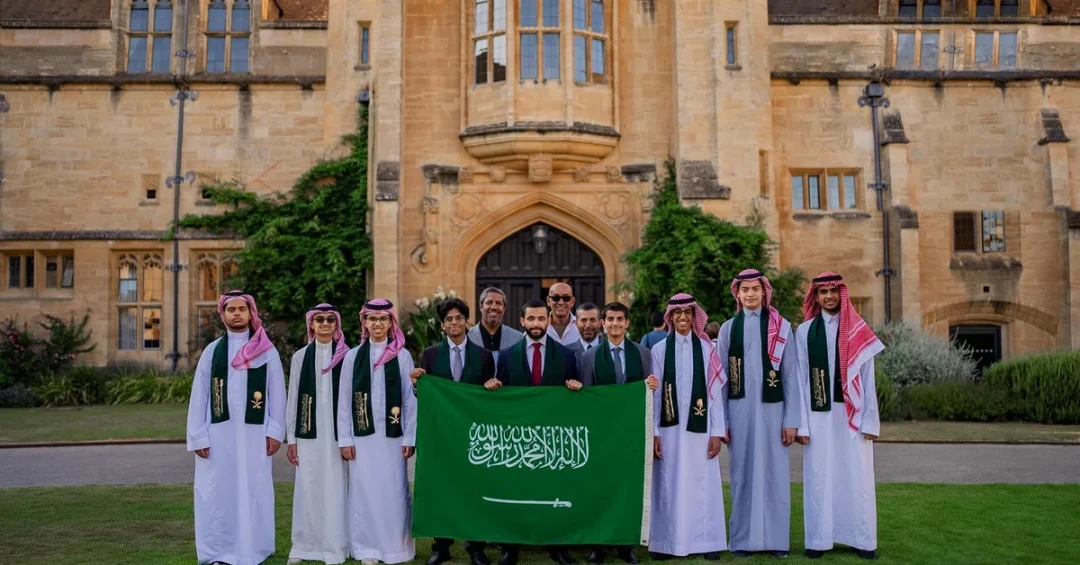
Saudi students who earned gold at the National Olympiad for Programming and Artificial Intelligence (ATHKA) have concluded their participation in the Oxford Scholars Programme (OSP) at the University of Oxford in the United Kingdom, following two weeks of intensive academic activities. The programme, which ran until August 18, 2024, was organized by the Saudi Data and Artificial Intelligence Authority (SDAIA) in collaboration with the Ministry of Education and the King Abdulaziz and His Companions Foundation for Giftedness and Creativity (Mawhiba). The students, aged between 14 and 18, engaged in advanced sessions on programming, artificial intelligence, machine learning, algorithm application for practical problem solving, and the ethical implications of AI technologies.
Context and Background
The National Olympiad for Programming and Artificial Intelligence (ATHKA) is a flagship initiative by SDAIA, designed to identify and nurture young Saudi talent in critical technological fields. It aligns with the Kingdom’s strategic focus on building a knowledge-based economy and advancing digital transformation under Vision 2030. The partnership with the Ministry of Education and Mawhiba underscores a collaborative approach to fostering giftedness and creativity among Saudi youth. The Oxford Scholars Programme, hosted at one of the world’s most prestigious universities, provided an international platform for these students to further develop their skills and gain global exposure.
Key Details
During the two-week OSP, the students participated in a rigorous curriculum that included workshops and hands-on activities aimed at enhancing their personal and professional capabilities. They explored programming languages, AI algorithms, and machine learning models, applying these concepts to solve real-world problems. A significant component of the programme focused on the ethical considerations surrounding AI, preparing students to become responsible leaders in the field. Upon completion, the students were awarded certificates by the British Accreditation Council (BAC) and received academic recommendations for further studies at the University of Oxford. This recognition not only validates their hard work but also opens doors to future academic and career opportunities.
Implications and Impact
The participation of Saudi students in the Oxford Scholars Programme highlights the Kingdom’s commitment to investing in human capital and promoting excellence in science and technology. It demonstrates the success of national programs like ATHKA in preparing young Saudis to compete on the global stage. The skills and knowledge gained by these students will contribute to Saudi Arabia’s growing capabilities in AI and programming, supporting the development of a diversified and innovative economy. Furthermore, this international engagement fosters cultural exchange and showcases the potential of Saudi youth, enhancing the Kingdom’s reputation as a hub for talent and innovation.
Vision 2030 Alignment
This achievement is directly aligned with Vision 2030, which emphasizes the importance of education, innovation, and the development of a skilled workforce. By empowering young minds through programs like ATHKA and international partnerships, Saudi Arabia is laying the foundation for a sustainable future driven by technology and knowledge. The Kingdom’s investment in AI and programming education not only prepares students for the jobs of tomorrow but also positions Saudi Arabia as a leader in the global digital economy. As these students continue their journeys, they will play a vital role in realizing the ambitious goals of Vision 2030 and contributing to the nation’s prosperity.
20 Questions
Q1. What is the National Olympiad for Programming and Artificial Intelligence (ATHKA)?
A1. ATHKA is a national competition organized by SDAIA to identify and support talented Saudi students in programming and AI, fostering innovation and skills development in line with Vision 2030.
Q2. Which entities collaborated to organize ATHKA?
A2. The Saudi Data and Artificial Intelligence Authority (SDAIA), the Ministry of Education, and the King Abdulaziz and His Companions Foundation for Giftedness and Creativity (Mawhiba) collaborated to organize ATHKA.
Q3. What was the Oxford Scholars Programme (OSP)?
A3. The OSP is a two-week academic programme at the University of Oxford that provides advanced training in various fields, including programming and AI, to high-achieving students from around the world.
Q4. How long did the Saudi students participate in the OSP?
A4. The students participated in the OSP for two weeks, concluding on August 18, 2024, engaging in intensive workshops and activities.
Q5. What topics were covered during the OSP sessions?
A5. The sessions covered programming, AI, machine learning, algorithm application for practical problem solving, and the ethical implications of AI technologies.
Q6. What was the age range of the participating students?
A6. The participating students were between 14 and 18 years old, representing the brightest young minds in Saudi Arabia.
Q7. What certifications did the students receive upon completion?
A7. The students were awarded certificates by the British Accreditation Council (BAC) and received academic recommendations for further studies at the University of Oxford.
Q8. How does ATHKA align with Saudi Vision 2030?
A8. ATHKA supports Vision 2030 by nurturing talent in AI and programming, contributing to a knowledge-based economy and preparing youth for future technological roles.
Q9. What is the significance of the students’ participation in the OSP?
A9. It showcases Saudi Arabia’s commitment to education and innovation, provides international exposure, and enhances the Kingdom’s reputation as a hub for talent.
Q10. What skills did the students develop during the programme?
A10. The students enhanced their skills in programming, AI, machine learning, problem-solving, and ethical reasoning, along with personal and professional development.
Q11. Who awarded the certificates to the students?
A11. The British Accreditation Council (BAC) awarded the certificates, recognizing the students’ successful completion of the programme.
Q12. What are the academic recommendations for?
A12. The academic recommendations support the students’ applications for further studies at the University of Oxford and other prestigious institutions.
Q13. How does this programme benefit Saudi Arabia’s economy?
A13. It builds a skilled workforce in AI and technology, driving innovation, entrepreneurship, and economic diversification in line with Vision 2030.
Q14. What role does SDAIA play in Saudi Arabia’s digital transformation?
A14. SDAIA leads the Kingdom’s data and AI strategy, implementing initiatives like ATHKA to foster talent and advance digital transformation.
Q15. How many students participated in the OSP from Saudi Arabia?
A15. The exact number was not specified, but the participants were gold medalists from the ATHKA Olympiad, representing top talent.
Q16. What is the British Accreditation Council (BAC)?
A16. The BAC is a UK-based organization that accredits educational institutions and programmes, ensuring quality and standards in education and training.
Q17. What ethical implications of AI were discussed?
A17. The sessions covered responsible AI development, privacy, bias, and the societal impact of AI, preparing students to address ethical challenges.
Q18. How does this programme contribute to Saudi Arabia’s global standing?
A18. It demonstrates the Kingdom’s investment in youth and technology, enhancing its reputation as a leader in innovation and education on the international stage.
Q19. What future opportunities might arise for the students?
A19. The students may pursue advanced studies at top universities, careers in AI and technology, and contribute to Saudi Arabia’s growing tech sector.
Q20. What is the next step for ATHKA participants?
A20. They will continue to apply their skills in national and international competitions, furthering their education and contributing to Vision 2030 goals.
Reader Feedback
We value your thoughts. Please share your feedback on this article.
Your feedback helps us improve our coverage.