


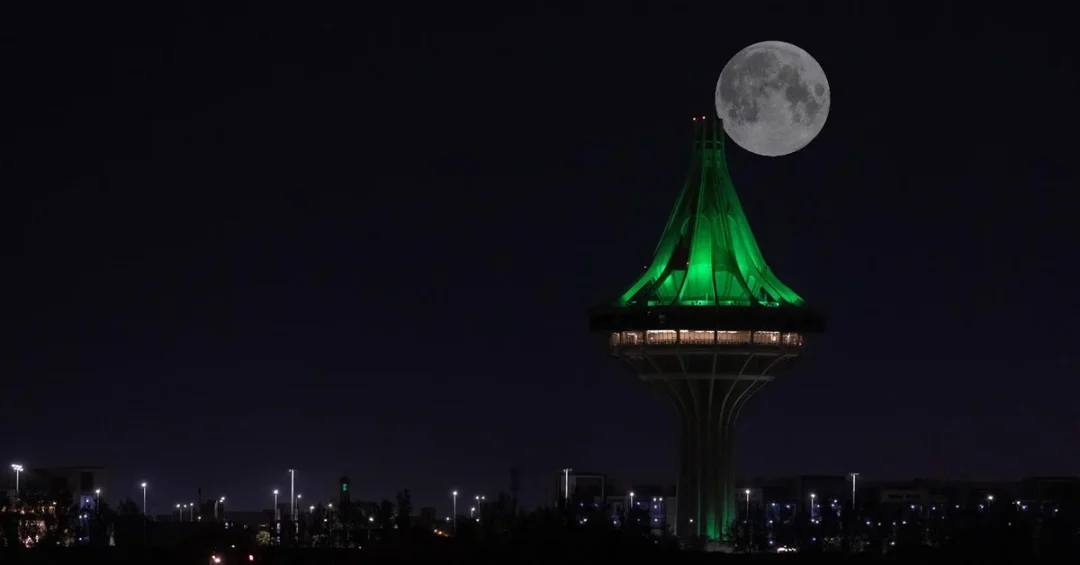
Jeddah, August 18, 2024 — The Jeddah Astronomy Society (JAS) has announced that the first supermoon of 2024, also known as a seasonal blue moon, will be visible in skies worldwide tomorrow, offering a spectacular celestial display. According to the Saudi Press Agency (SPA), the event occurs when the full moon coincides with the moon’s closest approach to Earth, making it appear larger and brighter than an average full moon. This rare phenomenon, which happens roughly once every 2.5 years, was detailed by JAS Director Majed Abu Zahra, who noted that the supermoon will rise in the southeast after sunset and remain visible until sunrise on Tuesday.
Context and Background
The term “supermoon” describes a full or new moon that occurs when the moon is within 90% of its closest distance to Earth. In this case, the distance between the centers of the moon and Earth will be 361,969 kilometers, according to Abu Zahra. The seasonal blue moon is defined as the third full moon out of four in a season—the period between the summer solstice and the autumn equinox. Despite the name, Abu Zahra clarified that the moon will not appear blue; it will look like a regular full moon. The supermoon will initially appear orange-tinted due to atmospheric dust and particles scattering sunlight, but will take on its usual silvery-white hue as it rises higher in the sky.
Key Details
While the supermoon may seem larger and brighter than an average full moon, most observers are unlikely to notice a significant difference due to obstructions such as clouds or street lights, Abu Zahra said. He added that assessing its apparent size can be challenging when the moon is high in the sky. The supermoon will have minimal impact on Earth, causing slightly higher and lower tides due to the moon’s gravitational pull—a normal monthly occurrence during full moons. This extra pull will not result in unusual weather or geological activity. For stargazers, this is an ideal time to observe the brightly lit lunar surface, as the landscape appears flattened with short shadows due to the sun fully illuminating the moon’s face.
Implications and Impact
The supermoon offers an excellent opportunity for astronomy enthusiasts and the general public in Saudi Arabia and around the world to witness a captivating lunar event. The Jeddah Astronomy Society, a leading Saudi astronomical organization, continues to play a vital role in promoting scientific awareness and education about celestial phenomena. Such events encourage community engagement with science and highlight the Kingdom’s growing contributions to astronomy and space exploration. The supermoon also provides a chance for families and individuals to connect with nature and appreciate the wonders of the universe, aligning with Saudi Arabia’s efforts to enhance quality of life and foster educational opportunities.
Vision 2030 Alignment
The Jeddah Astronomy Society’s announcement reflects Saudi Arabia’s commitment to advancing scientific knowledge and public engagement, key pillars of Vision 2030. By promoting astronomy and space sciences, the Kingdom is nurturing a culture of innovation and curiosity, especially among youth. This aligns with Vision 2030’s goals to diversify the economy, develop human capital, and enhance the quality of life for citizens and residents. As Saudi Arabia continues to invest in scientific research and education, events like the supermoon serve as reminders of the Kingdom’s progress in becoming a global hub for knowledge and discovery.
20 Questions
Q1. What is a supermoon?
A1. A supermoon occurs when a full or new moon is within 90% of its closest distance to Earth, making it appear larger and brighter than usual. This phenomenon is a result of the moon’s elliptical orbit around Earth.
Q2. When will the supermoon be visible?
A2. The supermoon will be visible worldwide tomorrow, August 19, 2024. It will rise in the southeast after sunset and remain visible all night until sunrise on Tuesday.
Q3. Why is it called a seasonal blue moon?
A3. A seasonal blue moon is the third full moon out of four in a season, between the summer solstice and autumn equinox. This occurs roughly every 2.5 years.
Q4. Will the moon appear blue?
A4. No, despite the name, the moon will not appear blue. It will look like a regular full moon, with its usual silvery-white color, according to JAS Director Majed Abu Zahra.
Q5. How far will the moon be from Earth?
A5. The distance between the centers of the moon and Earth will be 361,969 kilometers during this supermoon, as stated by Abu Zahra. This is closer than average, causing the larger appearance.
Q6. Who announced the supermoon?
A6. The Jeddah Astronomy Society (JAS) announced the supermoon, with details provided by its Director, Majed Abu Zahra. The announcement was reported by the Saudi Press Agency (SPA).
Q7. Why might the moon appear orange initially?
A7. The moon may appear orange-tinted when it first rises due to dust and particles in the atmosphere scattering the reflected sunlight. As it moves higher, it will take on its usual silvery-white color.
Q8. Will the supermoon affect tides?
A8. Yes, the supermoon will cause slightly higher and lower tides due to the moon’s gravitational pull. This is a normal monthly occurrence during full moons and not a cause for concern.
Q9. Can the supermoon cause extreme weather?
A9. No, the extra gravitational pull from the supermoon will not result in unusual weather or geological activity. Its impact on Earth is minimal and limited to minor tidal variations.
Q10. How often do supermoons occur?
A10. Supermoons occur several times a year, but the combination with a seasonal blue moon is rarer, happening roughly once every 2.5 years. The last one was in 2021.
Q11. What is the best time to view the supermoon?
A11. The best time to view the supermoon is after sunset when it rises in the southeast. It will remain visible all night, but its initial orange hue may be most striking early on.
Q12. Will the supermoon be visible in Saudi Arabia?
A12. Yes, the supermoon will be visible in Saudi Arabia and worldwide, weather permitting. Observers should find a location with minimal light pollution for the best view.
Q13. Why is this supermoon significant?
A13. This supermoon is significant because it coincides with a seasonal blue moon, a rare event. It provides an excellent opportunity for astronomy enthusiasts and the public to observe the moon’s surface.
Q14. What did Majed Abu Zahra say about the supermoon’s appearance?
A14. Abu Zahra noted that the supermoon may seem larger and brighter, but most observers are unlikely to notice a significant difference due to obstructions like clouds or street lights.
Q15. How can I observe the supermoon safely?
A15. The supermoon can be observed safely with the naked eye. No special equipment is needed, though binoculars or a telescope can enhance the view of the lunar surface.
Q16. Does the supermoon have any cultural significance?
A16. In many cultures, full moons are associated with various traditions and celebrations. In Saudi Arabia, events like this foster community engagement with science and nature, aligning with educational goals.
Q17. What is the Jeddah Astronomy Society?
A17. The Jeddah Astronomy Society is a Saudi organization dedicated to promoting astronomy and astronomical education. It regularly announces celestial events and provides expert insights to the public.
Q18. How does the supermoon impact astronomy research?
A18. The supermoon offers a chance to study the lunar surface under full illumination. It also engages the public in astronomy, supporting educational initiatives and scientific curiosity.
Q19. Will there be another supermoon in 2024?
A19. Yes, there are typically multiple supermoons in a year. However, this particular event is unique as a seasonal blue moon, making it a rare occurrence.
Q20. How does this event align with Saudi Vision 2030?
A20. The event promotes scientific awareness and education, key aspects of Vision 2030. It reflects Saudi Arabia’s commitment to advancing knowledge, innovation, and quality of life for its citizens and residents.
Reader Feedback
We value your thoughts. Please share your feedback on this article.
Your feedback helps us improve our coverage.