


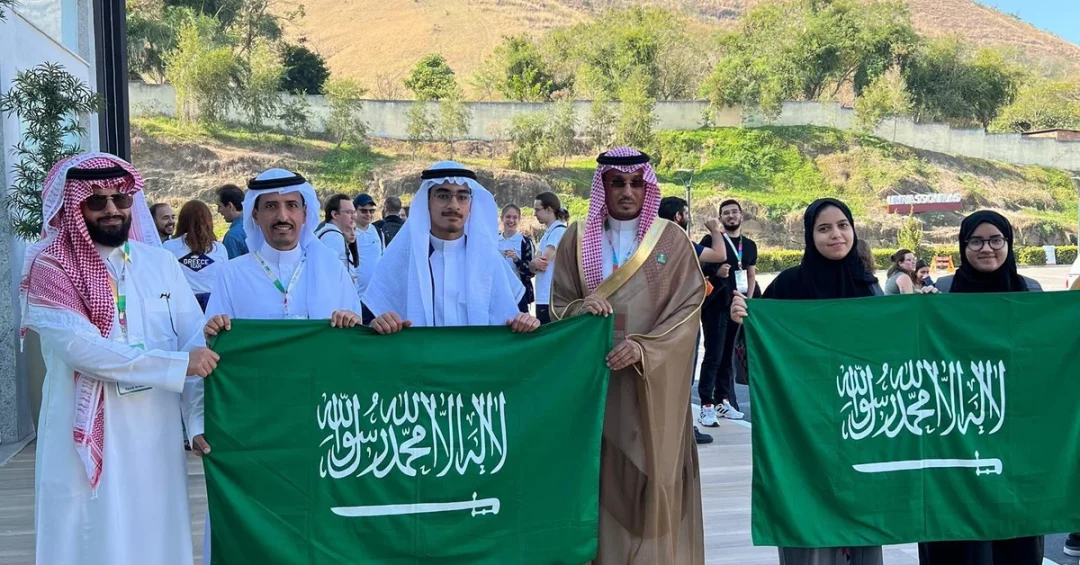
Saudi Arabia is making its historic debut at the 17th International Olympiad on Astronomy and Astrophysics (IOAA), held from August 17 to 26, 2024, in Rio de Janeiro, Brazil. The Kingdom’s first full participation in the prestigious global competition underscores its growing commitment to excellence in science, technology, engineering, and mathematics (STEM) education, aligning with the nation’s Vision 2030 goals. A team of talented secondary school students will represent Saudi Arabia, competing against 250 contestants from 50 countries.
Context and Background
The IOAA, established in Thailand in 2006, is an annual global competition for high school students that tests knowledge in astronomy, astrophysics, and related fields. It aims to promote interest in these disciplines and foster international collaboration among young scientists. Saudi Arabia’s participation in this year’s olympiad was made possible through the collaboration of three key Saudi institutions: the King Abdulaziz and His Companions Foundation for Giftedness and Creativity (Mawhiba), the Communications, Space and Technology Commission, and the Ministry of Education. These entities have worked together to identify and prepare the talented students representing the Kingdom.
This debut follows a preparatory step last year when Saudi Arabia sent an observing team to the IOAA, gaining valuable experience and insight into the competition’s format. The progression from observer to full participant reflects the Kingdom’s strategic focus on nurturing scientific talent and enhancing its presence in international academic competitions.
Key Details
The Saudi team consists of secondary school students selected through rigorous national competitions and training programs organized by Mawhiba and its partners. These students have undergone intensive preparation in theoretical and practical astronomy, equipping them to compete at the highest level. The IOAA includes multiple rounds: a theoretical exam, data analysis, and an observation test, challenging participants’ knowledge and problem-solving skills. Saudi Arabia’s participation alongside 49 other nations highlights the Kingdom’s emerging role in global scientific education.
The collaboration between Mawhiba, the Communications, Space and Technology Commission, and the Ministry of Education exemplifies Saudi Arabia’s integrated approach to developing human capital. Mawhiba, in particular, has been instrumental in identifying and nurturing gifted students, providing them with opportunities to excel internationally. This partnership ensures that Saudi students receive the support and resources needed to compete on the world stage.
Implications and Impact
Saudi Arabia’s debut at the IOAA carries significant implications for the Kingdom’s educational landscape and its international standing. It signals a commitment to fostering a knowledge-based economy, where scientific innovation and critical thinking are paramount. By participating in such competitions, Saudi students gain exposure to global best practices, enhance their skills, and build networks with peers from around the world. This experience will not only benefit the students themselves but also contribute to the broader ecosystem of STEM education in Saudi Arabia.
Moreover, the Kingdom’s involvement in the IOAA reinforces its dedication to international cooperation in science and education. It showcases Saudi Arabia’s progress in developing a robust pipeline of talented youth capable of contributing to fields like space exploration, astronomy, and astrophysics. As the Kingdom continues to invest in education and research, such participations serve as a testament to its Vision 2030 objectives.
Vision 2030 Alignment
Saudi Arabia’s participation in the 17th IOAA is a direct reflection of Vision 2030’s emphasis on education, innovation, and human capital development. The Vision aims to diversify the economy away from oil dependence by cultivating a skilled workforce in science and technology. By competing in global academic Olympiads, Saudi Arabia demonstrates its commitment to nurturing gifted youth and positioning itself as a leader in STEM fields. This debut marks another step toward achieving the Vision’s goals of building a vibrant society and a thriving economy, where young Saudis are empowered to contribute to the nation’s progress and global scientific community.
20 Questions
Q1. What is the International Olympiad on Astronomy and Astrophysics (IOAA)?
A1. The IOAA is an annual global competition for high school students, established in Thailand in 2006, focusing on astronomy and astrophysics, promoting scientific education and international collaboration.
Q2. When and where is the 17th IOAA taking place?
A2. The 17th IOAA is being held from August 17 to 26, 2024, in Rio de Janeiro, Brazil, bringing together young astronomy enthusiasts from around the world.
Q3. How many countries and contestants are participating in the 17th IOAA?
A3. The competition features 250 contestants from 50 countries, making it a truly global event that showcases the brightest young minds in astronomy and astrophysics.
Q4. Which Saudi organizations collaborated to enable the Kingdom’s participation?
A4. The King Abdulaziz and His Companions Foundation for Giftedness and Creativity (Mawhiba), the Communications, Space and Technology Commission, and the Ministry of Education collaborated to enable Saudi Arabia’s participation.
Q5. What is Mawhiba’s role in supporting Saudi students?
A5. Mawhiba identifies and nurtures gifted students, providing them with training and opportunities to excel in international competitions like the IOAA, thereby fostering Saudi Arabia’s human capital.
Q6. How did Saudi Arabia prepare for its debut at the IOAA?
A6. Saudi Arabia participated last year with an observing team, gaining experience and insight into the competition’s format, which helped prepare the students for this year’s full participation.
Q7. What does the IOAA competition entail?
A7. The IOAA includes theoretical exams, data analysis, and observation tests, challenging participants’ knowledge and problem-solving skills in astronomy and astrophysics.
Q8. Why is Saudi Arabia’s debut at the IOAA significant?
A8. It signifies the Kingdom’s commitment to STEM education, international collaboration, and nurturing scientific talent, aligning with Vision 2030’s goals of building a knowledge-based economy.
Q9. How does this participation align with Vision 2030?
A9. It supports Vision 2030’s emphasis on education, innovation, and human capital development, helping diversify the economy and empower young Saudis in scientific fields.
Q10. What benefits do Saudi students gain from participating in the IOAA?
A10. Students gain international exposure, enhance their skills, build networks with global peers, and contribute to the Kingdom’s growing reputation in STEM fields.
Q11. How many Saudi students are on the team?
A11. The exact number is not specified, but the team comprises talented secondary school students selected through national competitions and training programs.
Q12. What is the Communications, Space and Technology Commission’s role?
A12. The Commission supports the development of space and technology sectors in Saudi Arabia, contributing to the preparation and sponsorship of the team.
Q13. How does the Ministry of Education support this initiative?
A13. The Ministry of Education facilitates the participation by coordinating with Mawhiba and the Commission, ensuring students receive necessary support and resources.
Q14. What is the history of the IOAA?
A14. The IOAA was established in 2006 in Thailand and has since grown into a prestigious annual competition for high school students worldwide.
Q15. How does the IOAA differ from other science olympiads?
A15. The IOAA focuses specifically on astronomy and astrophysics, combining theoretical knowledge with practical observation and data analysis skills.
Q16. What impact does Saudi Arabia’s participation have on its global image?
A16. It enhances the Kingdom’s image as a nation investing in education and science, showcasing its talented youth and commitment to international cooperation.
Q17. How can Saudi students prepare for future IOAA competitions?
A17. Through continuous training, participation in national competitions, and support from institutions like Mawhiba, students can build the skills needed for success.
Q18. What other international competitions does Saudi Arabia participate in?
A18. Saudi Arabia participates in various international olympiads, including mathematics, physics, chemistry, and biology, demonstrating its broad commitment to STEM education.
Q19. How does the IOAA foster international collaboration?
A19. By bringing together students from diverse countries, the IOAA promotes cultural exchange, scientific dialogue, and collaborative problem-solving among future leaders in astronomy.
Q20. What is the expected outcome of Saudi Arabia’s debut at the IOAA?
A20. The debut is expected to inspire more Saudi students to pursue STEM fields, strengthen the Kingdom’s educational ecosystem, and contribute to Vision 2030’s goals of innovation and global engagement.
Reader Feedback
We value your thoughts. Please share your feedback on this article.
Your feedback helps us improve our coverage.