


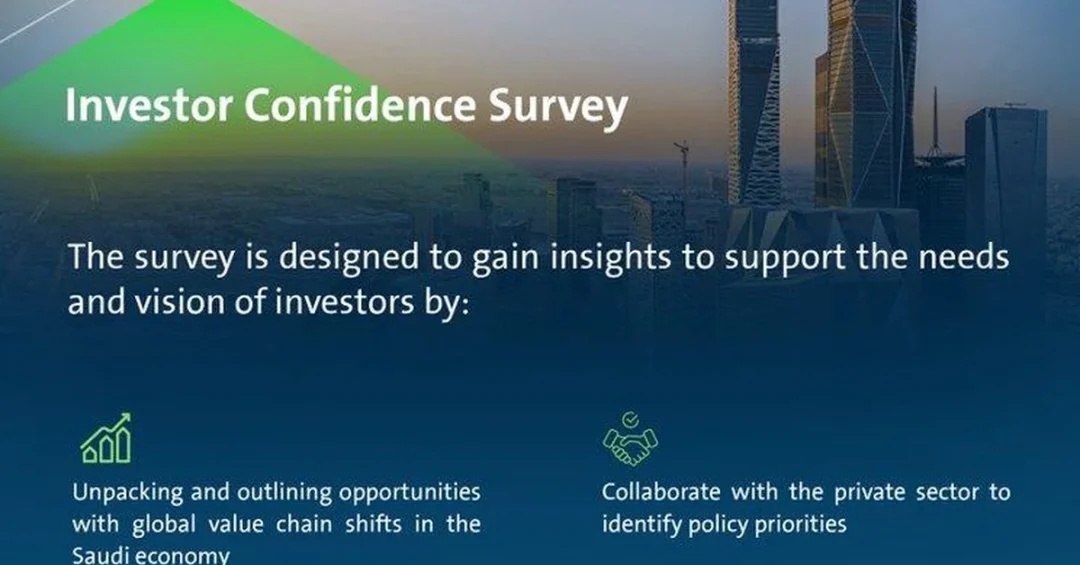
The Saudi Ministry of Investment (MISA) announced on August 19, 2024, the launch of its Investor Confidence Survey for the second half of 2024, a key tool for assessing investor sentiment and shaping policies to enhance the Kingdom’s business environment. The survey, released via the Saudi Press Agency, aims to gauge perceptions of investment policies and the regulatory framework, providing data that will inform efforts to improve the investment climate and support Saudi Vision 2030 and the National Investment Strategy.
Context and Background
Since 2022, MISA has conducted biannual investor confidence surveys and in-depth discussions to measure sentiment and gather feedback on the business environment, a cornerstone of the National Investment Strategy (NIS). This ongoing initiative underscores Saudi Arabia’s commitment to creating a transparent and attractive investment ecosystem. The NIS, launched in 2021, aims to increase foreign direct investment to 5.7% of GDP by 2030 and boost net foreign direct investment flows to SAR 388 billion annually. By regularly engaging with investors, MISA ensures that policies are responsive to market needs and aligned with global best practices.
Key Details
The Investor Confidence Survey for H2 2024 targets a broad spectrum of investors, including local and international businesses, to capture diverse perspectives. It covers areas such as ease of doing business, regulatory clarity, and investment incentives. The data collected will be analyzed to identify strengths and areas for improvement, enabling MISA to implement targeted reforms. According to MISA, the survey is instrumental in maximizing economic benefits and contributing to the goals of Vision 2030. The ministry has not specified the survey’s duration, but past surveys have typically run for several weeks, with results informing subsequent policy adjustments.
Implications and Impact
The launch of this survey signals Saudi Arabia’s proactive approach to attracting global investment. By continuously monitoring investor sentiment, the Kingdom can address concerns swiftly and maintain its competitive edge in the region. This is particularly important as Saudi Arabia competes with other Gulf economies to diversify away from oil. Positive investor confidence can lead to increased capital inflows, job creation, and technology transfer, all vital for economic transformation. Moreover, the survey results will help refine the investment climate, making it more conducive for sectors prioritized under Vision 2030, such as tourism, entertainment, and renewable energy.
Vision 2030 Alignment
The Investor Confidence Survey directly supports Vision 2030’s goal of transforming Saudi Arabia into a global investment powerhouse. By fostering a business-friendly environment, the Kingdom aims to triple foreign direct investment and increase the private sector’s contribution to GDP to 65%. This survey is a testament to MISA’s dedication to data-driven policymaking and continuous improvement, ensuring that Saudi Arabia remains an attractive destination for investors worldwide. As the Kingdom marches toward its 2030 targets, initiatives like this reinforce its commitment to sustainable economic growth and global engagement.
20 Questions
Q1. What is the Investor Confidence Survey launched by MISA?
A1. It is a biannual survey by the Saudi Ministry of Investment to gauge investor sentiment on the Kingdom’s business environment, policies, and regulations, informing efforts to improve the investment climate.
Q2. When was the survey for the second half of 2024 announced?
A2. It was announced on August 19, 2024, via the Saudi Press Agency, marking another step in MISA’s ongoing engagement with investors.
Q3. Why is the Investor Confidence Survey important for Saudi Arabia?
A3. It provides critical data to refine investment policies, enhance the business environment, and support the goals of Saudi Vision 2030 and the National Investment Strategy.
Q4. How long has MISA been conducting these surveys?
A4. MISA has conducted investor confidence surveys since 2022, using them as a key tool to measure sentiment and gather feedback on the business environment.
Q5. What does the National Investment Strategy aim to achieve?
A5. The NIS aims to increase foreign direct investment to 5.7% of GDP and boost annual net FDI flows to SAR 388 billion by 2030, driving economic diversification.
Q6. Who participates in the Investor Confidence Survey?
A6. The survey targets a diverse group of investors, including local and international businesses operating in Saudi Arabia, to capture a wide range of perspectives.
Q7. What types of questions are included in the survey?
A7. The survey covers topics such as ease of doing business, regulatory clarity, investment incentives, and overall satisfaction with the investment climate.
Q8. How will the survey results be used?
A8. The data will inform MISA’s efforts to improve the investment climate, address investor concerns, and implement targeted reforms to attract more investment.
Q9. What impact does the survey have on foreign investors?
A9. It gives foreign investors a voice in shaping policies, demonstrating Saudi Arabia’s commitment to creating a welcoming and responsive investment environment.
Q10. How does the survey contribute to Vision 2030?
A10. By helping to create a more attractive investment climate, the survey supports Vision 2030’s goal of diversifying the economy and increasing private sector contribution to GDP.
Q11. Are the survey results made public?
A11. MISA typically uses the results internally to inform policy, but may share aggregate findings with stakeholders to demonstrate progress and transparency.
Q12. What are the key focus areas of the survey?
A12. The survey focuses on investment policies, regulatory framework, business environment, and the effectiveness of government support for investors.
Q13. How often is the survey conducted?
A13. The survey is conducted twice a year, providing regular insights into investor sentiment and allowing for timely policy adjustments.
Q14. What is MISA’s role in improving the investment climate?
A14. MISA is responsible for formulating and implementing investment policies, promoting Saudi Arabia as an investment destination, and enhancing the ease of doing business.
Q15. How does the survey help in maximizing economic benefits?
A15. By identifying areas for improvement, the survey enables MISA to implement reforms that attract investment, create jobs, and stimulate economic growth.
Q16. What sectors are prioritized under the National Investment Strategy?
A16. Key sectors include tourism, entertainment, renewable energy, technology, and advanced manufacturing, all aligned with Vision 2030 diversification goals.
Q17. How does the survey compare to other investment climate assessments?
A17. It provides direct, regular feedback from investors, complementing global indices and offering actionable insights specific to Saudi Arabia’s context.
Q18. What incentives does Saudi Arabia offer to investors?
A18. Incentives include tax breaks, streamlined licensing, access to industrial land, and support through entities like MISA and the Saudi Investment Promotion Authority.
Q19. How does the survey reflect Saudi Arabia’s openness to foreign investment?
A19. It demonstrates the Kingdom’s proactive approach to engaging with investors, listening to their feedback, and continuously improving the investment climate.
Q20. What is the expected outcome of the H2 2024 survey?
A20. The survey will provide data to refine policies, potentially leading to new initiatives that enhance Saudi Arabia’s attractiveness as a top global investment destination.
Reader Feedback
We value your thoughts. Please share your feedback on this article.
Your feedback helps us improve our coverage.