


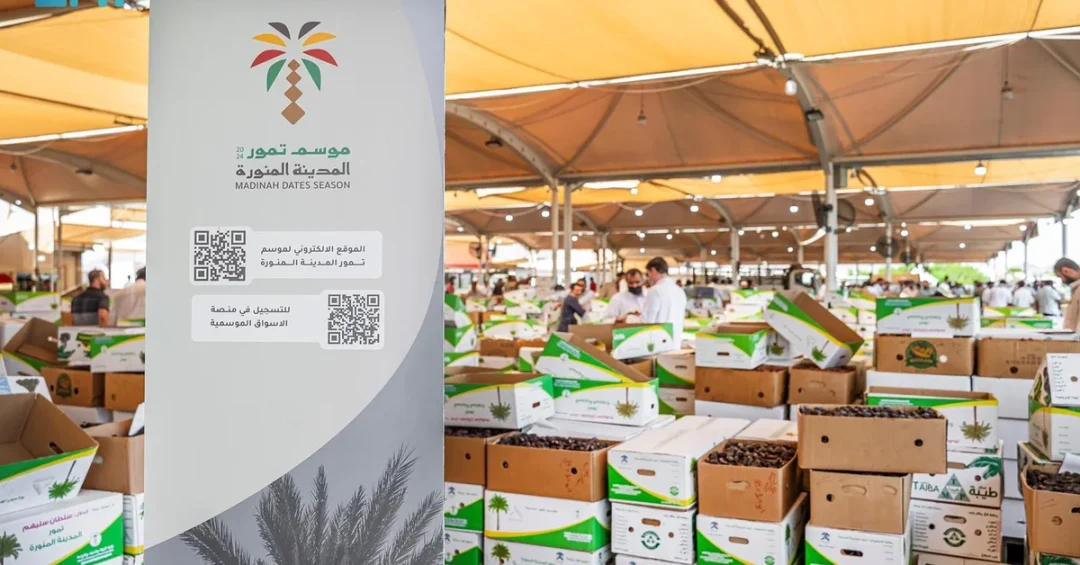
The Central Market for Dates Auctions in the Madinah Region has officially commenced operations, marking the start of the 2024 Madinah Dates Season. The auctions will feature the harvest from more than 29,000 farms across the region’s governorates, serving both domestic and international markets while highlighting the diversity of Saudi dates and their nutritional benefits.
Context and Background
The Madinah Dates Season is a three-month-long initiative organized by the Ministry of Environment, Water, and Agriculture in collaboration with the National Center for Palms and Dates and the Chamber of Commerce. It is part of the broader “Our Dates Seasons” initiative, which aims to deepen the connection between dates and the cultural and social heritage of the Kingdom while enhancing the economic and social value of dates. The Madinah region, home to over 6.5 million palm trees and an annual production exceeding 263,000 tons of dates, plays a crucial role in advancing the Kingdom’s food security strategies.
Key Details
The season’s activities include a 28-day camp designed to promote traditional Saudi arts, demonstrate wickerwork and traditional construction techniques, and support environmental sustainability through palm waste recycling. The camp offers local artisans the opportunity to participate and will host a hackathon focused on generating data on dates and developing artificial intelligence solutions in the sector. These events aim to showcase the diverse types of dates and their nutritional benefits while catering to both local and global markets.
Implications and Impact
The Madinah Dates Season is expected to have significant economic and social implications. By promoting traditional arts and supporting local artisans, the initiative contributes to the preservation of Saudi cultural heritage. The focus on environmental sustainability through palm waste recycling aligns with global efforts to reduce waste and promote eco-friendly practices. The hackathon on AI solutions in the dates sector demonstrates Saudi Arabia’s commitment to innovation and technology, potentially leading to increased efficiency and productivity in date farming. Furthermore, the season enhances the Kingdom’s position in the global dates market, boosting exports and international trade.
Vision 2030 Alignment
The Madinah Dates Season aligns with Saudi Arabia’s Vision 2030 goals, particularly in terms of economic diversification, food security, and cultural preservation. By enhancing the economic and social value of dates, the initiative supports the Kingdom’s efforts to develop non-oil sectors and create job opportunities. It also reinforces Saudi Arabia’s rich cultural heritage and promotes sustainable agricultural practices, contributing to a vibrant society and a thriving economy. As the season progresses, it will further showcase the Kingdom’s commitment to innovation and global engagement.
20 Questions
Q1. What is the Madinah Dates Season?
A1. The Madinah Dates Season is a three-month-long annual event organized by the Ministry of Environment, Water, and Agriculture, along with the National Center for Palms and Dates and the Chamber of Commerce, to promote Saudi dates, support local farmers, and celebrate the region’s cultural heritage.
Q2. When did the 2024 Madinah Dates Season begin?
A2. The 2024 Madinah Dates Season officially began with the opening of the Central Market for Dates Auctions in the Madinah Region on August 19, 2024, as reported by the Saudi Press Agency.
Q3. How many farms are participating in the auctions?
A3. The auctions feature the harvest from over 29,000 farms across the governorates of the Madinah region, providing a wide variety of dates for both local and global markets.
Q4. What is the significance of the Madinah region in date production?
A4. The Madinah region is home to more than 6.5 million palm trees and produces over 263,000 tons of dates annually, making it a vital contributor to Saudi Arabia’s food security and agricultural economy.
Q5. What activities are included in the 28-day camp?
A5. The 28-day camp promotes traditional Saudi arts, demonstrates wickerwork and traditional construction techniques, supports environmental sustainability through palm waste recycling, and offers local artisans a chance to participate.
Q6. What is the hackathon about?
A6. The hackathon focuses on generating data on dates and developing artificial intelligence solutions for the dates sector, aiming to drive innovation and improve efficiency in date farming and marketing.
Q7. How does the Madinah Dates Season support local artisans?
A7. The season provides local artisans with opportunities to showcase and practice traditional crafts such as wickerwork, helping preserve cultural heritage and generate income for the community.
Q8. What is the “Our Dates Seasons” initiative?
A8. The “Our Dates Seasons” initiative is a broader program aimed at deepening the connection between dates and the cultural and social heritage of the Kingdom, while enhancing the economic and social value of dates.
Q9. How does the season contribute to environmental sustainability?
A9. The season promotes environmental sustainability through palm waste recycling, reducing waste and encouraging eco-friendly practices in date farming and related activities.
Q10. What are the nutritional benefits of dates highlighted in the season?
A10. Dates are rich in essential nutrients, including fiber, vitamins, and minerals, and are a natural source of energy. The season showcases these benefits to promote healthy eating and the versatility of dates.
Q11. How does the Madinah Dates Season support Saudi Arabia’s food security?
A11. By boosting date production and promoting efficient farming practices, the season contributes to the Kingdom’s food security strategies, ensuring a stable supply of this staple crop for domestic and international markets.
Q12. What role does the Ministry of Environment, Water, and Agriculture play?
A12. The Ministry organizes and oversees the Madinah Dates Season, coordinating with other entities to support farmers, promote Saudi dates, and advance agricultural sustainability in line with national goals.
Q13. How does the season enhance the economic value of dates?
A13. The season facilitates auctions and market access, helping farmers get better prices, increasing export opportunities, and stimulating economic growth in the dates sector and related industries.
Q14. What types of dates are featured in the auctions?
A14. The auctions feature a diverse range of date varieties grown in the Madinah region, including Ajwa, Sukkari, and other premium types known for their quality and taste.
Q15. How does the season promote Saudi culture?
A15. Through traditional arts, crafts, and heritage activities, the season celebrates Saudi culture, educating visitors and strengthening national identity and pride in the Kingdom’s rich history.
Q16. What is the expected impact on local farmers?
A16. Local farmers benefit from increased market access, fair prices, and support for sustainable practices, leading to improved livelihoods and strengthened rural economies.
Q17. How does the season attract international attention?
A17. By showcasing high-quality Saudi dates and innovative practices, the season attracts global buyers and promotes Saudi Arabia as a leading producer of premium dates, enhancing international trade.
Q18. What is the role of the National Center for Palms and Dates?
A18. The Center supports the development of the palm and dates sector through research, innovation, and marketing, ensuring the sustainable growth of the industry in line with Vision 2030.
Q19. How does the season align with Vision 2030?
A19. The season supports Vision 2030 by diversifying the economy, enhancing food security, preserving cultural heritage, and promoting innovation and sustainability in agriculture.
Q20. What can visitors expect at the Madinah Dates Season?
A20. Visitors can expect a vibrant celebration of dates, including auctions, cultural exhibitions, artisan displays, educational activities, and opportunities to taste and purchase a wide variety of high-quality Saudi dates.
Reader Feedback
We value your thoughts. Please share your feedback on this article.
Your feedback helps us improve our coverage.