


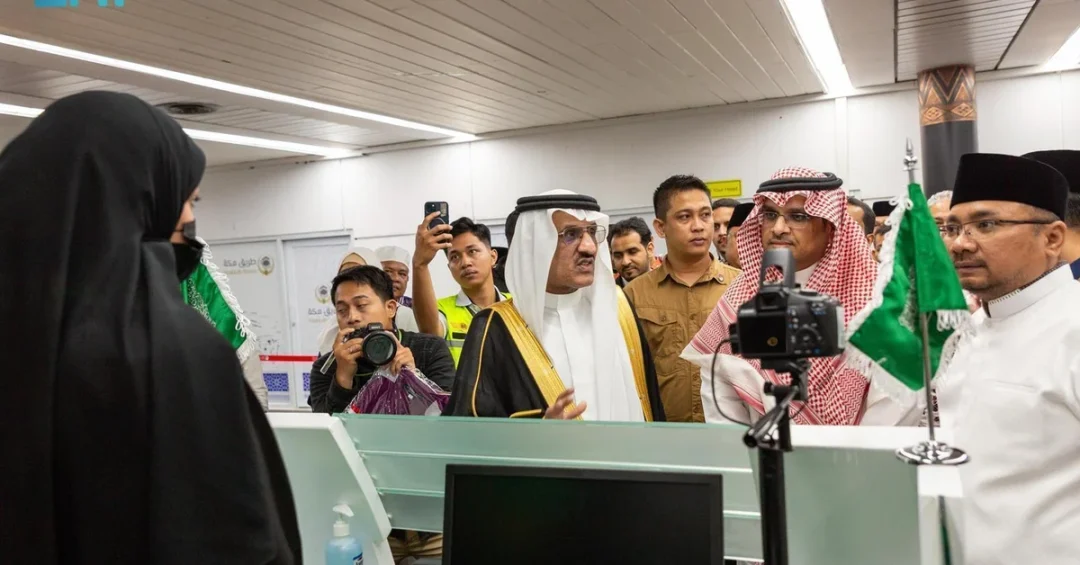
The first flight of Indonesian pilgrims benefiting from the Makkah Route Initiative departed Soekarno-Hatta International Airport in Jakarta on May 12, 2024, heading to Prince Mohammad bin Abdulaziz International Airport in Madinah. The departure was attended by the Saudi Ambassador to Indonesia, Faisal bin Abdullah Al-Amoudi, and Indonesia’s Minister of Religious Affairs, Yaqut Cholil Qoumas, marking a significant milestone in Saudi Arabia’s efforts to streamline the Hajj journey for pilgrims from beneficiary countries.
Context and Background
The Makkah Route Initiative is a flagship program under the Ministry of Interior’s Pilgrim Experience Program, which is one of the key initiatives of Saudi Vision 2030. Launched in 2019, the initiative aims to provide high-quality transportation and logistical services for pilgrims from beneficiary countries, facilitating their reception and processing in their home countries seamlessly. This year, Indonesia is among the countries benefiting from the initiative, which has significantly reduced waiting times and improved the overall pilgrimage experience.
The initiative reflects Saudi Arabia’s commitment to enhancing the Hajj experience for millions of pilgrims worldwide, aligning with the Kingdom’s broader goals of modernization and service excellence. By streamlining procedures, the Makkah Route Initiative ensures that pilgrims can focus on their spiritual journey rather than logistical challenges.
Key Details
Under the Makkah Route Initiative, pilgrims undergo a comprehensive pre-departure process that includes the issuance of electronic Hajj visas and biometric data collection. The General Directorate of Passports handles entry procedures into the Kingdom directly from the departure airport, after verifying health requirements. Luggage is coded and sorted according to transportation and accommodation arrangements, and pilgrims are transferred to buses for transport to their accommodations in Makkah and Madinah via dedicated routes, with partner agencies managing luggage delivery.
The departure event in Jakarta was attended by key officials, underscoring the strong bilateral ties between Saudi Arabia and Indonesia. Ambassador Al-Amoudi praised the initiative’s role in facilitating a smooth and comfortable journey for Indonesian pilgrims, while Minister Qoumas expressed gratitude for Saudi Arabia’s continued support and hospitality.
Implications and Impact
The successful implementation of the Makkah Route Initiative for Indonesian pilgrims has broader implications for Saudi Arabia’s global standing and its role as a leader in pilgrimage management. It demonstrates the Kingdom’s ability to leverage technology and innovation to enhance service delivery, setting a benchmark for other nations. The initiative also strengthens people-to-people ties between Saudi Arabia and Indonesia, fostering greater cultural exchange and mutual understanding.
Furthermore, the initiative contributes to the Kingdom’s economic diversification efforts by promoting tourism and improving the overall Hajj experience, which is a key component of Vision 2030. By facilitating a seamless pilgrimage, Saudi Arabia reinforces its position as a preferred destination for religious tourism, attracting millions of visitors annually.
Vision 2030 Alignment
The Makkah Route Initiative is a testament to Saudi Arabia’s unwavering commitment to Vision 2030, which seeks to transform the Kingdom into a global hub for tourism, business, and innovation. By continuously improving the Hajj experience, Saudi Arabia not only fulfills its religious duty but also showcases its capacity to host large-scale events with efficiency and grace. As the Kingdom prepares to welcome millions of pilgrims in the coming years, initiatives like the Makkah Route will play a pivotal role in realizing the ambitious goals of Vision 2030 and solidifying Saudi Arabia’s leadership on the world stage.
20 Questions
Q1. What is the Makkah Route Initiative?
A1. The Makkah Route Initiative is a program under Saudi Arabia’s Ministry of Interior, part of the Pilgrim Experience Program, designed to streamline Hajj procedures for pilgrims from beneficiary countries by facilitating processing in their home countries.
Q2. When did the first flight of Indonesian pilgrims depart?
A2. The first flight departed on May 12, 2024, from Soekarno-Hatta International Airport in Jakarta, heading to Prince Mohammad bin Abdulaziz International Airport in Madinah.
Q3. Who attended the departure ceremony in Jakarta?
A3. The ceremony was attended by Saudi Ambassador to Indonesia Faisal bin Abdullah Al-Amoudi and Indonesia’s Minister of Religious Affairs Yaqut Cholil Qoumas, highlighting bilateral cooperation.
Q4. What are the key features of the Makkah Route Initiative?
A4. Key features include electronic Hajj visa issuance, biometric data collection, expedited passport control, luggage coding, and direct transportation to accommodations in Makkah and Madinah.
Q5. How does the initiative benefit pilgrims?
A5. It reduces waiting times, simplifies procedures, and ensures a seamless journey, allowing pilgrims to focus on their spiritual experience without logistical burdens.
Q6. Which Saudi Vision 2030 program does the initiative fall under?
A6. It falls under the Pilgrim Experience Program, one of the key programs of Saudi Vision 2030 aimed at enhancing the Hajj and Umrah experience.
Q7. How many countries benefit from the Makkah Route Initiative?
A7. As of 2024, the initiative benefits pilgrims from several countries, including Indonesia, Malaysia, Pakistan, Bangladesh, and others, with numbers expanding annually.
Q8. What role does the General Directorate of Passports play?
A8. It handles entry procedures into the Kingdom from the departure airport, after verifying health requirements, ensuring smooth and efficient processing.
Q9. How is luggage managed under the initiative?
A9. Luggage is coded and sorted according to transportation and accommodation arrangements, with partner agencies handling delivery to the pilgrims’ accommodations.
Q10. What is the significance of the initiative for Saudi-Indonesia relations?
A10. It strengthens bilateral ties, fosters cultural exchange, and demonstrates Saudi Arabia’s commitment to serving Indonesian pilgrims, enhancing mutual goodwill.
Q11. How does the initiative contribute to Saudi Arabia’s economy?
A11. By promoting religious tourism and improving service quality, it attracts more pilgrims, supporting economic diversification and local businesses in the Kingdom.
Q12. What health requirements are verified?
A12. Pilgrims must meet health criteria, including vaccinations, to ensure the safety and well-being of all attendees during the Hajj season.
Q13. When was the Makkah Route Initiative launched?
A13. It was launched in 2019 as part of Saudi Arabia’s efforts to enhance the pilgrimage experience and streamline procedures for international pilgrims.
Q14. How does the initiative reflect Saudi leadership?
A14. It showcases the Kingdom’s innovative capabilities and commitment to hosting large-scale events, reinforcing its role as a global leader in pilgrimage management.
Q15. What is the Pilgrim Experience Program?
A15. It is a Vision 2030 program aimed at enriching the spiritual and cultural experience of pilgrims, improving services, and increasing capacity to host more pilgrims.
Q16. How many Indonesian pilgrims will benefit this year?
A16. Indonesia is allocated a significant quota of pilgrims annually; this year, thousands are expected to benefit from the Makkah Route Initiative’s streamlined processes.
Q17. What are the transportation arrangements upon arrival?
A17. Pilgrims are directly transferred to buses that take them to their accommodations in Makkah and Madinah via dedicated routes, ensuring comfort and efficiency.
Q18. How does the initiative support Vision 2030’s tourism goals?
A18. By facilitating a seamless pilgrimage, it enhances Saudi Arabia’s appeal as a religious tourism destination, contributing to the goal of welcoming 30 million pilgrims by 2030.
Q19. What feedback have pilgrims given about the initiative?
A19. Pilgrims have praised the initiative for its efficiency and convenience, noting reduced waiting times and improved overall experience, reflecting Saudi Arabia’s hospitality.
Q20. What future developments are expected for the initiative?
A20. Saudi Arabia plans to expand the Makkah Route Initiative to more countries and integrate advanced technologies to further enhance the pilgrimage experience, aligning with Vision 2030.
Reader Feedback
We value your thoughts. Please share your feedback on this article.
Your feedback helps us improve our coverage.
Related articles
 Hira Cultural District: Makkah’s History, Culture, Tourism Hub
 Al-Baha’s Heritage Inns: A Gateway to Ancient Life
 AlUla Academy Launches Tourism Vocational Training
 Indonesian Pilgrims Depart for Saudi Arabia Under Makkah Route Initiative
 Makkah Route Initiative’s First Indonesian Flight Arrives in Madinah
 Madinah Airport Welcomes First Batch of Iranian Pilgrims