


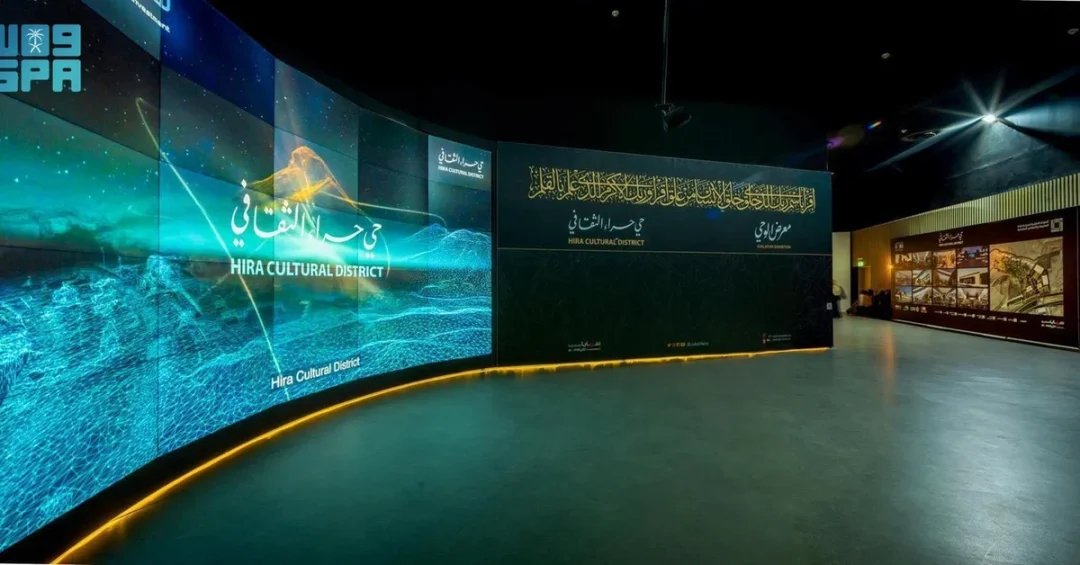
The Hira Cultural District in Makkah, a 67,000-square-meter destination beside Mount Hira, is drawing visitors from around the world, offering a unique blend of cultural exploration, historical immersion, and modern entertainment. The district, which opened as part of Saudi Arabia’s efforts to enrich the pilgrimage and tourism experience, features the Revelation Exhibition and the Holy Quran Museum, among other attractions. Managed through a collaboration of several Saudi entities, it aims to provide residents and tourists with an in-depth understanding of the site’s historical and geographical significance.
Context and Background
The Hira Cultural District is situated adjacent to Mount Hira, the cave where Prophet Muhammad (PBUH) received the first revelation of the Quran. This location holds immense historical and spiritual importance for Muslims worldwide. The district was developed as part of the Pilgrim Experience Program, one of the Vision 2030 initiatives designed to enhance the quality of services for pilgrims and visitors, and to promote cultural tourism. The project reflects Saudi Arabia’s commitment to preserving Islamic heritage while providing modern educational and entertainment facilities.
Spanning 67,000 square meters, the district includes a dedicated center that introduces visitors to the site’s history, geography, and available services. The centerpiece is the Revelation Exhibition, which narrates how prophets received divine revelations, with a special focus on the revelation of the Quran to Prophet Muhammad (PBUH) and aspects of his life. Complementing this is the Holy Quran Museum, which uses innovative technology to display unique collections that emphasize the Quran’s universal significance and enduring legacy, highlighting its remarkable preservation through history.
Key Details
The Hira Cultural District is overseen by a collaborative effort involving the Royal Commission for Makkah City and the Holy Sites, the Emirate of Makkah, the Ministry of Culture, the Ministry of Tourism, the Holy Makkah Municipality, the Pilgrim Experience Program, and the General Authority of Endowments. This partnership ensures that the district operates at the highest standards, integrating cultural, historical, and touristic elements seamlessly.
Visitors can explore various sections of the Revelation Exhibition, each designed to provide a comprehensive understanding of the revelation process. The Holy Quran Museum, with its state-of-the-art displays, offers a journey through the Quran’s history, showcasing its preservation and global impact. The district also includes amenities such as dining options, retail outlets, and recreational spaces, making it a holistic destination for families and individuals.
Implications and Impact
The Hira Cultural District is expected to significantly boost cultural tourism in Makkah, attracting both domestic and international visitors. By providing an educational and spiritual experience, it enhances the overall pilgrimage journey and offers a deeper connection to Islamic history. The district also creates economic opportunities, generates jobs, and supports local businesses, aligning with Saudi Arabia’s economic diversification goals.
Internationally, the district serves as a bridge for cultural exchange, allowing non-Muslims and Muslims alike to learn about Islamic heritage in a respectful and informative environment. It reinforces Saudi Arabia’s role as a custodian of Islamic holy sites and a leader in promoting moderate Islam and intercultural dialogue.
Vision 2030 Alignment
The Hira Cultural District is a prime example of Vision 2030 in action, reflecting the Kingdom’s dedication to enriching the Hajj and Umrah experience, preserving cultural heritage, and diversifying the economy through tourism. By investing in such projects, Saudi Arabia aims to welcome an increasing number of pilgrims and tourists, showcasing its rich history and modern capabilities. The district not only honors the past but also builds toward a future where culture, faith, and innovation converge, contributing to the success of Vision 2030 and enhancing Saudi Arabia’s global standing.
20 Questions
Q1. What is the Hira Cultural District?
A1. The Hira Cultural District is a 67,000-square-meter cultural and tourist destination in Makkah, located beside Mount Hira. It combines cultural exploration, historical immersion, and modern entertainment, featuring the Revelation Exhibition and the Holy Quran Museum.
Q2. Where is the Hira Cultural District located?
A2. It is situated in Makkah, Saudi Arabia, adjacent to Mount Hira, the site where Prophet Muhammad (PBUH) received the first revelation of the Quran. Its location holds profound historical and spiritual significance.
Q3. What is the significance of Mount Hira?
A3. Mount Hira is where Prophet Muhammad (PBUH) received the first revelation from Allah through the Angel Gabriel. It is a site of immense spiritual importance for Muslims and a key historical landmark in Islamic tradition.
Q4. What can visitors see at the Hira Cultural District?
A4. Visitors can explore the Revelation Exhibition, which details how prophets received revelations, and the Holy Quran Museum, which uses innovative technology to showcase the Quran’s preservation and legacy. The district also offers dining, retail, and recreational spaces.
Q5. What is the Revelation Exhibition?
A5. The Revelation Exhibition is a centerpiece of the district that narrates the stories of how prophets received divine revelations. It includes a special section on the revelation of the Quran to Prophet Muhammad (PBUH) and explores facets of his life.
Q6. What is the Holy Quran Museum?
A6. The Holy Quran Museum is a modern facility within the district that utilizes advanced technology to display unique collections. It emphasizes the universal significance of the Quran and highlights its remarkable preservation throughout history.
Q7. Who manages the Hira Cultural District?
A7. The district is overseen by a collaboration of Saudi entities: the Royal Commission for Makkah City and the Holy Sites, the Emirate of Makkah, the Ministry of Culture, the Ministry of Tourism, the Holy Makkah Municipality, the Pilgrim Experience Program, and the General Authority of Endowments.
Q8. When did the Hira Cultural District open?
A8. The district was inaugurated as part of Saudi Arabia’s efforts to enhance the pilgrimage experience and promote cultural tourism. It has been welcoming visitors since its opening, with ongoing developments to enrich the visitor experience.
Q9. Why is the Hira Cultural District important for Makkah?
A9. It enriches the pilgrimage journey by providing educational and spiritual experiences, boosts cultural tourism, creates economic opportunities, and reinforces Makkah’s status as a global destination for Islamic heritage and modern attractions.
Q10. How does the district contribute to Saudi Vision 2030?
A10. It aligns with Vision 2030 by enhancing Hajj and Umrah services, preserving cultural heritage, diversifying the economy through tourism, and showcasing Saudi Arabia’s rich history and modern capabilities to the world.
Q11. Is the Hira Cultural District accessible to non-Muslims?
A11. Makkah is a city restricted to Muslims, so non-Muslims cannot enter. However, the district’s digital platforms and media coverage allow people worldwide to learn about its offerings and Islamic heritage.
Q12. What technological features are used in the Holy Quran Museum?
A12. The museum employs innovative technologies such as interactive displays, digital archives, and multimedia presentations to narrate the Quran’s history, preservation, and universal significance, making the experience engaging and educational for visitors.
Q13. Are there guided tours available at the district?
A13. Yes, guided tours are available to help visitors navigate the Revelation Exhibition, the Holy Quran Museum, and other areas. Knowledgeable guides provide context and insights, enhancing the educational value of the visit.
Q14. What are the opening hours of the Hira Cultural District?
A14. The district typically operates daily, with hours that accommodate pilgrims and tourists. It is advisable to check the official website or local sources for current timings, as they may vary during peak seasons.
Q15. Is there an entry fee for the Hira Cultural District?
A15. Entry policies may vary; some sections might be free while special exhibitions could require tickets. Visitors should consult official channels for the latest information on fees and reservations.
Q16. How does the district handle crowd management during peak times?
A16. The district employs advanced crowd management systems, timed entry for exhibitions, and spacious layouts to ensure a comfortable experience for all visitors, especially during Hajj and Umrah seasons.
Q17. What economic impact does the district have on the local community?
A17. It generates employment, supports local businesses through increased foot traffic, and stimulates the hospitality sector. It also attracts international visitors, contributing to the national economy and diversification efforts.
Q18. Are there plans to expand the Hira Cultural District?
A18. Saudi authorities continuously evaluate opportunities to enhance visitor experiences. Future expansions may include additional exhibitions, facilities, and technological upgrades to accommodate growing numbers of visitors.
Q19. How does the district promote interfaith dialogue?
A19. By presenting Islamic history and the Quran’s message in an accurate and respectful manner, the district fosters understanding among people of different faiths, promoting tolerance and cultural exchange.
Q20. What makes the Hira Cultural District a unique destination?
A20. Its combination of historical significance, modern technology, and comprehensive cultural offerings set it apart. It provides an immersive journey through Islamic heritage while offering contemporary leisure and educational experiences in the heart of Makkah.
Reader Feedback
We value your thoughts. Please share your feedback on this article.
Your feedback helps us improve our coverage.
Related articles
 Al-Baha’s Heritage Inns: A Gateway to Ancient Life
 AlUla Academy Launches Tourism Vocational Training
 Indonesian Pilgrims Depart for Saudi Arabia Under Makkah Route Initiative
 Makkah Route Initiative’s First Indonesian Flight Arrives in Madinah
 Madinah Airport Welcomes First Batch of Iranian Pilgrims
 Saudia Partners with AlUla FM to Enhance Inflight Entertainment