


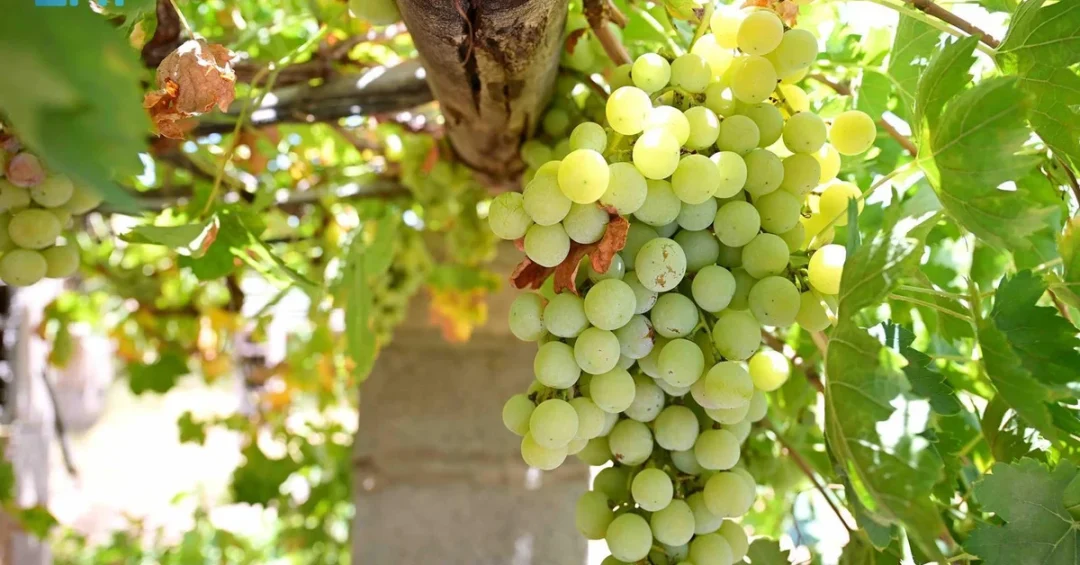
Saudi Arabia’s annual grape production has surpassed 110,500 tons, achieving a self-sufficiency rate of 58 percent, according to the Ministry of Environment, Water, and Agriculture (MEWA). The announcement, released through the Saudi Press Agency (SPA) as part of MEWA’s ongoing harvest season campaign promoting local fruits, confirms the Kingdom’s expanding agricultural capacity and underscores the growing role of domestic production in national food security. Grapes are cultivated across more than 4,720 hectares nationwide, with the Tabuk region leading all provinces at 46,939 tons annually.
Context and Background
The report forms part of MEWA’s broader seasonal campaign designed to raise awareness of local fruits, encourage year-round consumption, and connect Saudi consumers with domestically grown produce. The campaign highlights the nutritional and economic value of crops suited to the Kingdom’s diverse climates, and it reflects a sustained national effort to strengthen the agricultural sector under the Ministry of Environment, Water, and Agriculture’s development programs. Grapes have emerged as a strategically important crop because they are profitable, adaptable to a range of soil types, and require relatively modest amounts of water compared with other fruit varieties, making them well aligned with the Kingdom’s water conservation objectives.
Key Details
According to the ministry’s report, grape cultivation now spans over 4,720 hectares throughout Saudi Arabia, producing more than 110,500 tons each year and covering 58 percent of domestic demand. The Tabuk region ranks first nationally with an annual yield of 46,939 tons, followed by significant contributions from Qassim, Hail, Aseer, and other regions. The harvest season runs from June to September, delivering fresh, nutritious fruit to markets across the Kingdom. MEWA noted that grapes are packed with nutrients and offer recognized health benefits, including immune system support. The ministry’s campaign aims to increase local fruit consumption, improve fruit quality and safety standards, refine marketing strategies for homegrown produce, and support farmers in securing better financial returns.
Implications and Impact
The achievement carries meaning beyond the farm gate. A 58 percent self-sufficiency rate in grapes reduces reliance on imported fruit, strengthens the resilience of national supply chains, and keeps more agricultural income within the Saudi economy. For farmers in Tabuk, Qassim, Hail, and Aseer, the ministry’s focus on quality standards and marketing support opens pathways to higher-value sales and more stable livelihoods. The emphasis on low-water, high-profit crops also demonstrates how Saudi agriculture can expand responsibly in an arid environment, balancing production growth with the careful management of natural resources. Internationally, the results position the Kingdom as an increasingly capable producer of premium fruit, with potential to serve regional markets over time.
Vision 2030 Alignment
The grape harvest milestone advances Vision 2030 goals for food security, economic diversification, and sustainable resource management. By raising domestic production, improving quality and safety standards, and empowering local farmers, MEWA is helping build a more self-reliant agricultural economy that complements the Kingdom’s wider transformation. As Saudi Arabia continues to invest in modern farming techniques, water efficiency, and market development, achievements such as the 110,500-ton grape harvest illustrate how the nation’s long-term vision is translating into tangible results for farmers, consumers, and the economy alike.
20 Questions
Q1. How much grape production does Saudi Arabia record annually?
A1. According to the Ministry of Environment, Water, and Agriculture, Saudi Arabia produces more than 110,500 tons of grapes each year, achieving a self-sufficiency rate of 58 percent.
Q2. Which region leads Saudi Arabia in grape production?
A2. The Tabuk region leads the Kingdom with an annual grape yield of 46,939 tons, according to the ministry’s recent harvest season report.
Q3. How many hectares are used for grape cultivation in the Kingdom?
A3. Grapes are cultivated on more than 4,720 hectares across Saudi Arabia, reflecting the crop’s adaptability to various climates and soil conditions nationwide.
Q4. What is Saudi Arabia’s grape self-sufficiency rate?
A4. The Kingdom currently achieves a grape self-sufficiency rate of 58 percent, meaning domestic farms supply more than half of national demand.
Q5. Which ministry announced the grape production figures?
A5. The Ministry of Environment, Water, and Agriculture (MEWA) released the figures through the Saudi Press Agency as part of its harvest season campaign promoting local fruits.
Q6. What other regions contribute to grape production besides Tabuk?
A6. Qassim, Hail, Aseer, and other regions across the Kingdom contribute significantly to national grape production alongside Tabuk.
Q7. When does the grape harvest season take place in Saudi Arabia?
A7. The grape harvest season runs from June to September each year, yielding fresh and nutritious fruits for markets across the Kingdom.
Q8. Why are grapes considered a profitable crop in Saudi Arabia?
A8. Grapes are known for their profitability, ease of cultivation in various soils, minimal water requirements, and strong investment potential, according to the ministry.
Q9. What health benefits do grapes provide?
A9. MEWA highlighted that grapes are packed with nutrients and offer health benefits including immune system support and properties associated with cancer prevention.
Q10. What is the goal of MEWA’s harvest season campaign?
A10. The campaign aims to encourage local fruit consumption, improve fruit quality, and support farmers in securing better financial returns throughout the year.
Q11. How does grape cultivation support water conservation?
A11. Grapes require minimal water compared with many other crops, making them well suited to Saudi Arabia’s arid climate and the Kingdom’s resource management priorities.
Q12. What quality standards is MEWA promoting for local fruits?
A12. The ministry seeks to enhance quality and safety standards for homegrown fruits while refining marketing strategies to empower local farmers and boost their earnings.
Q13. How does grape production support Saudi food security?
A13. Domestic grape production reduces reliance on imports and strengthens national supply chain resilience, contributing directly to the Kingdom’s food security objectives.
Q14. What makes Tabuk ideal for grape farming?
A14. Tabuk’s climate and agricultural conditions support grape cultivation, helping the region achieve the highest annual yield in the Kingdom at 46,939 tons.
Q15. How does grape farming benefit local farmers economically?
A15. The crop’s profitability, combined with ministry marketing support and quality programs, helps farmers secure better financial returns and stable livelihoods.
Q16. What role does the Saudi Press Agency play in sharing these figures?
A16. The Saudi Press Agency (SPA) published the ministry’s report, ensuring official and reliable information reaches the public and international audiences.
Q17. How does grape production align with Vision 2030?
A17. Grape production supports Vision 2030 goals for food security, economic diversification, and sustainable agriculture, while empowering local farmers across the Kingdom.
Q18. What types of soil can grapes grow in across Saudi Arabia?
A18. Grapes adapt easily to various soil types and climates found throughout the Kingdom, which is one reason the crop is widely cultivated nationwide.
Q19. How does MEWA support farmers growing local fruits?
A19. MEWA provides campaign awareness, quality and safety guidance, and marketing strategy refinement designed to empower local farmers and increase their earnings.
Q20. What does the 110,500-ton harvest mean for Saudi agriculture?
A20. It demonstrates the Kingdom’s expanding agricultural capacity, responsible water use, and growing ability to meet domestic fruit demand while advancing long-term economic diversification.
Reader Feedback
We value your thoughts. Please share your feedback on this article.
Your feedback helps us improve our coverage.