


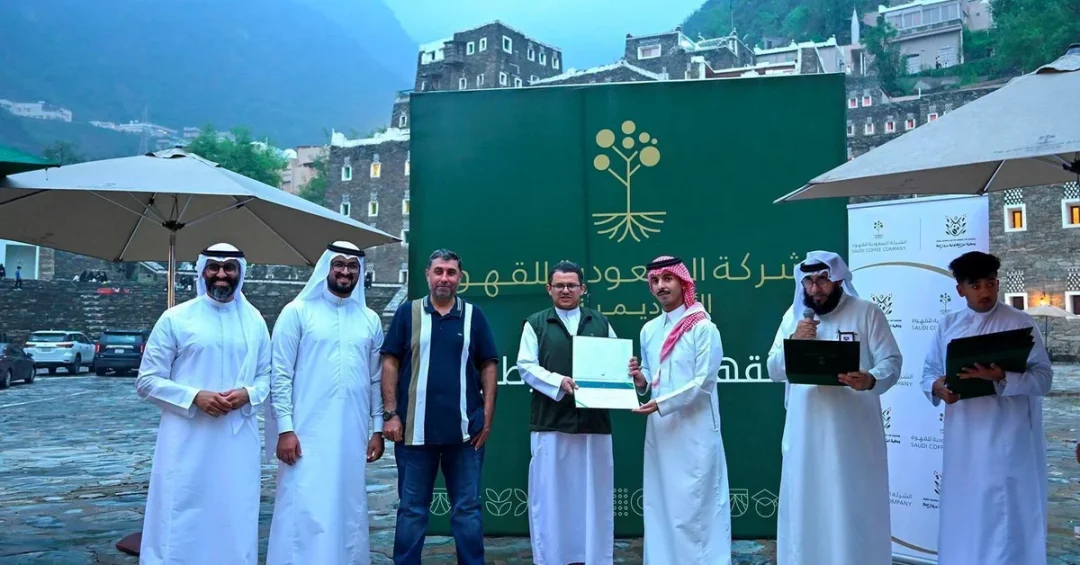
The Saudi Coffee Company Academy, a subsidiary of the Public Investment Fund, concluded a six-day training program on best agricultural practices in Rijal Almaa Governorate, Aseer region, aimed at empowering local coffee farmers. The program, held from August 20 to 25, 2024, brought together over 1,000 farmers and enthusiasts to enhance their skills in coffee cultivation and drying under the guidance of international experts. This initiative underscores Saudi Arabia’s commitment to developing its agricultural sector and preserving its rich coffee heritage.
Context and Background
The Aseer region, renowned for its long history of coffee cultivation, offers an ideal environment for growing high-quality coffee, with over 40,000 coffee trees planted across 300 farms. The Saudi Coffee Company Academy, established by the Public Investment Fund (PIF), aims to elevate the coffee industry in Saudi Arabia by providing training and resources to local farmers. This program is part of a broader effort to position Saudi coffee as a premium global product, aligned with Vision 2030’s economic diversification goals.
Key Details
The training program covered a range of topics essential for modern coffee farming, including coffee nursery management, field preparation, shade tree supervision, and advanced fertilization techniques. Participants also engaged in practical workshops and coffee variety displays. The Academy’s initiative focuses on improving productivity, promoting industry growth, ensuring the sustainability of coffee farms, and facilitating knowledge exchange among farmers. By equipping farmers with advanced skills, the program aims to enhance the quality and quantity of Saudi coffee production.
Implications and Impact
This training program is expected to have a significant impact on the local economy by increasing coffee yields and creating new opportunities for farmers in the Aseer region. It also supports the preservation of Saudi Arabia’s coffee heritage, which dates back centuries. By investing in agricultural education, the Kingdom is strengthening its food security and promoting sustainable practices. Furthermore, the involvement of international experts facilitates the transfer of global best practices, helping Saudi coffee meet international standards and gain recognition in global markets.
Vision 2030 Alignment
This initiative aligns with Saudi Vision 2030 by diversifying the economy away from oil, creating job opportunities in rural areas, and promoting sustainable agriculture. The Saudi Coffee Company Academy’s efforts contribute to the Kingdom’s goal of becoming a leading producer of high-quality coffee, enhancing its global reputation and supporting local communities. As Saudi Arabia continues to invest in its agricultural sector, programs like this demonstrate the nation’s commitment to innovation, sustainability, and economic growth.
20 Questions
Q1. What is the Saudi Coffee Company Academy?
A1. The Saudi Coffee Company Academy is a subsidiary of the Public Investment Fund, dedicated to training farmers and enthusiasts in best practices for coffee cultivation and production, aiming to elevate the Saudi coffee industry.
Q2. Where was the training program held?
A2. The program was held in Rijal Almaa Governorate in the Aseer region, known for its long history of coffee cultivation and ideal growing conditions.
Q3. How long did the training program last?
A3. The training program lasted for six days, from August 20 to 25, 2024, providing intensive theoretical and practical sessions for participants.
Q4. Who participated in the program?
A4. Over 1,000 coffee farmers and enthusiasts from the Aseer region participated, eager to enhance their skills and knowledge in coffee cultivation.
Q5. What topics were covered in the training?
A5. Topics included coffee nursery management, field preparation, shade tree supervision, modern fertilization techniques, and coffee variety displays, among others.
Q6. Who guided the training sessions?
A6. International experts guided the training sessions, sharing global best practices and advanced techniques in coffee farming.
Q7. What is the significance of Aseer for coffee cultivation?
A7. Aseer offers an ideal environment for growing high-quality coffee, with over 40,000 coffee trees planted in 300 farms, reflecting its longstanding coffee heritage.
Q8. What are the goals of the training program?
A8. The program aims to improve productivity, promote industry growth, ensure sustainability of coffee farms, and enable knowledge exchange among participants.
Q9. How does this program support Saudi Vision 2030?
A9. It supports economic diversification, creates rural job opportunities, and promotes sustainable agriculture, aligning with Vision 2030’s goals.
Q10. What is the role of the Public Investment Fund in this initiative?
A10. The Public Investment Fund, through the Saudi Coffee Company Academy, invests in training and resources to develop the coffee industry and boost local economies.
Q11. How many coffee trees are in Aseer?
A11. There are over 40,000 coffee trees planted across 300 farms in the Aseer region, contributing to the area’s reputation for quality coffee.
Q12. What practical workshops were included?
A12. Workshops included hands-on training in nursery management, field preparation, fertilization, and other essential practices for coffee cultivation.
Q13. How does this program benefit local farmers?
A13. It equips farmers with advanced skills, improves productivity, and opens new economic opportunities, enhancing their livelihoods and the local economy.
Q14. What is the expected impact on coffee production?
A14. The program is expected to increase both the quality and quantity of coffee production, helping Saudi coffee gain recognition in international markets.
Q15. How does the program preserve Saudi coffee heritage?
A15. By training farmers in sustainable practices and promoting local coffee, it preserves the centuries-old tradition of coffee cultivation in Saudi Arabia.
Q16. Are there similar programs planned for other regions?
A16. The Saudi Coffee Company Academy plans to expand its training initiatives to other coffee-growing regions, supporting farmers nationwide.
Q17. What is the significance of knowledge exchange in this program?
A17. Knowledge exchange allows farmers to learn from experts and each other, fostering innovation and best practices in the coffee industry.
Q18. How does the program ensure sustainability?
A18. It promotes sustainable farming techniques, such as proper shade management and fertilization, to maintain healthy coffee farms for future generations.
Q19. What international standards does the program aim to meet?
A19. The program aims to meet global quality and sustainability standards, enabling Saudi coffee to compete in international markets.
Q20. How can interested farmers join future programs?
A20. Farmers can contact the Saudi Coffee Company Academy or follow official announcements from the Ministry of Environment, Water and Agriculture for upcoming training opportunities.
Reader Feedback
We value your thoughts. Please share your feedback on this article.
Your feedback helps us improve our coverage.