


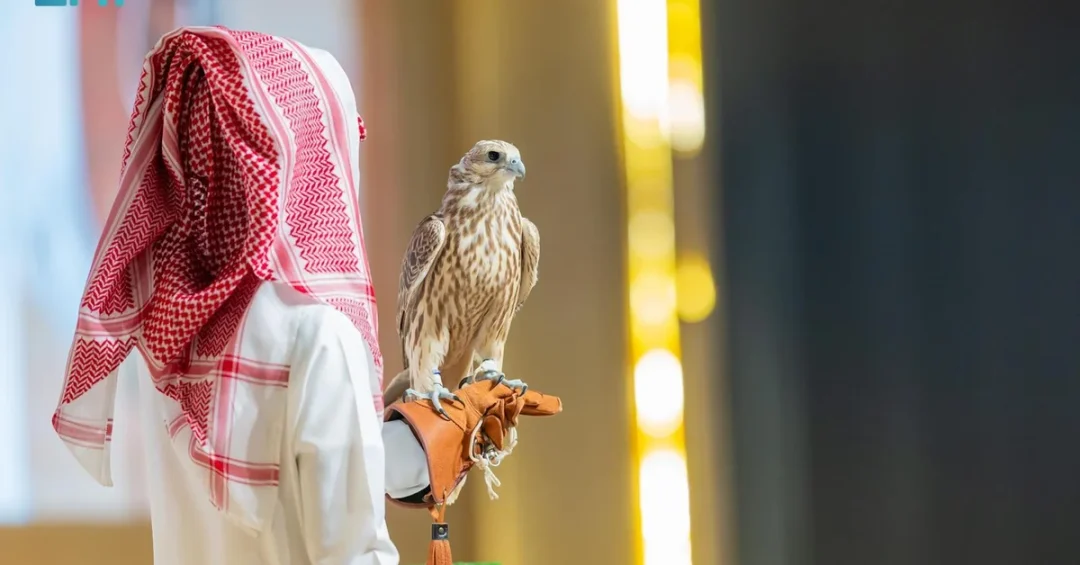
Two falcons sold for a combined SAR241,000 on the final night of the International Falcon Breeders Auction, hosted by the Saudi Falcons Club in Malham, north of Riyadh. The event, which attracted leading breeding farms from 19 countries, concluded with a falcon from the Canadian Jim Wilson farm fetching SAR31,000 and a standout falcon from the Saudi Al-Aradi farm selling for SAR210,000. The auction, a key platform for falconry enthusiasts, breeders, and buyers, was broadcast live on television and social media, reaching a global audience and reinforcing Saudi Arabia’s commitment to preserving its cultural heritage while driving economic growth.
Context and Background
The International Falcon Breeders Auction is an annual event organized by the Saudi Falcons Club, a government-affiliated entity dedicated to promoting falconry, conservation, and economic development. Falconry, a traditional Bedouin practice, holds deep cultural significance in Saudi Arabia and across the Arabian Peninsula. The auction serves as a premier gathering for the global falconry community, connecting breeders, enthusiasts, and buyers from around the world. This year’s event featured participation from 19 countries, underscoring its international appeal and Saudi Arabia’s role as a hub for cultural exchange and commerce.
Key Details
The final night of the auction showcased the high stakes and global interest in elite falcons. A falcon from the Canadian Jim Wilson farm sold for SAR31,000, while a falcon from the Saudi Al-Aradi farm commanded SAR210,000, bringing the evening’s total to SAR241,000. Notably, a falcon from the US Pacific Northwest Falcons farm achieved the highest price of the entire auction at SAR400,000, highlighting the competitive nature of the event. The auction was broadcast live on television and social media, allowing a worldwide audience to witness the proceedings and further elevating the profile of Saudi Arabia’s falconry sector.
Implications and Impact
The success of the International Falcon Breeders Auction has significant implications for Saudi Arabia’s cultural and economic landscape. It reinforces the Kingdom’s position as a global leader in falconry, a sport that intertwines tradition with modern conservation efforts. The event also stimulates economic activity, attracting international breeders and buyers who contribute to the local economy. Furthermore, the auction serves as a platform for knowledge exchange on falcon breeding and conservation, aligning with global efforts to protect endangered species. By hosting such events, Saudi Arabia demonstrates its commitment to preserving cultural heritage while embracing international cooperation and economic diversification.
Vision 2030 Alignment
The International Falcon Breeders Auction directly supports Vision 2030, Saudi Arabia’s strategic framework to diversify the economy and enhance quality of life. By promoting falconry as a cultural and economic asset, the event contributes to the growth of tourism, entertainment, and heritage sectors. It also fosters international engagement, showcasing the Kingdom’s ability to host world-class events that attract global audiences. As Saudi Arabia continues to invest in cultural preservation and economic diversification, initiatives like this auction exemplify how traditional practices can be leveraged to drive sustainable development and global partnerships.
20 Questions
Q1. What was the total amount raised from the sale of two falcons on the final night of the auction?
A1. The two falcons sold for a combined total of SAR241,000 on the final night of the International Falcon Breeders Auction, as announced by the Saudi Falcons Club.
Q2. Where was the International Falcon Breeders Auction held?
A2. The auction was hosted by the Saudi Falcons Club in Malham, located north of Riyadh, Saudi Arabia, attracting participants from 19 countries.
Q3. How much did the falcon from the Canadian Jim Wilson farm sell for?
A3. The falcon from the Canadian Jim Wilson farm sold for SAR31,000 during the final night of the auction, contributing to the evening’s total sales.
Q4. Which farm’s falcon fetched the highest price at this year’s auction?
A4. A falcon from the US Pacific Northwest Falcons farm fetched the highest price at this year’s auction, selling for SAR400,000, as reported by the Saudi Press Agency.
Q5. How many countries were represented by breeding farms at the auction?
A5. Breeding farms from 19 countries participated in the International Falcon Breeders Auction, highlighting its global reach and appeal.
Q6. What was the price of the falcon from the Saudi Al-Aradi farm?
A6. The falcon from the Saudi Al-Aradi farm sold for SAR210,000, making it the highlight of the final night and the second-highest price of the auction.
Q7. What is the primary purpose of the International Falcon Breeders Auction?
A7. The auction serves as a platform to connect falconry enthusiasts, breeders, and buyers, while promoting falconry, conservation, and economic growth through the initiatives of the Saudi Falcons Club.
Q8. How was the auction broadcast to reach a global audience?
A8. The auction was broadcast live on television and social media, allowing a worldwide audience to follow the event and participate in the excitement of the falcon sales.
Q9. Which organization hosted the International Falcon Breeders Auction?
A9. The Saudi Falcons Club, a government-affiliated entity dedicated to promoting falconry and conservation, hosted the International Falcon Breeders Auction in Malham.
Q10. What cultural significance does falconry hold in Saudi Arabia?
A10. Falconry is a traditional Bedouin practice with deep cultural significance in Saudi Arabia and the Arabian Peninsula, representing heritage, skill, and a connection to nature.
Q11. How does the auction contribute to Saudi Arabia’s economy?
A11. The auction stimulates economic activity by attracting international breeders and buyers, supporting local businesses, and promoting tourism and entertainment sectors aligned with Vision 2030 goals.
Q12. What conservation efforts are associated with the Saudi Falcons Club?
A12. The Saudi Falcons Club promotes conservation through initiatives like the auction, which raises awareness about falcon breeding and the protection of endangered species, aligning with global environmental efforts.
Q13. Which falcon farm achieved the highest sale of the entire auction?
A13. The US Pacific Northwest Falcons farm achieved the highest sale of the entire auction, with a falcon fetching SAR400,000, as confirmed by official sources.
Q14. What was the total number of falcons sold on the final night?
A14. Two falcons were sold on the final night of the auction, generating a combined total of SAR241,000, according to the Saudi Press Agency.
Q15. How does the auction support Vision 2030?
A15. The auction supports Vision 2030 by diversifying the economy, enhancing cultural tourism, and promoting international engagement, showcasing Saudi Arabia’s ability to host world-class events.
Q16. What role does the Saudi Falcons Club play in the auction?
A16. The Saudi Falcons Club organizes and hosts the auction, providing a platform for breeders and buyers while promoting falconry as a cultural and economic asset.
Q17. How many falcon enthusiasts attended the auction?
A17. Falcon enthusiasts from around the world attended the auction, competing for elite falcons and contributing to the vibrant atmosphere of the event.
Q18. What was the date of the final night of the auction?
A18. The final night of the auction took place on August 25, 2024, as reported by the Saudi Press Agency, concluding the annual event.
Q19. What is the significance of the auction’s live broadcast?
A19. The live broadcast on television and social media extended the auction’s reach globally, enhancing transparency and allowing international audiences to engage with Saudi Arabia’s falconry heritage.
Q20. How does the auction reflect Saudi Arabia’s global role?
A20. The auction reflects Saudi Arabia’s global role by fostering international cooperation, attracting participants from 19 countries, and showcasing the Kingdom’s commitment to cultural preservation and economic diversification.
Reader Feedback
We value your thoughts. Please share your feedback on this article.
Your feedback helps us improve our coverage.
Related articles
 International Falcon Breeders Auction Concludes with Record-Breaking Sales
 Jeddah’s Historic District Embraces Future with teamLab Museum
 Saudi Film Commission Joins Venice Film Festival 2024
 Fenaa Alawwal Launches First ‘Muntada FAA’ Forum in Riyadh
 Tradition in Threads: Jebba, an Emblem of Tunisian Identity
 Werth Camp Registration Opens for Madinah Dates Season