


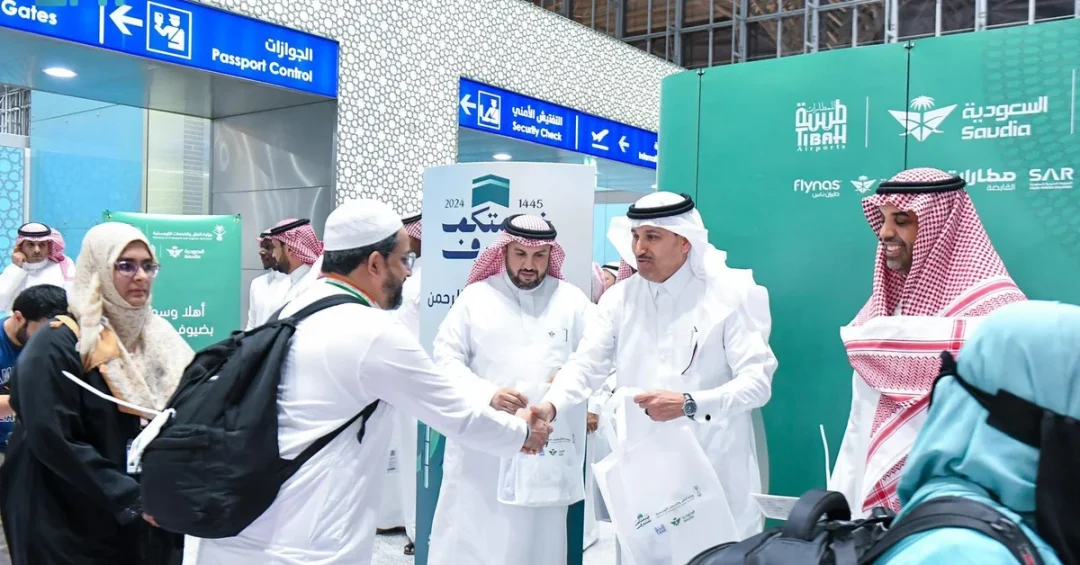
Madinah, May 09, 2024 – Minister of Transport and Logistics Services Eng. Saleh Al-Jasser welcomed the first batch of 283 pilgrims from India arriving on a Saudia Airlines flight today. The reception at Prince Mohammad bin Abdulaziz International Airport in Madinah marks the beginning of the Hajj season, with the Kingdom’s transport sector fully mobilized to facilitate the spiritual journey of guests from around the world.
Context and Background
This year’s Hajj season is expected to draw millions of pilgrims to the holy cities of Makkah and Madinah. Saudi Arabia has made significant investments in infrastructure and technology to ensure the comfort, safety, and convenience of all visitors. The arrival of the first Indian pilgrims underscores the Kingdom’s commitment to serving the global Muslim community, a priority that is deeply embedded in the nation’s Vision 2030 plan.
Key Details
Eng. Al-Jasser reiterated the transport and logistics sector’s unwavering commitment to serving pilgrims, emphasizing that this dedication stems from the directives of Custodian of the Two Holy Mosques King Salman bin Abdulaziz Al-Saud and His Royal Highness Prince Mohammed bin Salman bin Abdulaziz Al-Saud, Crown Prince and Prime Minister. The goal is to ensure a smooth and fulfilling Hajj experience, allowing pilgrims to depart for their homeland with the highest standards of comfort and safety.
The ministry has deployed extensive resources, including 7,700 flights operating across six airports and over 27,000 buses designated to facilitate pilgrim movement throughout their spiritual journey. Additionally, pilgrims can utilize the Haramain High-Speed Railway and the Al-Mashaaer Al-Mugaddassah Metro Line, which will operate over 5,000 trips during the Hajj season to ensure efficient and timely travel between key religious sites.
International Impact
The welcoming of Indian pilgrims highlights the strong bilateral ties between Saudi Arabia and India, two nations that share deep historical and cultural connections. This gesture also demonstrates Saudi Arabia’s readiness to host pilgrims from diverse backgrounds, providing them with world-class services and facilities. The Kingdom’s efforts to streamline travel and logistics play a crucial role in enhancing the overall pilgrim experience, a factor that resonates globally.
Vision 2030 Alignment
This initiative is closely aligned with Saudi Arabia’s Vision 2030, which seeks to enrich the spiritual experience of pilgrims and visitors to the Kingdom. By investing in cutting-edge transportation solutions and expanding capacity, Saudi Arabia aims to accommodate a growing number of pilgrims, reinforcing its position as the heart of the Islamic world and a leading global destination for religious tourism.
20 Questions
Q1. Who welcomed the first batch of Indian pilgrims in Madinah?
A1. The Minister of Transport and Logistics Services, Eng. Saleh Al-Jasser, personally welcomed the first batch of 283 Indian pilgrims upon their arrival at Prince Mohammad bin Abdulaziz International Airport in Madinah.
Q2. How many Indian pilgrims arrived in the first batch?
A2. The first batch comprised 283 pilgrims, who arrived on a Saudia Airlines flight as the initial group from India for the Hajj season.
Q3. Which airline operated the flight bringing the pilgrims?
A3. Saudia Airlines, the national carrier of Saudi Arabia, operated the flight that brought the first batch of Indian pilgrims to Madinah.
Q4. What is the total number of flights allocated for the Hajj season?
A4. The transport sector has allocated a total of 7,700 flights to operate across six airports in Saudi Arabia to facilitate the movement of pilgrims during the Hajj season.
Q5. How many buses are designated for pilgrim transport?
A5. Over 27,000 buses are designated to facilitate pilgrim movement throughout their spiritual journey, ensuring comfortable and efficient ground transportation.
Q6. What are the two main rail services available to pilgrims?
A6. Pilgrims can use the Haramain High-Speed Railway, connecting Makkah and Madinah, and the Al-Mashaaer Al-Mugaddassah Metro Line, which serves the holy sites in Mina, Arafat, and Muzdalifah.
Q7. How many trips will the rail services operate during Hajj?
A7. The Haramain High-Speed Railway and the Al-Mashaaer Al-Mugaddassah Metro Line will operate over 5,000 trips during the Hajj season to ensure efficient movement of pilgrims.
Q8. What is the primary goal of the transport sector during Hajj?
A8. The primary goal is to provide a smooth and fulfilling Hajj experience for all pilgrims, ensuring their comfort, safety, and convenience as they perform their rituals.
Q9. According to the Minister, what are the directives of the Saudi leadership?
A9. The King and Crown Prince have directed that all guests of the Kingdom be served with the highest standards of comfort and safety, reflecting the Kingdom’s deep commitment to pilgrims.
Q10. Who are the Custodian of the Two Holy Mosques and the Crown Prince?
A10. The Custodian of the Two Holy Mosques is King Salman bin Abdulaziz Al-Saud, and the Crown Prince is His Royal Highness Prince Mohammed bin Salman bin Abdulaziz Al-Saud, who also serves as Prime Minister.
Q11. What is the significance of welcoming the first batch of pilgrims?
A11. This marks the official beginning of the Hajj season, signaling the Kingdom’s readiness to receive pilgrims from around the world and setting the tone for a well-organized Hajj.
Q12. How does the arrival of Indian pilgrims impact bilateral relations?
A12. It emphasizes the strong cultural and historical ties between Saudi Arabia and India, demonstrating mutual respect and cooperation, which is beneficial for both nations.
Q13. Which airports are involved in the Hajj transportation plan?
A13. Six airports across Saudi Arabia, including Prince Mohammad bin Abdulaziz International Airport in Madinah, are part of the plan to handle the influx of pilgrims.
Q14. What are the key facilities provided to ensure pilgrim comfort?
A14. Facilities include modern airports, buses, high-speed trains, and metro services, all equipped with amenities to ensure comfort and safety during the pilgrimage.
Q15. How does the transport sector ensure the safety of pilgrims?
A15. Safety is ensured through rigorous planning, adherence to international standards, and the deployment of skilled personnel to manage all aspects of pilgrim movement.
Q16. What is the route of the Haramain High-Speed Railway?
A16. The Haramain High-Speed Railway connects the holy cities of Makkah and Madinah, with intermediate stations at King Abdulaziz International Airport and King Abdullah Economic City.
Q17. What is the role of the Al-Mashaaer Al-Mugaddassah Metro Line?
A17. The metro line is dedicated to transporting pilgrims between the holy sites of Mina, Arafat, and Muzdalifah, providing rapid and efficient transit during Hajj rituals.
Q18. Why is the transport sector crucial for Hajj?
A18. Efficient transport is essential to handle the massive movement of pilgrims, reducing congestion and ensuring a comfortable and safe journey throughout the pilgrimage.
Q19. How does this initiative support Vision 2030?
A19. It supports Vision 2030 by enhancing the capacity and quality of pilgrim services, thereby improving the spiritual experience and boosting Saudi Arabia’s role as a global hub for Islamic tourism.
Q20. What message does this send to the international community?
A20. It sends a message of readiness, hospitality, and commitment to service, showcasing Saudi Arabia’s capability to host large-scale events and welcome guests from all corners of the world with respect and care.
Reader Feedback
We value your thoughts. Please share your feedback on this article.
Your feedback helps us improve our coverage.