


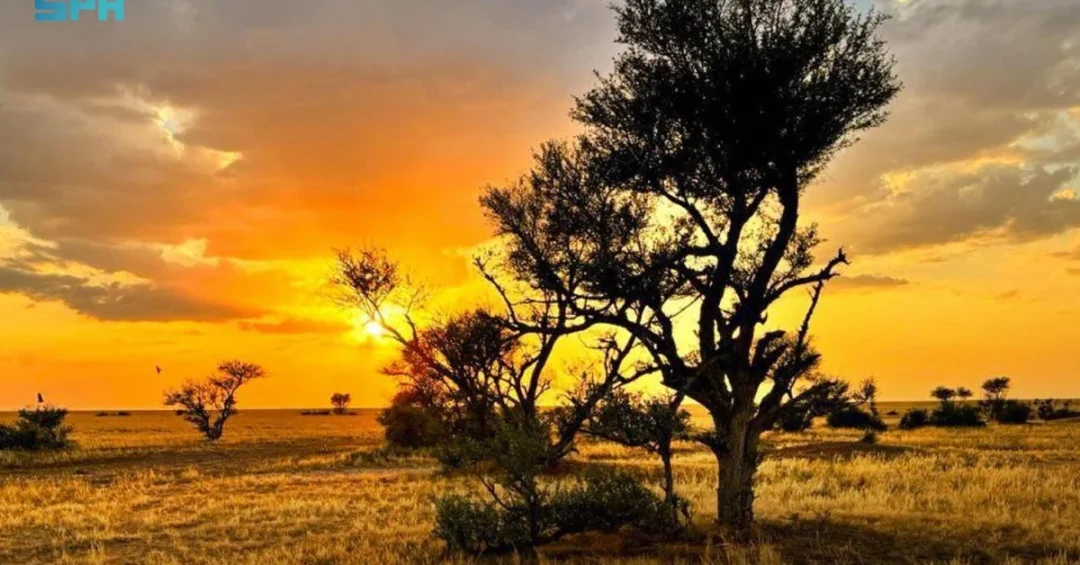
The Imam Turki bin Abdullah Royal Nature Reserve, the Kingdom’s second-largest protected area, spans 91,500 square kilometers south of Rafha Governorate in the Northern Borders Region. This expansive reserve, announced via the Saudi Press Agency on May 9, 2024, encompasses a variety of landscapes, including rolling grasslands, shrublands, and plains known as the “savannah,” creating picturesque scenery and providing a habitat for diverse flora and wildlife.
Context and Background
The reserve is part of Saudi Arabia’s broader environmental conservation efforts under Vision 2030, which emphasizes sustainability and the protection of natural heritage. Its vast size and varied topography—from deep valleys to towering mountains, wide plains to basalt plateaus—offer captivating contrasts and vital refuges for both resident and migratory species. The reserve’s establishment underscores the Kingdom’s commitment to preserving biodiversity and promoting eco-tourism.
Key Details
Boasting stunning natural beauty and unique biodiversity, the reserve is home to species such as Arabian oryx, sand gazelles, and Arabian ostriches. It is also a haven for plant life, with over 180 recorded species, representing 7.5% of the total plant species in the Kingdom. These include acacia, jujube, arta (Calligonum comosum), ghada (Haloxylon persicum), arfaj (Rhanterium epapposum), aather (Artemisia monosperma), and ramath (Haloxylon) trees.
Implications and Impact
The reserve’s environmental diversity is significant not only for Saudi Arabia but also for regional and global conservation efforts. It supports a wide range of wildlife, contributing to ecological balance and offering opportunities for scientific research and eco-tourism. The preservation of such habitats aligns with international environmental goals and positions Saudi Arabia as a leader in sustainable development.
Vision 2030 Alignment
The Imam Turki bin Abdullah Royal Nature Reserve exemplifies Saudi Arabia’s dedication to environmental stewardship and the goals of Vision 2030, which include enhancing quality of life and promoting sustainable development. By safeguarding natural treasures and fostering biodiversity, the Kingdom is building a greener future, inviting the world to witness its natural splendor and commitment to conservation.
20 Questions
Q1. What is the Imam Turki bin Abdullah Royal Nature Reserve?
A1. It is the Kingdom’s second-largest protected area, spanning 91,500 square kilometers south of Rafha Governorate in the Northern Borders Region, showcasing diverse landscapes and wildlife.
Q2. Where is the reserve located?
A2. The reserve is situated south of Rafha Governorate in the Northern Borders Region of Saudi Arabia, covering a vast area that includes grasslands, shrublands, and plains.
Q3. What is the size of the reserve?
A3. The reserve covers 91,500 square kilometers, making it the second-largest protected area in the Kingdom of Saudi Arabia.
Q4. What landscapes can be found in the reserve?
A4. The reserve features rolling grasslands, shrublands, plains known as “savannah,” deep valleys, towering mountains, wide plains, and basalt plateaus, offering scenic variety.
Q5. Which animal species are found in the reserve?
A5. The reserve is home to Arabian oryx, sand gazelles, and Arabian ostriches, among other wildlife, serving as a vital habitat for resident and migratory species.
Q6. How many plant species are recorded in the reserve?
A6. Over 180 plant species are recorded in the reserve, representing 7.5% of the total plant species found in Saudi Arabia.
Q7. What are some of the plant species in the reserve?
A7. Notable plant species include acacia, jujube, arta, ghada, arfaj, aather, and ramath trees, contributing to the area’s rich biodiversity.
Q8. Why is the reserve important for biodiversity?
A8. The reserve’s vast size and varied topography create diverse habitats that support a wide range of flora and fauna, crucial for ecological balance and species conservation.
Q9. How does the reserve contribute to Saudi Arabia’s environmental goals?
A9. The reserve aligns with Vision 2030’s sustainability objectives, promoting conservation, eco-tourism, and the preservation of natural heritage.
Q10. What role does the reserve play in eco-tourism?
A10. The reserve offers opportunities for eco-tourism, allowing visitors to experience its natural beauty and biodiversity, contributing to economic diversification.
Q11. What are the “savannah” areas in the reserve?
A11. The “savannah” are plains covered with grasslands and shrublands, characteristic of the reserve’s landscape, providing scenic views and habitats.
Q12. How does the reserve support migratory species?
A12. The reserve provides vital resting and feeding grounds for migratory birds and other species, thanks to its diverse and well-preserved habitats.
Q13. What is the significance of the reserve’s plant diversity?
A13. The plant diversity, including species like acacia and jujube, is significant as it represents a substantial portion of the Kingdom’s flora and supports wildlife.
Q14. How was the reserve’s information released?
A14. The information was released via the Saudi Press Agency (SPA) on May 9, 2024, as part of official Saudi announcements.
Q15. What is the full name of the reserve?
A15. The full name is the Imam Turki bin Abdullah Royal Nature Reserve, named after a historical figure, reflecting its royal endorsement.
Q16. What are the topographical features of the reserve?
A16. The reserve includes deep valleys, towering mountains, wide plains, and basalt plateaus, providing diverse habitats and scenic contrasts.
Q17. How does the reserve contribute to scientific research?
A17. The reserve offers a natural laboratory for studying biodiversity, ecosystem dynamics, and conservation methods, aiding scientific knowledge.
Q18. What is the role of the reserve in regional conservation?
A18. The reserve contributes to regional conservation by protecting habitats for threatened species and promoting ecological connectivity across borders.
Q19. How does the reserve align with international environmental initiatives?
A19. The reserve supports global conservation targets, such as the Convention on Biological Diversity, showcasing Saudi Arabia’s commitment to environmental stewardship.
Q20. What is the future outlook for the reserve?
A20. The reserve is poised to expand eco-tourism and research, further enhancing its role in safeguarding biodiversity and supporting Vision 2030’s environmental goals.
Reader Feedback
We value your thoughts. Please share your feedback on this article.
Your feedback helps us improve our coverage.