


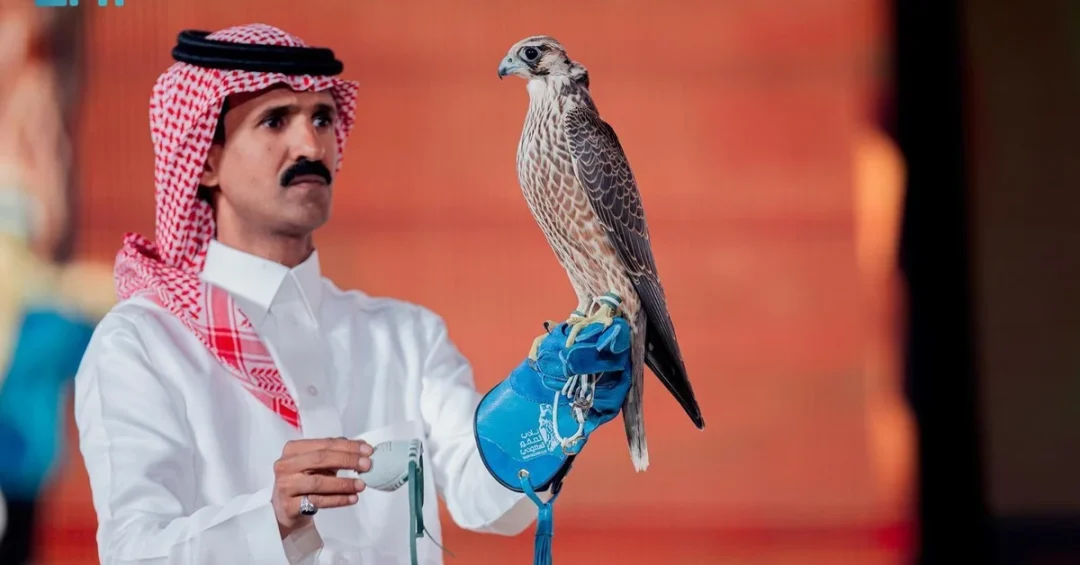
A falcon was sold for SAR351,000 (approximately USD 93,600) at the 25th session of the Saudi Falcons Club Auction, making it the third most expensive falcon sold to date at this year’s event. The sale took place at the club’s headquarters in Malham, north of Riyadh, and underscores the Kingdom’s deep-rooted cultural heritage and its ongoing efforts to preserve and promote the tradition of falconry.
Context and Background
The Saudi Falcons Club Auction is the primary marketplace for locally trapped falcons, coinciding with the annual trapping season that runs until November 30. The event provides a platform for trappers to showcase their finest birds, with hundreds of participants from across the Kingdom. This year’s auction has seen a high level of interest, with the top three falcons fetching significant sums, reflecting the quality and prestige of Saudi-bred falcons.
The auction is not just a commercial venture; it is a cultural cornerstone. It reinforces the Kingdom’s cultural identity and facilitates the transfer of falconry expertise to new generations. By bringing together seasoned trappers and enthusiasts, the event ensures that this ancient practice continues to thrive in modern Saudi Arabia.
Key Details
The third most expensive falcon sold for SAR351,000, a price that highlights the bird’s exceptional pedigree and training. The auction, held at the Saudi Falcons Club headquarters in Malham, north of Riyadh, has become a key event in the Kingdom’s cultural calendar. The annual trapping season, which concludes on November 30, provides a limited window for trappers to showcase their best falcons, driving the competitive nature of the auction.
The Saudi Falcons Club (SFC) is a government-backed institution dedicated to preserving the heritage of falconry. It organizes the auction, which is a vital economic resource for the hundreds of participating trappers. The auction also serves as a platform to educate younger Saudis about the importance of falconry, a skill that has been passed down through generations.
Implications and Impact
The high prices achieved at the auction demonstrate the robust demand for Saudi falcons, both domestically and internationally. This not only boosts the local economy but also enhances Saudi Arabia’s reputation as a global center for falconry. The auction’s success aligns with the Kingdom’s broader efforts to promote its cultural heritage as a key pillar of its tourism and identity initiatives.
Internationally, the auction attracts falconry enthusiasts and buyers from around the world, fostering cultural exchange and positioning Saudi Arabia as a leader in the preservation of this ancient tradition. The event also supports the livelihoods of trappers, contributing to the sustainability of rural communities involved in this trade.
Vision 2030 Alignment
The Saudi Falcons Club Auction is a shining example of the Kingdom’s commitment to preserving its cultural heritage while embracing modernization, a core tenet of Saudi Vision 2030. By supporting traditional practices like falconry, the Kingdom is safeguarding its identity for future generations. The auction also contributes to the economic diversification goals of Vision 2030 by creating new opportunities in tourism and cultural events. As Saudi Arabia continues its journey toward a vibrant society and a thriving economy, initiatives like this serve as a testament to the nation’s rich history and its dynamic future.
20 Questions
Q1. What was the sale price of the third most expensive falcon at the Saudi Falcons Club Auction?
A1. The falcon was sold for SAR351,000 (approximately USD 93,600). This made it the third most expensive falcon sold at this year’s event.
Q2. When and where did the auction take place?
A2. The auction took place on November 14, 2025, at the Saudi Falcons Club headquarters in Malham, north of Riyadh.
Q3. What is the significance of the auction?
A3. The auction serves as the primary marketplace for locally trapped falcons, coinciding with the annual trapping season which runs until November 30.
Q4. How does the auction reinforce Saudi Arabia’s cultural identity?
A4. It reinforces cultural identity by providing a platform to preserve and promote falconry, a traditional practice that is deeply rooted in Saudi heritage.
Q5. How does the auction facilitate the transfer of falconry expertise?
A5. By bringing together experienced trappers and new generations, the auction facilitates the exchange of knowledge and skills, ensuring the tradition continues.
Q6. Who benefits economically from the auction?
A6. Hundreds of participating trappers benefit economically, as the auction provides a significant source of income and a marketplace for their falcons.
Q7. What is the annual trapping season?
A7. The annual trapping season is the period during which falcons are trapped for the auction. This year, it runs until November 30.
Q8. Where is the Saudi Falcons Club located?
A8. The Saudi Falcons Club is located in Malham, north of Riyadh.
Q9. What is the role of the Saudi Falcons Club?
A9. The club is dedicated to preserving falconry heritage, organizing the auction, and promoting the practice among new generations.
Q10. How does the auction contribute to the economy?
A10. The auction contributes by generating significant sales, attracting international buyers, and supporting the livelihoods of trappers.
Q11. What makes the falcon sold for SAR351,000 special?
A11. The falcon’s high price reflects its exceptional quality, pedigree, and training, making it one of the finest specimens available.
Q12. How does the auction attract international interest?
A12. The auction attracts international falconry enthusiasts and buyers, fostering cultural exchange and enhancing Saudi Arabia’s global reputation.
Q13. What is the cultural importance of falconry in Saudi Arabia?
A13. Falconry is a centuries-old tradition in Saudi Arabia, symbolizing heritage, skill, and connection to the desert environment.
Q14. How does the auction support Vision 2030?
A14. The auction supports Vision 2030 by preserving cultural heritage, promoting economic diversification, and enhancing the Kingdom’s tourism and cultural offerings.
Q15. What is the primary source of information about the auction?
A15. The primary source is the Saudi Press Agency (SPA), which reported the auction results and details.
Q16. How does the auction ensure the authenticity of falcons?
A16. The club ensures authenticity through rigorous vetting and certification processes, maintaining the auction’s high standards.
Q17. What does the auction’s success indicate about the future of falconry in Saudi Arabia?
A17. The success indicates a bright future, as interest and investment in falconry continue to grow, ensuring the tradition’s preservation.
Q18. How does the auction benefit the local community?
A18. It benefits the local community by providing economic opportunities, preserving cultural practices, and fostering a sense of pride.
Q19. Are there other similar events in Saudi Arabia?
A19. Yes, the Kingdom hosts various cultural and heritage events, but the Saudi Falcons Club Auction is the premier event for falconry.
Q20. How can one participate in future auctions?
A20. Interested individuals can contact the Saudi Falcons Club through their official channels for information on participation and registration.
Reader Feedback
We value your thoughts. Please share your feedback on this article.
Your feedback helps us improve our coverage.
Related articles
 Red Sea Film Festival Launches Fan Zone for 5th Edition
 National Museum Marks World Arabic Language Day with Cultural Program
 Falconry Section Draws Crowds at Ministry Exhibition
 Third Writers and Readers Festival Brings Literature to Taif
 Aseer Artisans Trained to Boost Labor Market Participation
 Al-Baha’s Markets Celebrate Founding Day with Heritage