


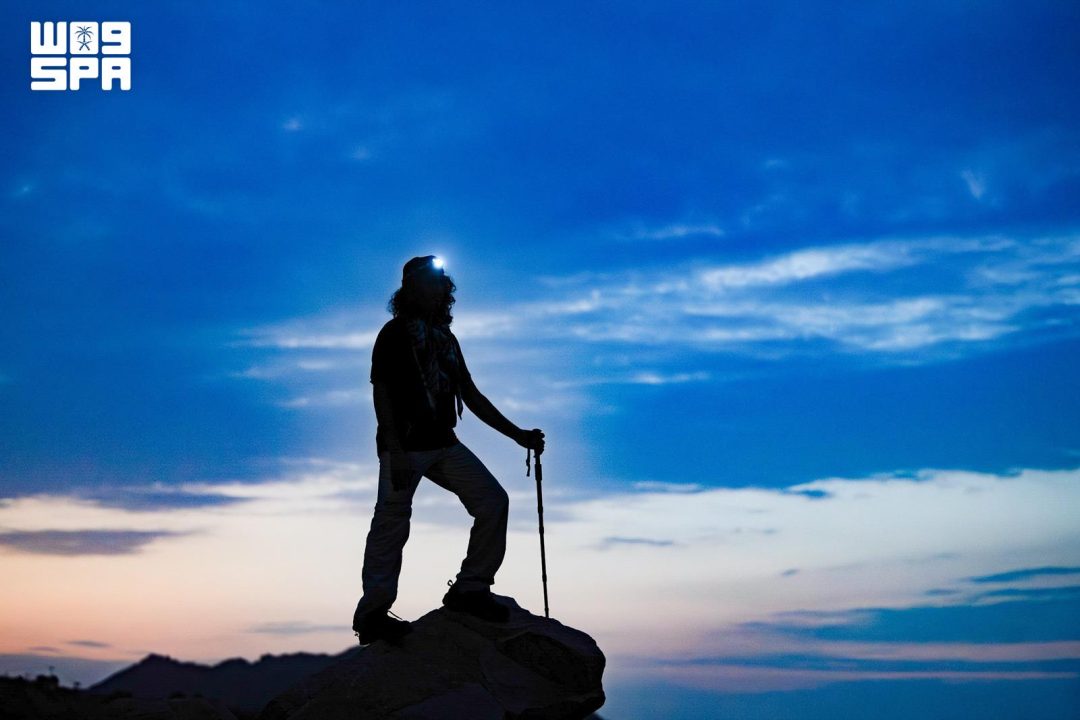
Taif provides open spaces for hiking and exploration across the peaks of Al-Shafa and various ravines. The terrain features perennial juniper trees, aromatic plants, and rock formations leading to high points overlooking the Sarawat Mountains.
According to SPA, the province’s geography offers diverse experiences, including climbing peaks, walking along slopes, and crossing narrow passages and valley floors. Al-Shafa is a preferred destination due to its environmental features, including acacia trees, wild aromatic plants, and ancient paths formed by nature and used by residents over the years.
Participants encounter local culture and history through villages, farms, agricultural terraces, stone buildings, and old roads. The trips reveal mountain architecture made from local stone and farming patterns on slopes and terraces.
Hiking groups also visit Wadi Dhi Ghazal, Wadi Khamas, and surrounding sites, traveling varying distances along watercourses and slopes. Hiking guide Captain Adel Firaq told SPA that Taif offers multiple options for practitioners, with journeys that can start in a valley and cross through ravines.
What natural features can hikers find in Al-Shafa? Hikers in Al-Shafa encounter environmental elements such as perennial juniper trees, acacia, and wild aromatic plants. The area is characterized by ancient paths created by the land’s nature and used by residents over time, while the scenery is further shaped by moderate weather, fog, and clouds.
Which specific valleys are popular for hiking groups in Taif? Hiking groups frequently visit Wadi Dhi Ghazal and Wadi Khamas, along with several surrounding locations. These groups cover varying distances by walking along watercourses and slopes, utilizing breaks to photograph the vegetation and listen to stories related to the sites they cross.
How does hiking in Taif connect visitors to local history and culture? The activity serves as a window into local culture through encounters with villages, farms, and stone buildings. Hikers observe mountain architecture built from available local stone and agricultural terraces on slopes, reflecting the historical relationship between the residents and the land’s resources.