


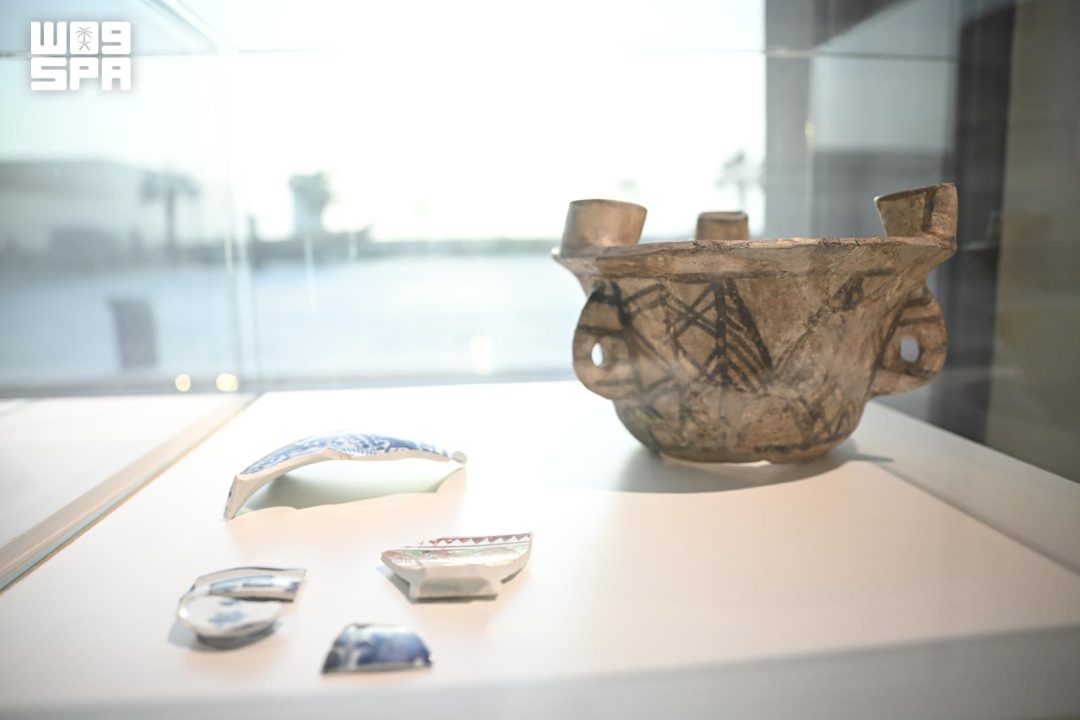
The Red Sea Museum in historical Jeddah is hosting the Treasures Sunken exhibition, showcasing archaeological discoveries from the mosque of Caliph Othman bin Affan. The exhibition highlights the city’s role as a major Red Sea port, a gateway for pilgrims to Makkah, and a hub for trade and cultural exchange between Asia, Africa, and the Arabian Peninsula.
According to SPA, the displayed items include archaeological objects unearthed during excavations at the mosque of Caliph Othman bin Affan, one of the oldest Islamic monuments in historical Jeddah. These finds date from the 17th to the 19th centuries, reflecting the continuous commercial and cultural activity of the city during that era.
Specific exhibits include a lamp from 1880 originating from the south of the Arabian Peninsula and Chinese ceramic pieces dating between the 17th and 19th centuries. These items demonstrate the trade links between the port of Jeddah and Far East ports.
The mosque of Caliph Othman bin Affan dates back to the first century of the Hijri, witnessing a succession of civilizations for over thirteen centuries. The exhibition provides a historical and scientific look at Red Sea navigation and trade, aligning with the goals of Saudi Vision 2030 regarding the preservation of maritime cultural heritage.
What specific items are featured in the Treasures Sunken exhibition? The exhibition features archaeological objects found during excavations at the mosque of Caliph Othman bin Affan. Notable items include a lamp from 1880 that came from the south of the Arabian Peninsula and various ceramic pieces imported from China dating between the 17th and 19th centuries.
What is the historical significance of the Othman bin Affan mosque? The mosque of Caliph Othman bin Affan is one of the oldest Islamic monuments in historical Jeddah. Its origins date back to the first century of the Hijri, and it has served as a witness to the succession of civilizations for more than thirteen centuries.
What does the exhibition reveal about Jeddah’s historical role? The exhibition illustrates Jeddah’s role as a major port on the Red Sea and a gateway for pilgrims traveling to Makkah. It also highlights the city’s function as a center for commercial and cultural exchanges connecting the Arabian Peninsula with Asia and Africa.
Which time periods are represented by the archaeological finds? Many of the discoveries, including the Chinese ceramics, date from the period between the 17th and 19th centuries. These items demonstrate the continuity of cultural and commercial activity in Jeddah and its trade relations with Far East ports.