



Assistant Minister of Culture Rakan bin Ibrahim Al-Touq met with the United Kingdom’s Ambassador to Saudi Arabia Stephen Hitchen at the Ministry of Culture’s headquarters in Diriyah, where the two officials reviewed the latest developments in cultural relations between the two countries, including the announcement of the Saudi-British Cultural Year 2029. The meeting, reported by the Saudi Press Agency, underscores the growing depth of a partnership that now spans heritage preservation, museum development, film, literature, and creative industries. Held in Diriyah, the historic birthplace of the Saudi state and a UNESCO World Heritage Site, the encounter placed cultural diplomacy at the center of the Kingdom’s international engagement.
What does it mean when two countries decide to dedicate an entire year to cultural exchange? For Saudi Arabia and the United Kingdom, the answer is more than symbolism. The Saudi-British Cultural Year 2029 is expected to serve as a framework for exhibitions, performances, academic exchanges, and joint heritage projects that connect institutions, artists, and audiences across both nations. The meeting between Al-Touq and Hitchen signals that planning is already underway, with the Ministry of Culture coordinating closely with British counterparts to ensure the initiative delivers lasting cultural and economic value.
Context and Background
Why has culture become such a central pillar of Saudi diplomacy? The answer lies in the transformation of the Kingdom’s international profile over the past decade. Under Vision 2030, the national roadmap championed by Crown Prince Mohammed bin Salman, Saudi Arabia has invested heavily in cultural infrastructure, from the restoration of historic districts to the establishment of new museums, festivals, and creative districts. The Ministry of Culture, led by Prince Badr bin Abdullah bin Farhan Al Saud, has been the primary engine of this effort, building partnerships with global institutions and positioning the Kingdom as a hub for arts and heritage.
The United Kingdom has been one of the most active partners in this journey. British expertise has contributed to archaeological research, museum curation, and conservation projects across Saudi Arabia. In turn, Saudi cultural initiatives have found receptive audiences in London, Manchester, and Edinburgh. The relationship is not new: it builds on decades of educational ties, including thousands of Saudi students who have studied at British universities and returned to contribute to the Kingdom’s development. The announcement of the Saudi-British Cultural Year 2029 formalizes and elevates this cooperation to a new level.
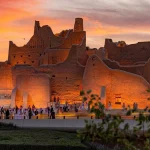
Diriyah itself is a fitting venue for such discussions. The historic town, home to the Diriyah Gate Development Authority and the restored At-Turaif District, embodies the Kingdom’s commitment to preserving its heritage while embracing modernity. Hosting the British Ambassador at the Ministry of Culture’s headquarters there reinforces the message that Saudi Arabia’s cultural opening is rooted in its own history, not imported from abroad.
Key Details of the Meeting
What exactly was discussed at the Diriyah meeting? According to the Saudi Press Agency, Assistant Minister Al-Touq and Ambassador Hitchen covered the latest developments in cultural relations between the two friendly countries. The centerpiece was the Saudi-British Cultural Year 2029, a planned program of bilateral cultural activities that will run across both nations. While specific events have yet to be announced, the framework is expected to include museum collaborations, film screenings, literary translations, and heritage conservation initiatives.
The meeting also reflects the routine but important diplomatic work that sustains cultural partnerships. Assistant Minister Al-Touq, a senior official at the Ministry of Culture, has been involved in numerous international cultural agreements, helping to position Saudi Arabia as a global cultural destination. Ambassador Hitchen, who has served as the United Kingdom’s representative in Riyadh, has been a vocal advocate for stronger people-to-people ties. Their discussion in Diriyah is part of a continuous dialogue that turns high-level agreements into concrete projects.
Notably, the meeting took place at the Ministry of Culture’s headquarters, a symbolic location that highlights the institutional weight behind the partnership. The Ministry of Culture oversees 11 sector-specific commissions, covering everything from music and film to museums and literature. Each of these sectors stands to benefit from the 2029 initiative, creating opportunities for Saudi and British creatives to collaborate, learn, and showcase their work to new audiences.
International and Regional Impact
How does a cultural year between Saudi Arabia and the United Kingdom resonate beyond their borders? For a start, it reinforces the Kingdom’s role as a bridge between cultures, a theme that runs through Saudi foreign policy. By partnering with a global cultural powerhouse like the UK, Saudi Arabia signals that its cultural sector is open for international collaboration. This can encourage other countries to pursue similar exchanges, from France and Italy to Japan and China, many of which have already signed cultural agreements with the Kingdom.
Regionally, the initiative supports Saudi Arabia’s efforts to promote a positive image of the Middle East. Cultural diplomacy offers a counter-narrative to stereotypes, showcasing the creativity and hospitality of Saudi society. The UK, with its diverse population and world-class cultural institutions, provides an ideal partner for this endeavor. The 2029 Cultural Year is expected to feature events in both countries, giving British audiences a firsthand experience of Saudi arts, while Saudi audiences gain access to British cultural productions.
Furthermore, the meeting comes at a time of growing global interest in Saudi heritage. The discovery of ancient archaeological sites, the restoration of historic cities, and the opening of new museums have attracted attention from researchers and tourists alike. British institutions, including the British Museum and the Victoria and Albert Museum, have engaged with Saudi counterparts on projects that highlight the Kingdom’s deep history. The Cultural Year will build on these connections, creating a sustained platform for exchange.
Economic and Strategic Significance
What economic value can cultural cooperation generate? Culture is increasingly recognized as an economic sector in its own right. Saudi Arabia’s creative industries are expanding rapidly, contributing to job creation and GDP diversification. The Ministry of Culture has launched initiatives to support filmmakers, designers, musicians, and writers, many of whom will benefit from international exposure. A cultural year with the UK can boost tourism, as British visitors travel to Saudi Arabia for exhibitions and festivals, and as Saudi tourists explore British cultural landmarks.
Strategically, the partnership aligns with the Kingdom’s broader foreign policy objectives. Cultural ties complement political and economic relations, creating a foundation of mutual understanding that can help navigate global challenges. The UK is a key investor in Saudi Arabia and a partner in Vision 2030 projects, from NEOM to the Red Sea development. By deepening cultural links, both countries strengthen the overall relationship, making it more resilient and multifaceted.
For Saudi Arabia, the Cultural Year also supports the goal of increasing international cultural exchange as outlined in Vision 2030. The national strategy aims to raise the contribution of culture to the economy and to enhance the Kingdom’s global presence. Partnerships like the one with the UK are essential to achieving these targets, providing access to expertise, markets, and audiences that can accelerate the growth of Saudi creative industries.
Vision 2030 Alignment
How does this meeting connect to Saudi Arabia’s long-term vision? Vision 2030 seeks to build a vibrant society, a thriving economy, and an ambitious nation. Culture is a thread that runs through all three. A vibrant society values arts and heritage; a thriving economy benefits from creative industries; an ambitious nation engages confidently with the world. The Saudi-British Cultural Year 2029 embodies these principles, turning cultural exchange into a driver of national progress.
The Ministry of Culture’s collaboration with the UK also supports the Kingdom’s goal of hosting major international events and attracting visitors. By 2030, Saudi Arabia aims to welcome 150 million visits annually, and cultural tourism is a key component of that target. The partnership with the UK will help raise awareness of Saudi cultural offerings, from the ancient wonders of AlUla to the contemporary art scene in Riyadh. As Assistant Minister Al-Touq and Ambassador Hitchen continue their dialogue, they are not just planning events; they are building a legacy of friendship and shared creativity that will outlast any single year.
20 Questions
Q1. Who met with the British Ambassador to Saudi Arabia?
A1. Assistant Minister of Culture Rakan bin Ibrahim Al-Touq met with UK Ambassador Stephen Hitchen at the Ministry of Culture’s headquarters in Diriyah, as reported by the Saudi Press Agency.
Q2. Where did the meeting take place?
A2. The meeting was held at the Ministry of Culture’s headquarters in Diriyah, a historic area in Riyadh and a UNESCO World Heritage Site that reflects Saudi Arabia’s rich heritage.
Q3. What was the main topic of discussion?
A3. The officials discussed the latest developments in cultural relations between Saudi Arabia and the United Kingdom, including the announcement of the Saudi-British Cultural Year 2029.
Q4. What is the Saudi-British Cultural Year 2029?
A4. It is a planned bilateral initiative that will feature a year-long program of cultural exchanges, exhibitions, performances, and joint projects between Saudi Arabia and the UK.
Q5. Who is Rakan bin Ibrahim Al-Touq?
A5. Rakan bin Ibrahim Al-Touq is the Assistant Minister of Culture in Saudi Arabia, a senior official involved in advancing the Kingdom’s cultural diplomacy and international partnerships.
Q6. Who is Stephen Hitchen?
A6. Stephen Hitchen is the United Kingdom’s Ambassador to Saudi Arabia, representing British interests and promoting bilateral ties, including cultural cooperation.
Q7. Why is the meeting significant?
A7. It highlights the growing cultural partnership between Saudi Arabia and the UK and signals progress toward the Saudi-British Cultural Year 2029, which will deepen people-to-people ties.
Q8. How does this meeting align with Vision 2030?
A8. Vision 2030 emphasizes cultural development and international engagement. The meeting supports these goals by fostering partnerships that enhance Saudi Arabia’s global cultural presence.
Q9. What other cultural initiatives has Saudi Arabia pursued with the UK?
A9. Saudi Arabia and the UK have collaborated on archaeological research, museum development, and educational exchanges. Many Saudi students have studied in the UK, strengthening ties.
Q10. What can we expect from the Cultural Year 2029?
A10. While specific events are yet to be announced, the year is expected to include museum collaborations, film screenings, literary translations, and heritage conservation projects between the two nations.
Q11. How does Diriyah fit into the cultural narrative?
A11. Diriyah is the historic birthplace of the Saudi state and home to the At-Turaif District. Hosting the meeting there underscores the Kingdom’s commitment to preserving heritage.
Q12. What role does the Ministry of Culture play in Saudi Arabia?
A12. The Ministry of Culture oversees 11 sector-specific commissions, promoting arts, heritage, and creative industries as part of Vision 2030’s cultural transformation.
Q13. How might the Cultural Year impact tourism?
A13. It is expected to attract British visitors to Saudi cultural events and encourage Saudi tourists to explore UK cultural landmarks, boosting tourism in both countries.
Q14. What economic benefits could arise from cultural cooperation?
A14. Cultural cooperation can stimulate creative industries, create jobs, and increase GDP contribution. It also supports Saudi Arabia’s goal of economic diversification.
Q15. Are there other countries with similar cultural years with Saudi Arabia?
A15. Saudi Arabia has pursued cultural exchanges with various nations, including France, Italy, and China, as part of its broader cultural diplomacy strategy.
Q16. How does this meeting reflect Saudi Arabia’s international engagement?
A16. It demonstrates the Kingdom’s proactive approach to building bridges with global partners, enhancing mutual understanding and showcasing Saudi culture on the world stage.
Q17. What is the significance of the UK as a cultural partner?
A17. The UK has world-class cultural institutions and a diverse creative sector. Partnering with the UK provides Saudi Arabia access to expertise and audiences, enriching both cultures.
Q18. Will the Cultural Year include events in both countries?
A18. Yes, the initiative is expected to feature events in both Saudi Arabia and the UK, allowing audiences in each country to experience the other’s cultural offerings.
Q19. How does this fit into Saudi Arabia’s broader foreign policy?
A19. Cultural diplomacy is a key pillar of Saudi foreign policy, complementing political and economic ties. It helps project a positive image and build lasting friendships.
Q20. What is the next step after this meeting?
A20. Following the meeting, the Ministry of Culture and the UK Embassy are expected to continue planning the Saudi-British Cultural Year 2029, with announcements of specific events to come.
Reader Feedback
We value your thoughts. Please share your feedback on this article.
Your feedback helps us improve our coverage.
Related articles
 SBA Highlights Saudi Arabia’s Journey through National Day Documentaries
 Diriyah Readies for Saudi National Day Under ‘Pride and Unity
 Museums Commission Signs Agreement with Tuwaiq Association
 Saudi Book Project Reaches Nearly Two Million Beneficiaries
 Madinah Marks National Day with Five Days of Heritage Events
 Najran Heritage and Development Reflect Saudi Journey