


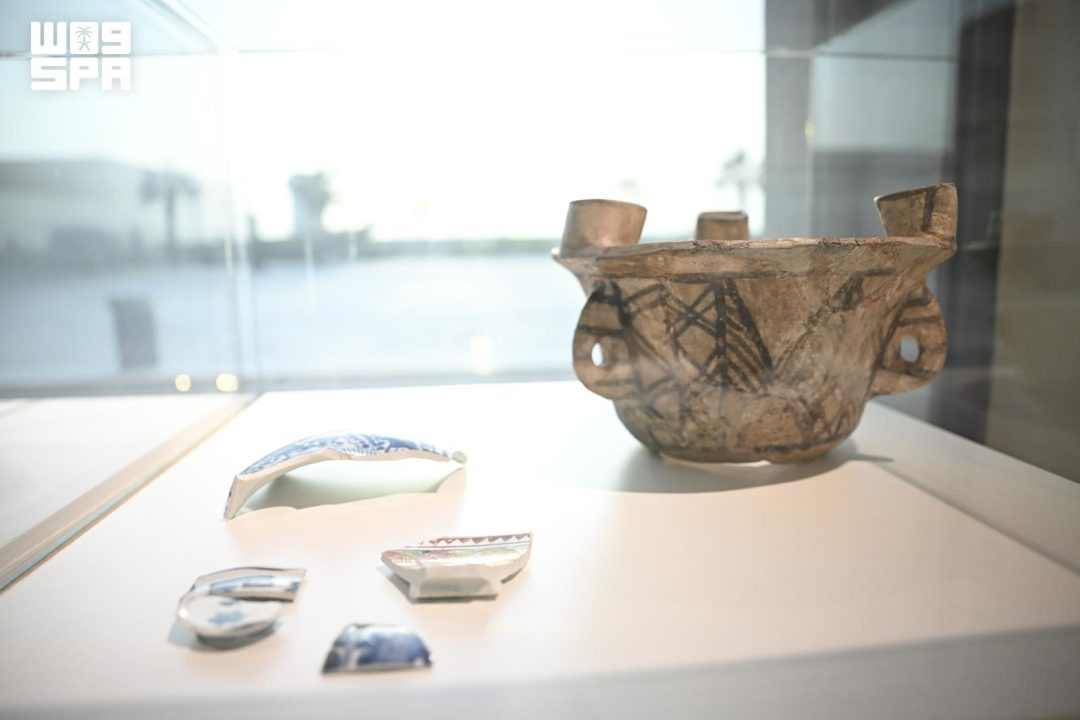
The Red Sea Museum in historic Jeddah is hosting the Sunken Treasures exhibition, featuring archaeological finds from the Uthman bin Affan Mosque. The exhibition showcases the city’s heritage as a primary Red Sea port and a hub for trade and culture between Asia, Africa, and the Arabian Peninsula.
According to SPA, the displayed artifacts date from the 17th to the 19th centuries. These items were discovered during archaeological excavations at the mosque, which is among the oldest Islamic buildings in historic Jeddah.
Notable exhibits include an oil lamp from 1880 originating from the south of the Arabian Peninsula and imported Chinese pottery from the 17th to 19th centuries. These finds illustrate the trade links between Jeddah and East Asian ports.
The mosque’s history dates back to the first century AH, following the order by Caliph Uthman bin Affan to move the port of Makkah from Al-Shuaiba to Jeddah. This transition established Jeddah as the main port for merchants and pilgrims on the Red Sea coast.
What artifacts are featured in the Sunken Treasures exhibition? The exhibition includes archaeological finds from the Uthman bin Affan Mosque, specifically items dating between the 17th and 19th centuries. Key pieces on display include imported pottery from China and an oil lamp from 1880 that came from the south of the Arabian Peninsula.
What is the historical significance of the Uthman bin Affan Mosque? The mosque is one of the oldest Islamic structures in historic Jeddah with a history reaching back to the first century AH. It represents over 13 centuries of civilization, beginning when Caliph Uthman bin Affan ordered the relocation of the port of Makkah from Al-Shuaiba to Jeddah.
How does the exhibition reflect Jeddah’s role in regional trade? The exhibition highlights Jeddah’s position as a primary Red Sea port and a center for cultural and commercial exchange between Asia, Africa, and the Arabian Peninsula. The presence of Chinese pottery and regional oil lamps confirms the extent of trade links with East Asian ports.