


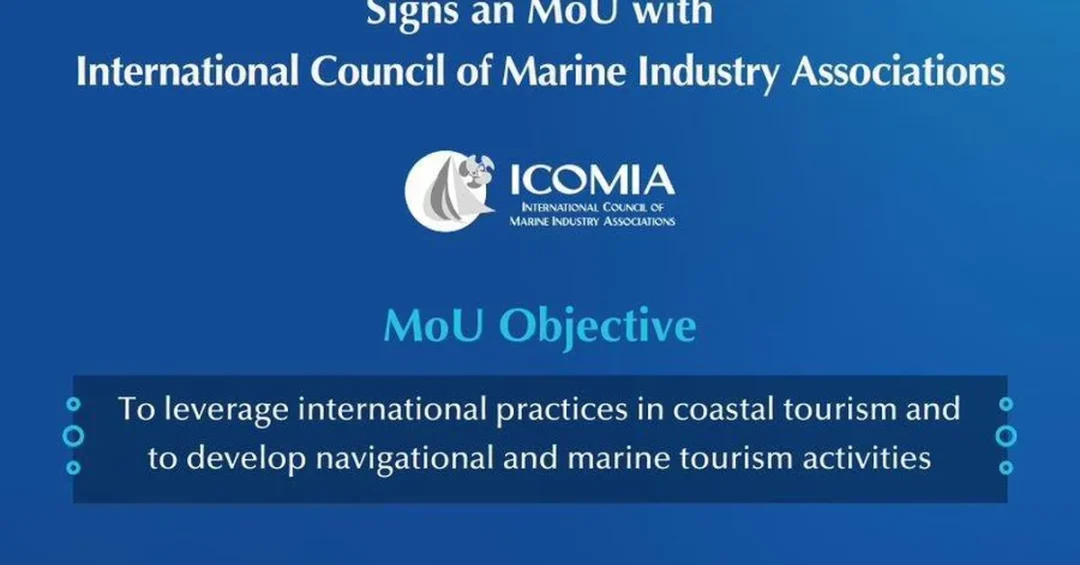
The Saudi Red Sea Authority (SRSA) signed a memorandum of understanding (MoU) with the International Council of Marine Industry Associations (ICOMIA) on the sidelines of the Monaco Yacht Show, marking a significant step in advancing Saudi Arabia’s coastal tourism industry and attracting international investment to the Red Sea region. The agreement, signed at the Saudi Tourism Authority’s pavilion, aims to develop maritime and marine tourism activities through cooperation and the exchange of expertise with leading international organizations.
Context and Background
The SRSA, established to regulate and develop the Red Sea’s coastal and marine tourism sector, has been actively forging partnerships with global entities to enhance the Kingdom’s maritime offerings. This MoU with ICOMIA, a global trade association representing the marine industry, aligns with SRSA’s mandate to benefit from international best practices and to position the Red Sea as a premier destination for coastal tourism. The signing took place during the Monaco Yacht Show, a prestigious international event that showcases the latest in yachting and marine innovation, underscoring Saudi Arabia’s commitment to engaging with global industry leaders.
Key Details of the Agreement
The MoU was signed by Mohammed Al Nasser, Chief Executive of SRSA, and Joe Lynch, Chief Executive of ICOMIA. The agreement outlines cooperation in planning and implementing initiatives to develop the coastal tourism sector in the Red Sea, attracting investors, and helping operators raise safety standards. It also includes exchanging insights on coastal tourism regulations, environmental standards, safety guidelines, and sustainable practices. Additionally, the MoU aims to assess the economic impact of coastal tourism, monitor key performance indicators, and ensure compliance with new international standards and laws. Joint research and studies will be conducted to support these objectives.
Implications and Impact
This partnership is expected to significantly boost the Red Sea region’s appeal as a global tourism destination, drawing investment and fostering sustainable development. By collaborating with ICOMIA, SRSA gains access to a wealth of international expertise and best practices, which will help elevate the standards of maritime tourism in Saudi Arabia. The MoU also facilitates knowledge exchange on environmental sustainability, a key priority for the Kingdom as it seeks to balance economic growth with ecological preservation. This agreement reinforces Saudi Arabia’s position as a responsible and forward-looking player in the global marine industry.
Vision 2030 Alignment
The MoU is in line with Saudi Vision 2030, which aims to diversify the economy, promote tourism, and create new opportunities for investment and job creation. By developing the coastal tourism sector, SRSA contributes to the Kingdom’s goals of increasing tourism’s share of GDP and enhancing the quality of life for citizens and visitors. This collaboration with ICOMIA exemplifies Saudi Arabia’s proactive approach to international cooperation and sustainable development, further solidifying its role as a leader in the global tourism landscape. For more information about the Saudi Red Sea Authority, visit www.redsea.gov.sa.
20 Questions
Q1. What is the Saudi Red Sea Authority (SRSA)?
A1. The SRSA is a Saudi government authority responsible for regulating and developing coastal and marine tourism in the Red Sea region, aiming to enhance the sector’s contribution to the economy and promote sustainable practices.
Q2. What is ICOMIA?
A2. ICOMIA is the International Council of Marine Industry Associations, a global organization representing the marine industry, promoting growth, and advocating for best practices in boating and yachting.
Q3. What does the MoU between SRSA and ICOMIA aim to achieve?
A3. The MoU aims to advance coastal tourism by cooperating on initiatives, attracting investors, raising safety standards, exchanging knowledge on regulations and sustainability, and conducting joint research.
Q4. Where and when was the MoU signed?
A4. The MoU was signed on September 26, 2024, at the Saudi Tourism Authority’s pavilion during the Monaco Yacht Show.
Q5. Who represented SRSA and ICOMIA at the signing?
A5. SRSA was represented by its Chief Executive, Mohammed Al Nasser, and ICOMIA by its Chief Executive, Joe Lynch.
Q6. Why is the Red Sea region important for Saudi tourism?
A6. The Red Sea region offers pristine coastlines, coral reefs, and cultural heritage, making it a key destination for coastal and marine tourism, aligned with Saudi Vision 2030’s tourism goals.
Q7. How does this MoU support Saudi Vision 2030?
A7. It supports Vision 2030 by diversifying the economy, boosting tourism’s GDP contribution, attracting investment, and creating jobs in the coastal tourism sector.
Q8. What are the key areas of cooperation under the MoU?
A8. Key areas include planning initiatives, attracting investors, enhancing safety, exchanging insights on regulations and environmental standards, and conducting joint research.
Q9. How will the MoU help attract investors to the Red Sea?
A9. By leveraging ICOMIA’s global network and expertise, the MoU will promote the Red Sea as an attractive destination for marine tourism investment, showcasing its potential and facilitating partnerships.
Q10. What role does sustainability play in this agreement?
A10. Sustainability is central, with cooperation on environmental standards and sustainable practices to ensure the long-term viability of the Red Sea’s marine ecosystem.
Q11. What is the Monaco Yacht Show?
A11. The Monaco Yacht Show is an annual international event showcasing luxury yachts, marine technology, and industry trends, attracting global leaders and enthusiasts.
Q12. How does SRSA plan to use ICOMIA’s expertise?
A12. SRSA will benefit from ICOMIA’s knowledge in marine industry best practices, safety guidelines, and international standards to develop a world-class coastal tourism sector.
Q13. What economic impact is expected from this MoU?
A13. The MoU aims to assess and enhance the economic impact of coastal tourism, potentially increasing revenue, investment, and employment in the Red Sea region.
Q14. Will the MoU lead to new regulations for coastal tourism?
A14. It may inform the development of regulations by exchanging insights on international standards, but specific regulatory changes would be implemented by SRSA as needed.
Q15. How does this MoU benefit local communities?
A15. It can create job opportunities, support local businesses, and promote sustainable tourism, improving livelihoods and quality of life in coastal communities.
Q16. What are the next steps after signing the MoU?
A16. The next steps include implementing joint initiatives, conducting research, and facilitating knowledge exchange to achieve the MoU’s objectives.
Q17. How does this MoU enhance Saudi Arabia’s global standing?
A17. It demonstrates Saudi Arabia’s commitment to international cooperation and sustainable tourism, enhancing its reputation as a responsible and attractive global destination.
Q18. What types of marine tourism activities does SRSA focus on?
A18. SRSA focuses on activities such as yachting, cruising, diving, and other coastal recreational activities, aiming to develop them sustainably.
Q19. Are there other similar agreements SRSA has signed?
A19. SRSA has been actively forming partnerships with various international organizations to develop the coastal tourism sector, in line with its mandate.
Q20. How can interested parties learn more about SRSA?
A20. For more information, visit the SRSA website at www.redsea.gov.sa.
Reader Feedback
We value your thoughts. Please share your feedback on this article.
Your feedback helps us improve our coverage.
Related articles
 AlUla Skies Festival 2024: Soaring Adventures in Saudi Arabia
 Crimson Sunset Over Al-Aqiq Governorate Captured by SPA
 Jeddah: Coastal Charm and Panoramic Views
 Saudi Inbound Visitor Spending Hits SAR92.6 Billion in H1 2024
 Saudi General Aviation Airshow Returns to Riyadh Nov 19-23
 ITBA Launches Pavilion at Falcons and Hunting Exhibition 2024