


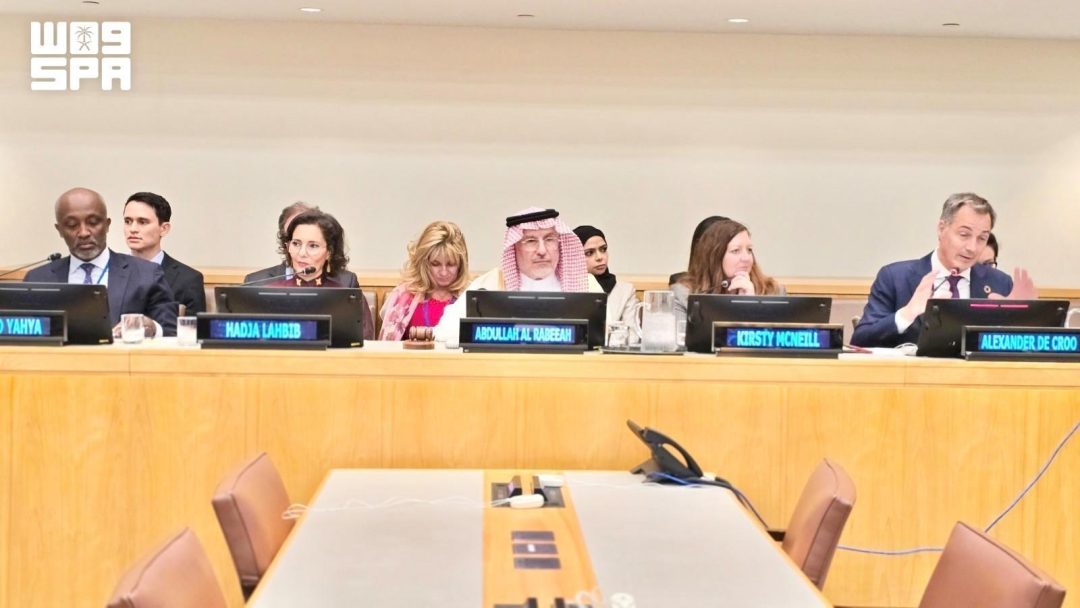
New York hosted a high-level panel discussion titled “Humanitarian Reset and Responsible Transitions: Safeguarding Resilience and Principled Action” on Thursday. The event took place on the sidelines of the 81st session of the UN General Assembly.
According to SPA, the panel was organized by the King Salman Humanitarian Aid and Relief Center (KSrelief) in partnership with the European Union, the UK Foreign, Commonwealth and Development Office, the UN Development Programme (UNDP), and the UN Office for the Coordination of Humanitarian Affairs (OCHA).
Advisor at the Royal Court and Supervisor General of KSrelief Dr. Abdullah Al Rabeeah participated in the discussion, describing the UN-led initiative to reform the global humanitarian architecture as an essential opportunity for efficiency and operational resilience. He emphasized the need to link peacebuilding, sustainable development, and humanitarian relief in protracted crisis zones, specifically Palestine, Sudan, and Yemen.
Dr. Al Rabeeah stated that KSrelief works with over 300 partners in more than 110 countries. He noted that the center engages development institutions, including the Saudi Fund for Development, during early response planning to ensure sustainable outcomes.
Regarding operational strategy, the Supervisor General highlighted the importance of localization to ensure international assistance reinforces local leadership and grassroots capacity, particularly in high-risk environments. He cited a KSrelief initiative with UNDP to rehabilitate over 30 damaged bakeries across eight regions in Syria to restore local food production and prevent aid dependency.
Who organized the humanitarian panel in New York? The panel titled “Humanitarian Reset and Responsible Transitions: Safeguarding Resilience and Principled Action” was organized by the King Salman Humanitarian Aid and Relief Center (KSrelief). It was held in partnership with the UN Office for the Coordination of Humanitarian Affairs (OCHA), the UN Development Programme (UNDP), the UK Foreign, Commonwealth and Development Office, and the European Union.
Which regions did Dr. Abdullah Al Rabeeah identify as protracted crisis zones? During the panel discussion held on the sidelines of the 81st session of the UN General Assembly, Dr. Abdullah Al Rabeeah stressed the necessity of linking peacebuilding, sustainable development, and humanitarian relief in specific protracted crisis zones, which he identified as Palestine, Sudan, and Yemen.
What is the scale of KSrelief’s global operations and partnerships? KSrelief operates across more than 110 countries and works with more than 300 partners. To ensure coordinated and sustainable outcomes, the center engages development institutions, such as the Saudi Fund for Development, starting from the earliest phases of response planning.
How is KSrelief addressing aid dependency in Syria? To prevent long-term aid dependency, KSrelief launched an initiative with the UNDP to rehabilitate more than 30 damaged bakeries. These bakeries are located across eight regions in Syria, and the project aims to restore local production capacity to meet essential food needs.