


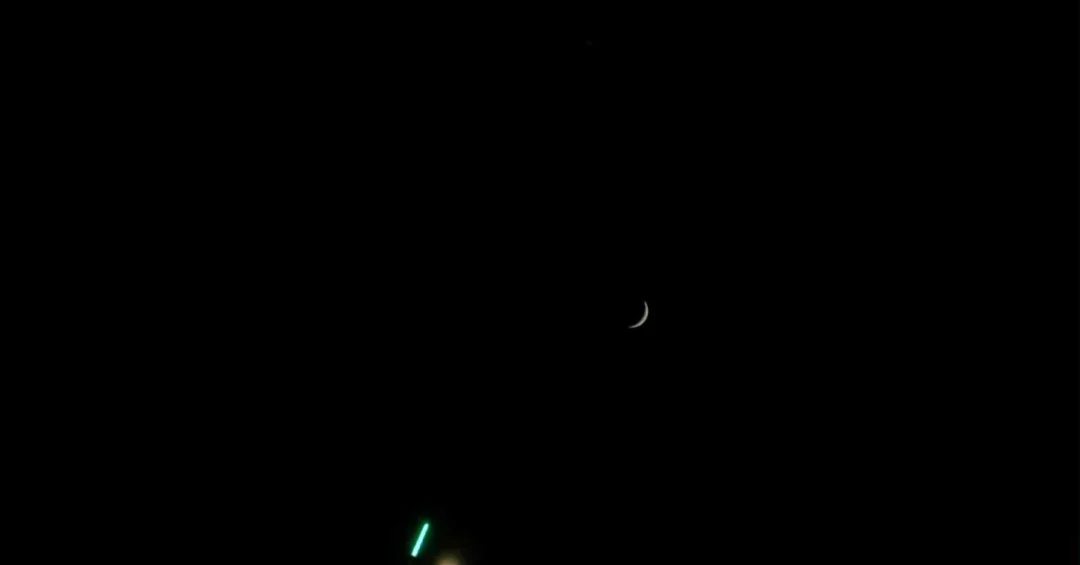
The skies over Turaif Governorate in Saudi Arabia’s Northern Borders Region witnessed a striking celestial conjunction on the evening of August 15, 2026, as the crescent moon of the month of Rabi Al-Awwal aligned with the planet Venus on the western horizon after sunset, an astronomical phenomenon visible to the naked eye without any observation equipment, according to the Saudi Press Agency (SPA). The event drew the attention of skywatching enthusiasts across the Kingdom and beyond, offering a moment of scientific wonder and a reminder of the deep connection between astronomical phenomena and human life.
Context and Background
Astronomical phenomena have long formed an essential framework in human life, serving as tools for determining time, organizing calendars, and identifying the four seasons. In Saudi Arabia, where the Islamic calendar governs religious observances such as the beginning of Rabi Al-Awwal, the sighting of the crescent moon holds particular significance. The conjunction of the moon and Venus is not an isolated event but part of the regular apparent movement of celestial bodies along their orbits. These periodic phenomena recur at different times throughout the year, providing consistent opportunities for observation and study. The Saudi Press Agency reported that the alignment was especially clear during twilight, when the western horizon offered an unobstructed view of both the crescent and the bright planet.
Key Details of the Conjunction
The conjunction appeared as a result of the apparent movement of the Moon and planets, a predictable astronomical event that allows skywatching enthusiasts to observe and photograph the pairing. According to SPA, the phenomenon could be documented with a smartphone or digital camera, making it accessible to the general public. For those using telescopes, clearer details of the crescent became visible, including earthshine, the faint illumination of the unlit portion of the Moon caused by sunlight reflected from the Earth. This optical effect added a layer of scientific interest to the event, highlighting the dynamic relationship between the Earth, Moon, and Sun. The visibility of the conjunction to the naked eye underscores how accessible astronomy can be, encouraging broader public engagement with the sciences.
Scientific and Cultural Significance
Beyond its visual appeal, the conjunction serves as a source of scientific and intellectual inspiration, connecting humanity with the mysteries of the universe. In Saudi Arabia, astronomical observation is increasingly integrated into educational and cultural initiatives, aligning with the Kingdom’s broader efforts to promote science and innovation. The event in Turaif also reflects the Northern Borders Region’s growing profile as a destination for nature and skywatching tourism, supported by improved infrastructure and accessibility under Vision 2030. The Saudi Press Agency’s coverage of the phenomenon highlights the role of official media in disseminating accurate scientific information and fostering public curiosity about astronomy.
Implications and Impact
The conjunction offers more than a fleeting spectacle; it represents an opportunity for international and regional audiences to appreciate Saudi Arabia’s commitment to scientific outreach and cultural enrichment. As the Kingdom continues to diversify its economy and invest in knowledge-based sectors, events like this conjunction serve as reminders of the natural phenomena that unite people across borders. The visibility of the crescent and Venus to the naked eye also encourages amateur astronomy and photography, potentially boosting local tourism and community engagement in the Northern Borders Region. Furthermore, the precise reporting by SPA demonstrates the Kingdom’s capacity to document and share astronomical events with a global audience, reinforcing its role as a hub for scientific and cultural exchange.
Vision 2030 Alignment
This celestial event aligns with Saudi Arabia’s Vision 2030 objectives by promoting scientific literacy, enhancing quality of life, and supporting tourism development in regions such as the Northern Borders. As the Kingdom invests in education, technology, and cultural heritage, phenomena like the Turaif conjunction inspire future generations to explore STEM fields and appreciate the natural world. The event also underscores the importance of environmental awareness and the preservation of dark skies, which are essential for astronomical observation and sustainable tourism. By highlighting such occurrences, Saudi Arabia continues to demonstrate its commitment to a diversified, knowledge-driven future that honors both its cultural traditions and its forward-looking ambitions.
20 Questions
Q1. What astronomical event occurred over Turaif on August 15, 2026?
A1. The crescent moon of Rabi Al-Awwal aligned with the planet Venus on the western horizon after sunset, creating a conjunction visible to the naked eye.
Q2. Where did the conjunction take place?
A2. The phenomenon was observed in Turaif Governorate, located in the Northern Borders Region of Saudi Arabia, as reported by the Saudi Press Agency.
Q3. Was special equipment needed to see the conjunction?
A3. No, the conjunction was visible to the naked eye without any observation equipment, making it accessible to the general public.
Q4. What is a conjunction in astronomy?
A4. A conjunction occurs when two celestial bodies appear close together in the sky due to their apparent movement along their orbits from Earth’s perspective.
Q5. Why is the crescent moon of Rabi Al-Awwal significant?
A5. Rabi Al-Awwal is a month in the Islamic calendar, and the sighting of its crescent marks the beginning of the month, which holds religious and cultural importance.
Q6. What is earthshine and how was it observed?
A6. Earthshine is the faint illumination of the unlit portion of the Moon caused by sunlight reflected from Earth, and it was visible through telescopes during the conjunction.
Q7. How can the phenomenon be documented?
A7. According to SPA, the conjunction can be documented with a smartphone or digital camera, allowing enthusiasts to capture the event easily.
Q8. What role do astronomical phenomena play in human life?
A8. They help determine time, organize calendars, and identify seasons, while also serving as a source of scientific and intellectual inspiration.
Q9. How often do such conjunctions occur?
A9. Conjunctions are periodic astronomical phenomena that recur at different times throughout the year, offering regular opportunities for observation.
Q10. What makes twilight an ideal time to observe conjunctions?
A10. During twilight, the sky is dark enough to see celestial bodies clearly but still illuminated enough to provide contrast, enhancing visibility of the moon and planets.
Q11. Which official source reported this event?
A11. The Saudi Press Agency (SPA) reported the conjunction, providing accurate and timely information to the public.
Q12. What is the Northern Borders Region known for?
A12. The Northern Borders Region, where Turaif is located, is known for its desert landscapes and growing potential for nature and skywatching tourism.
Q13. Why is this event important for Saudi Arabia?
A13. It highlights Saudi Arabia’s commitment to scientific outreach, cultural enrichment, and promoting astronomy among the public.
Q14. Can telescopes reveal more details during such events?
A14. Yes, telescopes provide clearer details of the crescent, including earthshine, enhancing the observational experience.
Q15. How does this event connect to Vision 2030?
A15. It aligns with Vision 2030 by promoting scientific literacy, enhancing quality of life, and supporting tourism development in regions like the Northern Borders.
Q16. What is the significance of the western horizon in this event?
A16. The western horizon after sunset provided the backdrop for the conjunction, as the moon and Venus appeared low in the sky during twilight.
Q17. What inspiration can skywatchers draw from this event?
A17. The conjunction inspires curiosity about the universe, encourages amateur astronomy, and connects people with the natural world.
Q18. How does SPA contribute to public awareness of astronomy?
A18. SPA disseminates accurate scientific information, fostering public curiosity and engagement with astronomical events across the Kingdom.
Q19. What economic or tourism benefits could arise from such events?
A19. They can boost local tourism and community engagement, particularly in regions like the Northern Borders, by attracting skywatching enthusiasts.
Q20. What does this conjunction symbolize for Saudi Arabia’s future?
A20. It symbolizes the Kingdom’s forward-looking ambitions, blending cultural traditions with scientific progress and a commitment to knowledge-driven development.
Reader Feedback
We value your thoughts. Please share your feedback on this article.
Your feedback helps us improve our coverage.
Related articles
 Saudi Arabia Achieves 89% Improvement in E-Gaming Response Times
 Saudi Informatics Team Wins Three Awards at IOI 2026
 Rare Moon-Venus Conjunction Dazzles Skywatchers in Saudi Arabia’s Turaif
 Monsha’at, SDAIA Close AI Week with 3,900 Participants
 Catania Airport Resumes Flights After Etna Alert Reduced
 ARABOSAI Marks 50 Years of Audit Excellence Under Saudi Leadership