


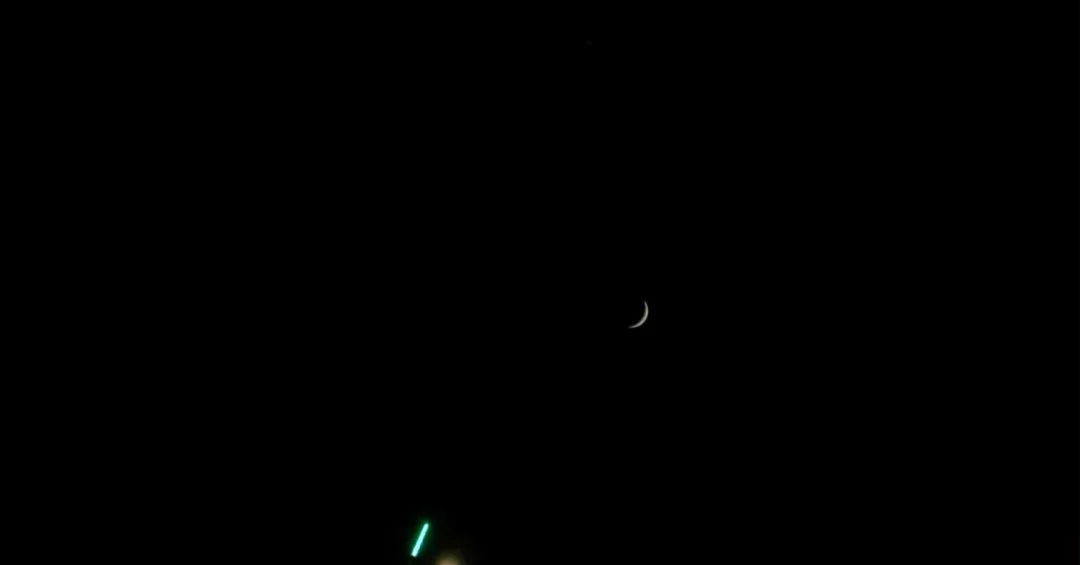
On the evening of Saturday, August 15, 2026, the crescent moon of the Islamic month of Rabi’ al-Awwal was observed in conjunction with the planet Venus in the western sky over the city of Turaif in the Northern Borders Region of Saudi Arabia. The celestial event, visible to the naked eye after sunset, was reported by the official Saudi Press Agency (SPA) and captivated local skywatchers and astronomy enthusiasts.
Context and Background
Astronomical phenomena have historically played a crucial role in human civilization, serving as the foundation for timekeeping, calendar systems, and the delineation of seasons. In Islam, the lunar calendar governs religious observances, making the sighting of the crescent moon of particular significance. The conjunction of the Moon and Venus, a periodic occurrence, is part of the natural motion of celestial bodies and offers a unique opportunity for observation and reflection on the cosmos.
The event took place in Turaif, a city known for its clear skies and low light pollution, providing ideal conditions for astronomical observations. The SPA report highlighted that the phenomenon could be witnessed without any specialized equipment, making it accessible to the general public.
Key Details
According to the SPA, the conjunction was visible in the western horizon shortly after sunset. The proximity of the crescent Moon and Venus created a striking visual display. Amateur astronomers and photographers were able to capture the event using smartphones and digital cameras, while binoculars revealed finer details, including earthshine on the unlit portion of the Moon.
Such events are not only of aesthetic interest but also serve educational purposes, fostering public engagement with science and astronomy. The SPA emphasized that the phenomenon is part of the natural apparent motion of the Moon and planets, recurring at different times throughout the year, and encourages continued observation of the night sky.
Implications and Impact
This astronomical event underscores Saudi Arabia’s growing interest in space and science, aligned with the Kingdom’s Vision 2030 goals of fostering a knowledge-based society and promoting STEM education. The visibility of such phenomena in the Kingdom provides an opportunity to inspire youth and the public, reinforcing Saudi Arabia’s commitment to scientific advancement and its role as a hub for innovation in the region.
The event also highlights the importance of the Kingdom’s natural and cultural heritage, as stargazing and astronomy have deep roots in Arabian tradition, from navigation to timekeeping. By encouraging public observation and documentation of celestial events, Saudi Arabia is nurturing a culture of scientific curiosity and appreciation for the universe.
Vision 2030 Alignment
The successful observation of the Moon-Venus conjunction in Turaif exemplifies the Kingdom’s broader efforts to integrate science and technology into society, a key pillar of Vision 2030. As Saudi Arabia invests in space programs, research, and education, events like this serve as accessible entry points for citizens and residents to engage with the wonders of the universe. This phenomenon not only enriches the cultural landscape but also contributes to building a scientifically literate community, ready to contribute to the Kingdom’s future ambitions in space and beyond.
20 Questions
Q1. What was the astronomical phenomenon observed in Turaif?
A1. The crescent moon of Rabi’ al-Awwal was seen in conjunction with the planet Venus in the western sky after sunset, visible to the naked eye.
Q2. When did this event occur?
A2. The observation took place on the evening of Saturday, August 15, 2026, corresponding to the 2nd of Rabi’ al-Awwal, 1448 AH.
Q3. In which region of Saudi Arabia is Turaif located?
A3. Turaif is a city in the Northern Borders Region (Al-Hudud ash-Shamaliyah) of Saudi Arabia.
Q4. Did observers need telescopes to see the conjunction?
A4. No, the conjunction was visible to the naked eye without any optical aids, though binoculars enhanced details such as earthshine.
Q5. What is the Islamic month in which this event occurred?
A5. The month is Rabi’ al-Awwal, the third month of the Islamic lunar calendar.
Q6. What causes the apparent conjunction of the Moon and Venus?
A6. The conjunction results from the apparent motion of the Moon and planets in their orbits, as observed from Earth, leading to a temporary alignment in the sky.
Q7. How often do such conjunctions occur?
A7. They are periodic phenomena that occur at various times throughout the year, depending on the orbital positions of the celestial bodies.
Q8. Can the conjunction be photographed with regular cameras?
A8. Yes, smartphones and digital cameras can capture the event, and binoculars can reveal more detail, including earthshine.
Q9. What is earthshine?
A9. Earthshine is the faint illumination of the Moon’s dark side caused by sunlight reflecting off Earth, making the unlit portion faintly visible.
Q10. Why are lunar phases important in Islam?
A10. The Islamic lunar calendar is based on moon phases, determining the dates of religious observances like Ramadan and Hajj.
Q11. What is the significance of the crescent moon sighting?
A11. The sighting of the crescent marks the beginning of Islamic months, and in this case, confirmed the start of Rabi’ al-Awwal.
Q12. How does this event reflect Saudi Arabia’s interest in astronomy?
A12. The SPA’s coverage and public accessibility of the event highlight the Kingdom’s encouragement of scientific observation and education.
Q13. What is Vision 2030’s goal regarding science and technology?
A13. Vision 2030 aims to diversify the economy and build a knowledge-based society, with significant investments in STEM education and space research.
Q14. How can such events inspire the youth in Saudi Arabia?
A14. They ignite curiosity in science and astronomy, potentially steering youth toward STEM careers and supporting national scientific advancement.
Q15. Are there organized astronomy groups in Saudi Arabia?
A15. Yes, various clubs and societies, such as the Saudi Astronomical Society, promote stargazing and educational activities across the Kingdom.
Q16. What role did the Saudi Press Agency play in reporting this event?
A16. The SPA provided official coverage, ensuring accurate information was disseminated to the public and international audiences.
Q17. How does the Northern Borders Region benefit from such events?
A17. The region gains attention as a destination for astronomy tourism, boosting local interest and potential economic opportunities.
Q18. Can such phenomena be predicted in advance?
A18. Yes, astronomers calculate celestial positions, allowing precise predictions of conjunctions and other events.
Q19. What cultural significance do stars and planets have in Arabian tradition?
A19. Historically, they guided navigation, timekeeping, and agriculture, drawing deep roots in Arabian culture.
Q20. How can the public participate in observing future astronomical events?
A20. The public can follow announcements from SPA and astronomy clubs, and use simple tools like smartphone apps to locate and observe such phenomena.
Reader Feedback
We value your thoughts. Please share your feedback on this article.
Your feedback helps us improve our coverage.