


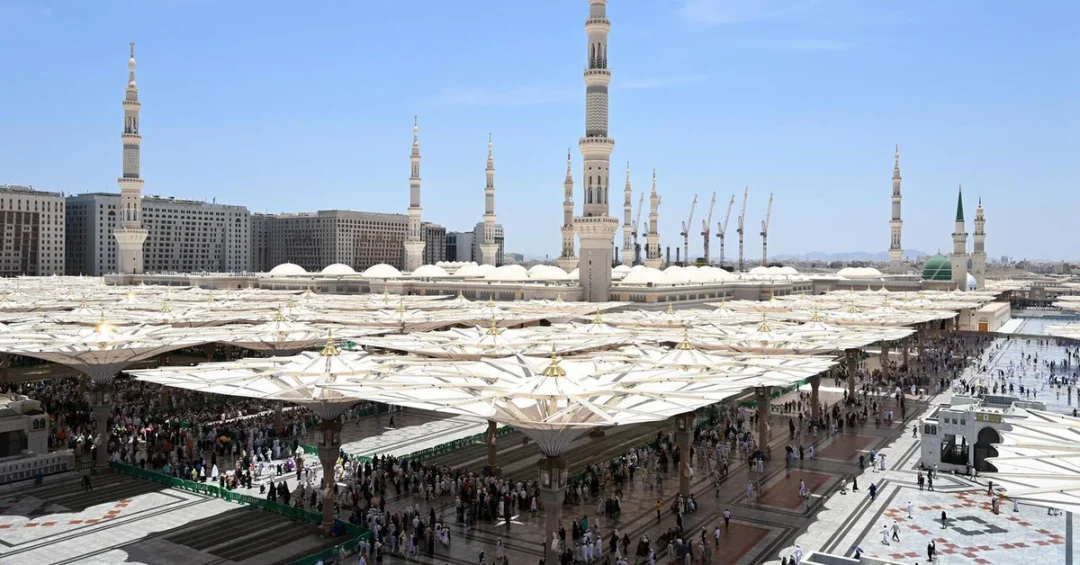
Pilgrims from around the world are enjoying a deeply spiritual atmosphere at the Prophet’s Mosque in Madinah, where they gather for prayer, supplication, and Quran recitation following the completion of Hajj. The Saudi Press Agency (SPA) documented the serene environment, highlighting the sense of security and comfort provided by the government of the Custodian of the Two Holy Mosques, King Salman bin Abdulaziz Al Saud, and His Royal Highness Crown Prince Mohammed bin Salman bin Abdulaziz Al Saud.
Context and Background
The Prophet’s Mosque, Al-Masjid an-Nabawi, is the second holiest site in Islam after the Grand Mosque in Makkah. It holds immense historical and religious significance as the mosque built by the Prophet Muhammad (peace be upon him) and his final resting place. Each year, millions of Muslims from every corner of the globe visit Madinah, particularly after Hajj, to offer prayers and seek spiritual tranquility. The Kingdom of Saudi Arabia has long committed to serving these pilgrims, ensuring their journey is safe and fulfilling.
Key Details
According to SPA, the mosque is currently overflowing with worshippers who have come to spend time in devotion. The agency’s on-ground documentation captured the profound spiritual atmosphere and the pilgrims’ sense of security, attributing it to the extensive services and facilities provided by the Saudi government. These include expanded prayer areas, enhanced crowd management, round-the-clock medical care, and multilingual guidance. The Saudi leadership’s unwavering dedication to pilgrim welfare is evident in the seamless operations that allow worshippers to focus on their spiritual journey.
Implications and Impact
The successful management of the post-Hajj season underscores Saudi Arabia’s logistical prowess and its role as the guardian of Islam’s holiest sites. It reinforces the Kingdom’s standing in the Islamic world and demonstrates its capacity to host millions with efficiency and compassion. The positive experiences of pilgrims translate into strengthened international goodwill and highlight Saudi Arabia’s commitment to fostering peace and spiritual harmony. Moreover, the smooth flow of visitors contributes to the local economy and showcases the nation’s advanced infrastructure.
Vision 2030 Alignment
This achievement aligns seamlessly with Saudi Vision 2030, which seeks to enhance the quality of life for citizens and visitors alike, and to elevate the Kingdom’s global stature. By continuously improving services for pilgrims, Saudi Arabia not only fulfills its sacred duty but also promotes cultural exchange and economic diversification through religious tourism. As Vision 2030 progresses, the Kingdom remains dedicated to providing world-class experiences for all who visit its holy sites, ensuring that the spiritual legacy of the Prophet’s Mosque endures for generations to come.
20 Questions
Q1. What is the significance of the Prophet’s Mosque?
A1. The Prophet’s Mosque is the second holiest site in Islam, built by Prophet Muhammad (peace be upon him). It serves as a major pilgrimage destination and a center for spiritual learning and worship.
Q2. Why do pilgrims visit the Prophet’s Mosque after Hajj?
A2. After completing Hajj, many pilgrims visit Madinah to pray at the Prophet’s Mosque, seeking spiritual blessings and tranquility. It is a tradition deeply rooted in Islamic practice.
Q3. How does Saudi Arabia ensure the comfort of pilgrims?
A3. Saudi Arabia provides extensive services including expanded prayer areas, medical care, crowd management, and multilingual guidance. These efforts ensure pilgrims can worship with ease and safety.
Q4. What did the Saudi Press Agency document?
A4. SPA documented the spiritual atmosphere and sense of security among pilgrims at the Prophet’s Mosque. Their reports highlighted the effective services provided by the Saudi government.
Q5. Who is responsible for the services at the Prophet’s Mosque?
A5. The government of the Custodian of the Two Holy Mosques, King Salman bin Abdulaziz Al Saud, and Crown Prince Mohammed bin Salman oversee and fund these services to ensure pilgrim welfare.
Q6. How many pilgrims visit the Prophet’s Mosque annually?
A6. Millions of pilgrims from around the world visit the Prophet’s Mosque each year, especially during Hajj and Umrah seasons. Exact numbers vary annually based on global conditions.
Q7. What facilities are available for pilgrims at the mosque?
A7. Facilities include air-conditioned prayer halls, medical clinics, food courts, and extensive guidance services. These amenities cater to the diverse needs of international pilgrims.
Q8. How does Saudi Arabia handle crowd management during peak times?
A8. Saudi authorities use advanced technology, trained personnel, and strategic planning to manage crowds efficiently. This ensures safety and smooth movement within the mosque and its surroundings.
Q9. What is the role of the Crown Prince in pilgrim services?
A9. Crown Prince Mohammed bin Salman is actively involved in overseeing and enhancing pilgrim services as part of Vision 2030. His leadership ensures continuous improvement and innovation.
Q10. How does the experience of pilgrims reflect on Saudi Arabia?
A10. Positive pilgrim experiences showcase Saudi Arabia’s commitment to hospitality and its capability to manage large-scale religious events. This enhances the Kingdom’s global reputation.
Q11. What spiritual activities do pilgrims engage in at the mosque?
A11. Pilgrims engage in prayer, supplication, Quran recitation, and meditation. These activities foster a deep sense of peace and spiritual connection.
Q12. How does the Saudi government ensure security at the mosque?
A12. Security is maintained through surveillance, trained security personnel, and coordination with various agencies. This creates a safe environment for worship.
Q13. What is the significance of Madinah in Islam?
A13. Madinah is the city where Prophet Muhammad (peace be upon him) migrated and established the first Islamic state. It hosts the Prophet’s Mosque, a site of immense religious importance.
Q14. How does Vision 2030 aim to improve religious tourism?
A14. Vision 2030 seeks to enhance religious tourism by improving infrastructure, services, and accessibility. It aims to provide a seamless and enriching experience for all visitors.
Q15. What languages are supported for pilgrim guidance?
A15. Guidance is available in multiple languages including Arabic, English, Urdu, French, and others. This ensures clear communication with pilgrims from diverse backgrounds.
Q16. How does the Saudi government handle medical emergencies?
A16. Medical teams and clinics are stationed within the mosque complex to provide immediate care. Advanced hospitals nearby are also equipped to handle emergencies.
Q17. What is the economic impact of religious tourism on Madinah?
A17. Religious tourism boosts local businesses, creates jobs, and stimulates economic growth. It contributes significantly to the Kingdom’s diversification efforts.
Q18. How do pilgrims describe their experience at the mosque?
A18. Pilgrims often describe their experience as deeply moving and peaceful. They express gratitude for the services that allow them to focus on worship.
Q19. What measures are taken to ensure cleanliness at the mosque?
A19. The mosque is cleaned continuously by dedicated staff using advanced equipment. High hygiene standards are maintained to provide a pure environment for worship.
Q20. How can one prepare for a visit to the Prophet’s Mosque?
A20. Visitors should plan ahead, respect local customs, and familiarize themselves with mosque etiquette. Utilizing official guides and services enhances the spiritual experience.
Reader Feedback
We value your thoughts. Please share your feedback on this article.
Your feedback helps us improve our coverage.
Related articles
 City Walk Garden Attracts Visitors to Jeddah Season 2024
 Haramain High Speed Railway Transports 1.07M Pilgrims
 Jeddah Season’s MotoSurf Cup Thrills at Obhur Corniche
 Hadiyah Distributes Over Two Million Water Bottles to Prophet’s Mosque Visitors
 Islamic Affairs Ministry Offers Dawah in 45 Languages for Umrah
 Al-Faqra: Madinah’s Mountain Escape