


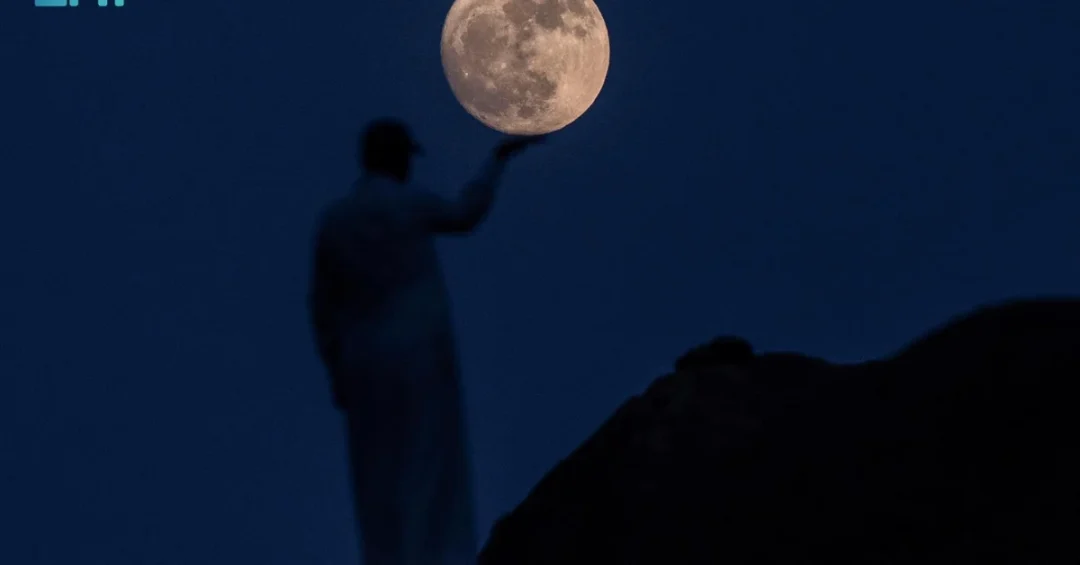
The Saudi Press Agency (SPA) observed a rare blue supermoon illuminating the night sky on Monday, August 19, 2024, from Jeddah, as the celestial body appeared larger and brighter than usual due to its closer proximity to Earth. This astronomical event, confirmed by the Jeddah Astronomy Society (JAS), captivated skywatchers across the Kingdom and highlighted Saudi Arabia’s growing engagement with scientific observation and celestial phenomena.
Context and Background
The blue supermoon is a rare convergence of two lunar phenomena: a supermoon, where the moon is at its closest point to Earth in its orbit (perigee), and a seasonal blue moon, which is the third full moon in a season that contains four full moons. According to Majed Abu Zahra, Director of the Jeddah Astronomy Society, this event occurs approximately every two and a half years, making it a significant occasion for astronomers and the public alike. The SPA’s documentation of the event underscores the Kingdom’s commitment to promoting scientific awareness and education in line with Vision 2030.
Key Details
Abu Zahra explained that the supermoon occurs when the distance between the moon and Earth’s centers falls below 362,146 kilometres, earning it the scientific label of a perigee moon. Despite its name, the blue moon does not exhibit a blue hue but resembles the typical full moons observed each month. The full moon of August 19, 2024, was notably distinctive as it combined both a supermoon and a blue moon. Abu Zahra noted that a full moon is ideal for observing the radiant features on the moon’s surface, as the sun fully illuminates the moon’s face, making shadows short and the terrain appear flat.
Implications and Impact
This rare celestial event garnered attention not only in Saudi Arabia but also globally, as astronomy enthusiasts and scientists marveled at the phenomenon. The SPA’s coverage reflects the Kingdom’s active role in documenting and sharing scientific occurrences, fostering a culture of curiosity and learning. Such events also present opportunities for educational initiatives and public engagement, aligning with Saudi Arabia’s efforts to advance science and technology under Vision 2030. The observation serves as a reminder of the shared human experience of exploring the universe, reinforcing international collaboration in astronomy.
Vision 2030 Alignment
The documentation of the blue supermoon by the SPA and the insights from the Jeddah Astronomy Society exemplify Saudi Arabia’s dedication to scientific advancement and knowledge dissemination, key pillars of Vision 2030. By highlighting such phenomena, the Kingdom encourages youth involvement in STEM fields and promotes a forward-looking society that values discovery and innovation. As Saudi Arabia continues to diversify its economy and invest in education, events like these inspire the next generation of scientists and reinforce the nation’s global standing in research and exploration.
20 Questions
Q1. What is a blue supermoon?
A1. A blue supermoon is a rare combination of a supermoon, where the moon is closest to Earth, and a seasonal blue moon, the third full moon in a season with four full moons.
Q2. When did the blue supermoon occur?
A2. The blue supermoon occurred on Monday, August 19, 2024, as observed by the Saudi Press Agency in Jeddah.
Q3. Who provided details about the event?
A3. Majed Abu Zahra, Director of the Jeddah Astronomy Society, provided expert insights on the phenomenon.
Q4. How often does a blue supermoon happen?
A4. A blue supermoon occurs approximately once every two and a half years, when a supermoon coincides with a seasonal blue moon.
Q5. What is a supermoon?
A5. A supermoon is when the moon is at or near its closest proximity to Earth (perigee) while being full, making it appear larger and brighter.
Q6. What is the scientific term for a supermoon?
A6. The scientific term is perigee moon, referring to the moon’s closest approach to Earth.
Q7. Why is it called a blue moon?
A7. It is called a blue moon because it is an extra full moon in a season, not because of its color, which remains typical.
Q8. Does the blue moon appear blue?
A8. No, contrary to its name, the blue moon does not exhibit a blue hue and looks like a regular full moon.
Q9. What distance defines a supermoon?
A9. A supermoon occurs when the distance between the moon and Earth’s centers falls below 362,146 kilometres.
Q10. How many full moons are in a typical season?
A10. Usually, there are three full moons in each season, but occasionally four occur, with the extra one called a seasonal blue moon.
Q11. What makes the August 19 full moon distinctive?
A11. It is distinctive because it is both a supermoon and a blue moon, a rare combination.
Q12. Why is a full moon ideal for observation?
A12. A full moon is ideal because the sun fully illuminates its face, making surface features radiant and shadows short.
Q13. Where was the event observed?
A13. The event was observed in Jeddah, Saudi Arabia, by the Saudi Press Agency.
Q14. What organization provided commentary?
A14. The Jeddah Astronomy Society (JAS) provided expert commentary on the phenomenon.
Q15. What is the significance of the event for Saudi Arabia?
A15. It highlights Saudi Arabia’s engagement with science and astronomy, supporting Vision 2030 goals for education and innovation.
Q16. How does this event align with Vision 2030?
A16. It promotes scientific awareness and STEM education, aligning with Vision 2030’s focus on knowledge-based development.
Q17. What did Majed Abu Zahra explain about the supermoon?
A17. Abu Zahra explained that the supermoon is a rare phenomenon occurring every few years, with the moon closer to Earth than usual.
Q18. What is a seasonal blue moon?
A18. A seasonal blue moon is the third full moon in a season that has four full moons, occurring about every two and a half years.
Q19. How did the SPA contribute to the coverage?
A19. The SPA documented the event, providing factual reporting and sharing insights from the Jeddah Astronomy Society.
Q20. Why is this event important for astronomers?
A20. It offers a rare opportunity to study lunar phenomena and engage the public in astronomy, fostering scientific curiosity.
Reader Feedback
We value your thoughts. Please share your feedback on this article.
Your feedback helps us improve our coverage.
Related articles
 Tuwaiq Academy Launches First Technical High School in Riyadh
 KAUST Breakthrough Boosts Solar Cell Efficiency
 GACA Issues Air Carrier and Airport Classifications for July 2024
 Suhail Star Marks End of Summer Heat in Saudi Arabia
 Saudi Geological Survey Launches 27th Issue of Ardhona Journal
 Third Global AI Summit to Convene in Riyadh, September 10-12