


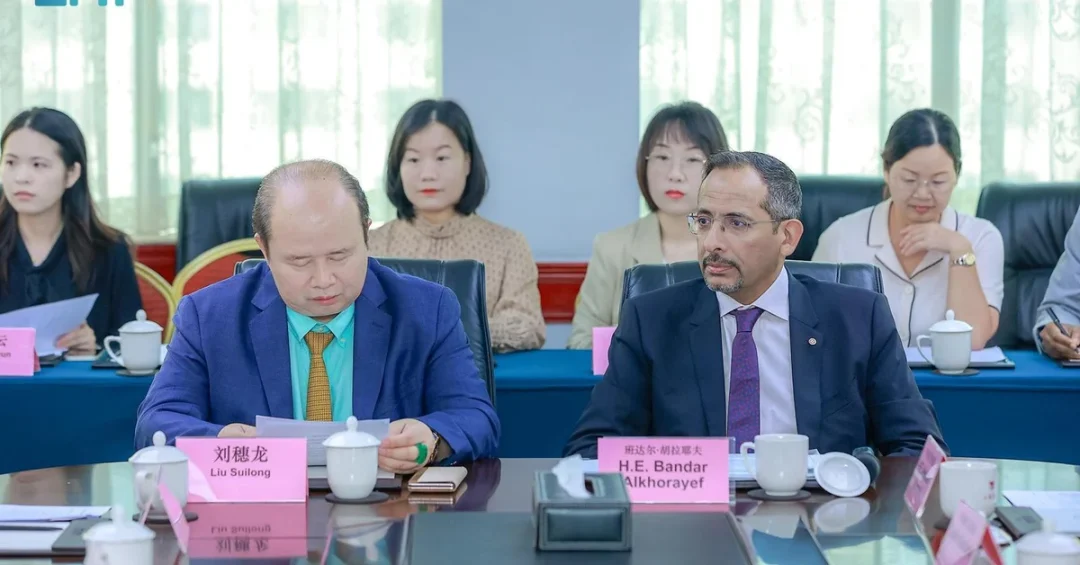
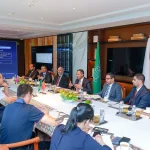
Saudi Minister of Industry and Mineral Resources Bandar bin Ibrahim Al-Khorayef invited Chinese companies to invest in promising industrial sectors during an official visit to the People’s Republic of China, as part of efforts to deepen economic ties and advance the Kingdom’s industrial base. The invitation was extended at a roundtable meeting organized by the Federation of Chambers of Commerce in Guangzhou, where the minister highlighted opportunities aligned with the National Industrial Strategy.
Context and Background
The visit underscores Saudi Arabia’s commitment to diversifying its economy and attracting foreign investment in key sectors. It reflects the strong relationship between the Kingdom and China, two nations with complementary economic strengths. The meeting in Guangzhou, a major industrial and commercial hub, brought together Saudi officials and Chinese business leaders to explore collaboration.
Key Details
Minister Al-Khorayef outlined the incentives and services available to industrial investors in Saudi Arabia, including developed industrial lands, financing options, workforce training, and preferential treatment for local products in government procurement. He specifically invited investment in automotive, food, pharmaceutical, aviation, machinery, equipment, and renewable energy industries. “We are looking for companies that can help us boost investment in key industrial sectors that are essential for the Kingdom,” he said, noting the rising demand for buses, trucks, and light-duty vehicles.
Implications and Impact
This outreach is expected to strengthen Saudi-Chinese economic partnerships, particularly in industry and mining, and support the Kingdom’s efforts to build resilient supply chains. It also signals Saudi Arabia’s openness to international collaboration and its strategic focus on becoming a global industrial hub.
Vision 2030 Alignment
The invitation aligns with Vision 2030’s goal of economic diversification and industrial development. By attracting Chinese investment, Saudi Arabia aims to localize manufacturing, create jobs, and enhance non-oil exports, contributing to a sustainable and diversified economy.
20 Questions
Q1. Who extended the invitation to Chinese companies?
A1. Saudi Minister of Industry and Mineral Resources Bandar bin Ibrahim Al-Khorayef extended the invitation during a roundtable meeting in Guangzhou, China.
Q2. What is the National Industrial Strategy?
A2. It is a Saudi initiative to diversify the industrial base, boost local manufacturing, and attract investment in key sectors to support Vision 2030.
Q3. Which sectors are highlighted for investment?
A3. The highlighted sectors include automotive, food, pharmaceutical, aviation, machinery, equipment, and renewable energy industries.
Q4. Where was the roundtable meeting held?
A4. The meeting was held in Guangzhou, China, organized by the Federation of Chambers of Commerce.
Q5. What incentives does Saudi Arabia offer to industrial investors?
A5. Incentives include developed industrial lands, industrial financing, workforce training, and preferences for local products in government purchases.
Q6. What did Minister Al-Khorayef say about Saudi-China relations?
A6. He praised the strong relationship at both leadership and people-to-people levels and expressed a desire to enhance economic partnership in industry and mining.
Q7. Who attended the meeting from the Saudi side?
A7. Attendees included Assistant Minister Dr. Abdullah Al-Ahmari, NIDC CEO Eng. Saleh Al-Sulami, and MODON CEO Eng. Majid Al-Argoubi.
Q8. What is the purpose of the minister’s visit to China?
A8. The visit aims to strengthen economic ties, promote investment opportunities, and explore partnerships in industrial and mining sectors.
Q9. How does this invitation align with Vision 2030?
A9. It supports economic diversification, localizes manufacturing, creates jobs, and boosts non-oil exports, aligning with Vision 2030 goals.
Q10. What specific automotive segments are targeted?
A10. The focus is on developing supply chains for buses, trucks, and light-duty vehicles due to expected rising demand.
Q11. What is the role of the National Industrial Development Center (NIDC)?
A11. NIDC drives industrial development by enabling investments, fostering innovation, and supporting the National Industrial Strategy.
Q12. What is MODON’s role in industrial development?
A12. MODON develops and manages industrial cities and technology zones, providing infrastructure and services to industrial investors.
Q13. Why is Saudi Arabia focusing on these industrial sectors?
A13. These sectors are essential for economic diversification, job creation, and reducing reliance on oil revenues.
Q14. What benefits do Chinese companies gain from investing in Saudi Arabia?
A14. They gain access to a growing market, competitive incentives, strategic location, and opportunities to partner in large-scale projects.
Q15. How does this visit impact Saudi-China trade?
A15. It is expected to boost bilateral trade and investment, particularly in industry and mining, strengthening economic ties.
Q16. What is the significance of Guangzhou for this meeting?
A16. Guangzhou is a major industrial and commercial hub in China, making it an ideal location to engage with business leaders.
Q17. What are the expected outcomes of the roundtable?
A17. Expected outcomes include increased Chinese investment in Saudi industries, knowledge transfer, and joint ventures.
Q18. How does Saudi Arabia support workforce training?
A18. The Kingdom offers training programs to develop skilled labor, ensuring a capable workforce for industrial sectors.
Q19. What is the Saudi Authority for Industrial Cities and Technology Zones (MODON)?
A19. MODON is a government agency responsible for developing industrial lands and technology zones to attract investment.
Q20. How does this initiative benefit the Saudi economy?
A20. It diversifies the economy, creates jobs, enhances industrial capabilities, and increases non-oil exports, supporting sustainable growth.
Reader Feedback
We value your thoughts. Please share your feedback on this article.
Your feedback helps us improve our coverage.
Related articles
 24 Fintech Conference Concludes with Global Impact
 Mawani Reports 26.57% Cargo Growth at Saudi Ports in August 2024
 First Najran Dates Festival Concludes Successfully
 ZATCA Issues New Customs Fee Rules to Boost Trade
 IsDB President Visits BAKAD Ring-Road Project in Kazakhstan
 Saudi Minister Meets Foton Motor to Localize Vehicle Manufacturing