


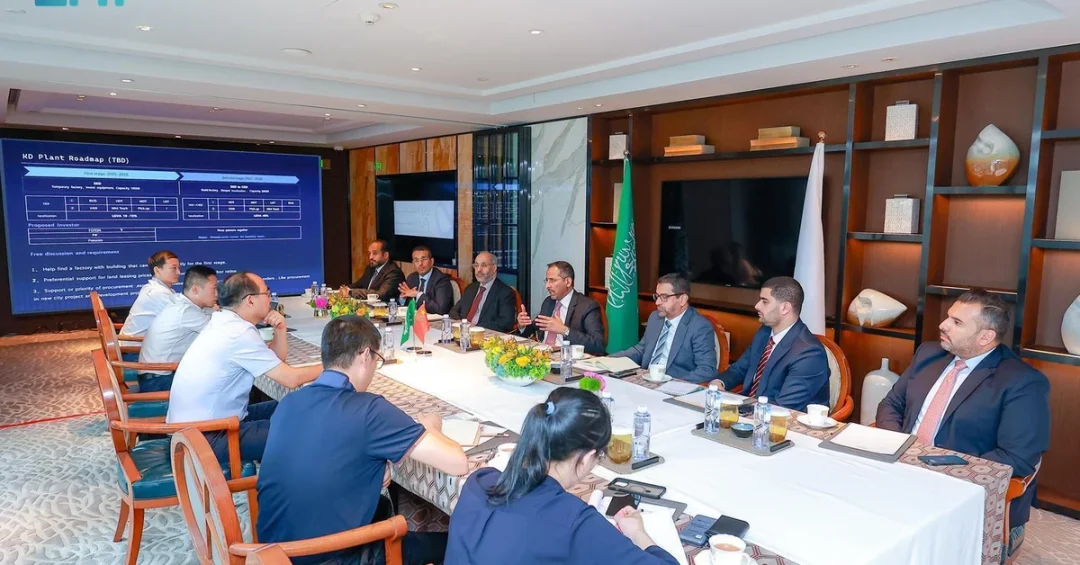
Saudi Minister of Industry and Mineral Resources Bandar bin Ibrahim Alkhorayef met with officials from Foton Motor Company in Guangzhou, China, on September 7, 2024, to discuss enhancing cooperation in vehicle manufacturing and localizing bus, truck, and light-transport production in the Kingdom. The meeting, attended by representatives from the Ministry of Investment, the Ministry of Transport and Logistic Services, and entities from the industry and mineral resources sector, focused on investment opportunities in Saudi Arabia’s vehicle and bus manufacturing sector and how to localize this vital industry in line with Vision 2030 goals.
Context and Background
Saudi Arabia is actively pursuing economic diversification under Vision 2030, aiming to reduce dependence on oil revenues by developing non-oil sectors, including advanced manufacturing. The National Industrial Strategy, a key component of Vision 2030, seeks to localize industries, attract foreign investment, and create high-skilled jobs. The automotive sector is a priority due to its potential to drive technological transfer, boost exports, and integrate with global supply chains.
Foton Motor, founded in 1996 in Beijing, is a leading global manufacturer of commercial vehicles, including light, medium, and heavy trucks. The company has a strong presence in international markets, including Saudi Arabia, and is known for its innovation in electric and new energy vehicles. This meeting underscores Saudi Arabia’s commitment to partnering with global leaders to build a domestic automotive ecosystem.
Key Details
During the meeting, Minister Alkhorayef emphasized the ministry’s keenness to enhance cooperation with international companies specialized in commercial and heavy vehicle manufacturing, including Foton Motor. He highlighted the Kingdom’s ambition to become a regional hub for the automotive industry and an attractive destination for foreign investments. The discussions covered available investment opportunities in the vehicle and bus manufacturing sector and strategies to localize the industry, contributing to economic diversification and the goals of the National Industrial Strategy.
Foton Motor officials expressed strong interest in the Saudi market and a desire to expand their investments in the Kingdom, contribute to localizing the industry, and transfer technical knowledge to national cadres. The meeting was attended by officials from the Ministry of Investment, the Ministry of Transport and Logistic Services, and other entities from the industry and mineral resources sector, reflecting a coordinated government approach to industrial development.
Implications and Impact
This meeting signals Saudi Arabia’s growing attractiveness as a destination for automotive manufacturing investment. Localizing bus, truck, and light-transport manufacturing would reduce reliance on imports, create jobs, and stimulate ancillary industries such as parts manufacturing and logistics. It also aligns with the Kingdom’s efforts to become a logistics hub connecting three continents, as outlined in the National Transport and Logistics Strategy.
For Foton Motor, expanding in Saudi Arabia offers access to a growing market and a strategic gateway to the Middle East and Africa. The transfer of technical knowledge to Saudi nationals will enhance local capabilities and support the development of a skilled workforce. This collaboration could also attract other international manufacturers, further strengthening the Kingdom’s industrial base.
Vision 2030 Alignment
This initiative directly supports Vision 2030 by diversifying the economy, localizing strategic industries, and attracting foreign investment. The automotive sector is a key pillar of the National Industrial Strategy, which aims to increase the industrial sector’s contribution to GDP and boost non-oil exports. By partnering with global leaders like Foton Motor, Saudi Arabia is advancing its goal of becoming a regional automotive hub and a global player in advanced manufacturing, ultimately creating a sustainable and diversified economy for future generations.
20 Questions
Q1. Who met with Foton Motor officials in Guangzhou?
A1. Saudi Minister of Industry and Mineral Resources Bandar bin Ibrahim Alkhorayef met with Foton Motor officials in Guangzhou on September 7, 2024, to discuss cooperation in vehicle manufacturing and localization.
Q2. What was the main purpose of the meeting?
A2. The meeting aimed to enhance cooperation in vehicle manufacturing and localize bus, truck, and light-transport manufacturing in Saudi Arabia, supporting economic diversification and Vision 2030 goals.
Q3. Which Saudi ministries were represented at the meeting?
A3. The Ministry of Investment, the Ministry of Transport and Logistic Services, and entities from the industry and mineral resources sector attended the meeting, demonstrating a collaborative government approach.
Q4. What did Minister Alkhorayef emphasize during the meeting?
A4. He stressed the ministry’s keenness to cooperate with international companies specialized in commercial and heavy vehicles, and highlighted Saudi Arabia’s goal to become a regional automotive hub and attractive investment destination.
Q5. What is Foton Motor’s background?
A5. Foton Motor, founded in 1996 in Beijing, is a leading global manufacturer of commercial vehicles, including light, medium, and heavy trucks, with a strong presence in many markets, including Saudi Arabia.
Q6. How does this meeting align with Vision 2030?
A6. It supports Vision 2030 by diversifying the economy, localizing strategic industries, attracting foreign investment, and advancing the National Industrial Strategy to boost non-oil GDP.
Q7. What investment opportunities were reviewed?
A7. Participants reviewed opportunities in Saudi Arabia’s vehicle and bus manufacturing sector, focusing on localizing production and leveraging global expertise to build a domestic automotive ecosystem.
Q8. What did Foton Motor officials express interest in?
A8. They expressed strong interest in the Saudi market, a desire to expand investments, contribute to localizing the industry, and transfer technical knowledge to national cadres.
Q9. Why is localizing the automotive industry important for Saudi Arabia?
A9. It reduces import dependence, creates jobs, stimulates ancillary industries, and supports economic diversification, aligning with the goals of the National Industrial Strategy.
Q10. What role does the Ministry of Industry and Mineral Resources play?
A10. The ministry works to enhance cooperation with leading international companies, attract investments, and localize strategic industries to diversify the national economy and achieve Vision 2030 objectives.
Q11. How might this cooperation benefit Saudi nationals?
A11. It will facilitate the transfer of technical knowledge and expertise to national cadres, enhancing local skills and creating high-value job opportunities in advanced manufacturing.
Q12. What is the significance of Saudi Arabia becoming a regional automotive hub?
A12. It positions the Kingdom as a key player in the global automotive supply chain, boosts exports, attracts further investment, and supports the goal of becoming a logistics hub connecting three continents.
Q13. What types of vehicles are involved in the localization efforts?
A13. The focus is on buses, trucks, and light-transport vehicles, which are essential for public transportation, logistics, and commercial activities, driving demand in the region.
Q14. How does this meeting reflect Saudi-China economic ties?
A14. It demonstrates deepening economic cooperation between Saudi Arabia and China, as Saudi Arabia seeks to leverage Chinese expertise in manufacturing to advance its industrial capabilities.
Q15. What is the National Industrial Strategy?
A15. The National Industrial Strategy is a Vision 2030 initiative aimed at diversifying the economy, localizing industries, increasing non-oil exports, and creating sustainable jobs in strategic sectors like automotive.
Q16. What are the potential economic impacts of localizing vehicle manufacturing?
A16. It can reduce imports, increase GDP contribution, create jobs, foster innovation, and develop a skilled workforce, while also attracting foreign direct investment and enhancing export competitiveness.
Q17. How does this fit into Saudi Arabia’s broader investment strategy?
A17. It aligns with efforts to attract foreign investment, improve the business environment, and develop strategic sectors, as part of the Kingdom’s goal to diversify revenue sources and achieve Vision 2030.
Q18. What are the next steps following this meeting?
A18. While specific next steps were not announced, the discussions pave the way for potential agreements and further collaboration between Foton Motor and Saudi entities to localize vehicle manufacturing.
Q19. How does this meeting support Saudi Arabia’s goal of economic diversification?
A19. By localizing the automotive industry, Saudi Arabia reduces oil dependency, develops non-oil sectors, and creates a sustainable, innovation-driven economy, directly supporting Vision 2030 objectives.
Q20. What message does this send to international investors?
A20. It signals Saudi Arabia’s openness to foreign investment and its commitment to partnering with global leaders, reinforcing the Kingdom’s position as an attractive destination for industrial investment.
Reader Feedback
We value your thoughts. Please share your feedback on this article.
Your feedback helps us improve our coverage.
Related articles
 Al-Ahsa Agricultural Exhibition Extended to September 10
 Minister Attends Investment Forum in Al-Baha
 ITFC CEO Meets Egyptian Finance Minister to Boost Econ
 Saudi Non-Oil Activities Grow 4.9% in Q2 2024
 NLO Reports Growth in Saudi Private Sector Jobs for August
 Saudi Arabia Joins GCC-Indonesia FTA Negotiations