


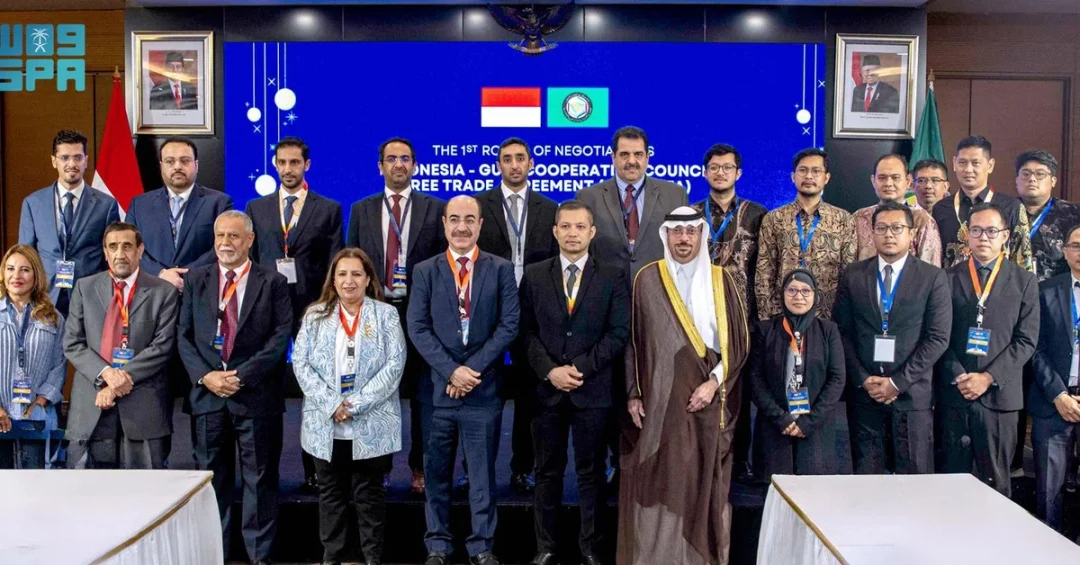
Riyadh, September 9, 2024 — The General Authority of Foreign Trade (GAFT) led the Saudi delegation at the first round of Free Trade Agreement (FTA) negotiations between the Gulf Cooperation Council (GCC) and the Republic of Indonesia, held in Jakarta from September 9 to 31. The Saudi team, headed by GAFT Deputy Governor Fareed bin Saeed Al-Asali, is overseeing commercial negotiations to ensure alignment with the Kingdom’s trade objectives and policies under Saudi Vision 2030.
Context and Background
The GCC-Indonesia FTA negotiations represent a significant step in strengthening economic ties between the Gulf region and Southeast Asia. Saudi Arabia, as a key GCC member, plays a pivotal role in shaping these discussions. The Kingdom’s participation is coordinated by GAFT, which is responsible for preparing and coordinating Saudi Arabia’s negotiating positions for discussions at the World Trade Organization and for free trade agreements. The Saudi delegation comprises nine technical sub-teams focusing on goods, services, investment, general provisions, e-commerce, intellectual property, government procurement, rules of origin, and economic evaluation.
These teams are made up of representatives from 46 government entities, ensuring a comprehensive approach to the negotiations. In 2023, the volume of trade between Saudi Arabia and Indonesia was approximately $7 billion, with key Saudi exports including metal products and organic chemicals, and major Indonesian exports to the Kingdom comprising vehicles and their parts, animal and vegetable fats and oils. This robust trade relationship underscores the potential benefits of a free trade agreement.
Key Details
The first round of negotiations, held in Jakarta, marks the beginning of a series of discussions aimed at reducing trade barriers and boosting economic cooperation. The Saudi delegation’s focus areas reflect the Kingdom’s strategic priorities, including diversifying the economy, enhancing non-oil exports, and attracting foreign investment. Deputy Governor Al-Asali emphasized the importance of aligning the negotiations with Saudi Arabia’s trade objectives, which are integral to Vision 2030.
The nine technical sub-teams are tasked with addressing various aspects of the agreement, from tariff reductions to intellectual property rights. Their work is crucial for ensuring that the final agreement benefits Saudi businesses and consumers while promoting sustainable economic growth. The participation of 46 government entities highlights the whole-of-government approach Saudi Arabia is taking to maximize the benefits of international trade agreements.
Implications and Impact
A successful GCC-Indonesia FTA would have far-reaching implications for both regions. For Saudi Arabia, it would open new markets for non-oil exports, particularly in sectors such as petrochemicals, metals, and services. It would also facilitate greater investment flows and technology transfer, supporting the Kingdom’s economic diversification goals. For Indonesia, the agreement would provide enhanced access to Gulf markets, benefiting its automotive and agricultural sectors.
Regionally, the FTA could serve as a model for future agreements between the GCC and other Southeast Asian nations, reinforcing Saudi Arabia’s role as a bridge between the Gulf and Asia. Internationally, it signals the Kingdom’s commitment to free trade and multilateral cooperation, even amid global economic uncertainties. The negotiations also align with Saudi Arabia’s efforts to strengthen ties with emerging economies and expand its diplomatic and economic footprint.
Vision 2030 Alignment
The GCC-Indonesia FTA negotiations are closely tied to Saudi Vision 2030, which aims to diversify the economy away from oil dependence and enhance international trade. By leading the negotiations, GAFT is directly contributing to the vision’s objectives of increasing non-oil exports, attracting foreign investment, and positioning Saudi Arabia as a global trade hub. The Kingdom’s proactive engagement in such agreements demonstrates its commitment to economic reform and global integration.
As the negotiations progress, Saudi Arabia will continue to play a leading role in shaping a fair and mutually beneficial agreement. The successful conclusion of the FTA will not only boost trade but also strengthen people-to-people ties and cultural exchange between the Gulf and Indonesia. Ultimately, it reflects the Kingdom’s forward-looking approach to international relations and its dedication to achieving the ambitious goals of Vision 2030.
20 Questions
Q1. What is the General Authority of Foreign Trade?
A1. The General Authority of Foreign Trade (GAFT) is a Saudi government entity responsible for managing and coordinating the Kingdom’s international trade negotiations and policies, ensuring they align with Saudi Vision 2030 goals.
Q2. Who led the Saudi delegation in the GCC-Indonesia FTA negotiations?
A2. The Saudi delegation was led by Fareed bin Saeed Al-Asali, Deputy Governor of the General Authority of Foreign Trade (GAFT), who oversees commercial negotiations to align with the Kingdom’s trade objectives.
Q3. When and where did the first round of negotiations take place?
A3. The first round of GCC-Indonesia Free Trade Agreement negotiations took place in Jakarta, Indonesia, from September 9 to 31, 2024, marking the beginning of formal trade talks.
Q4. What are the nine technical sub-teams focused on?
A4. The nine sub-teams focus on goods, services, investment, general provisions, e-commerce, intellectual property, government procurement, rules of origin, and economic evaluation, covering all key areas of the agreement.
Q5. How many government entities are represented in the Saudi delegation?
A5. The Saudi delegation comprises representatives from 46 government entities, ensuring a comprehensive and coordinated approach to the negotiations that reflects Saudi Arabia’s national interests.
Q6. What was the trade volume between Saudi Arabia and Indonesia in 2023?
A6. In 2023, the trade volume between Saudi Arabia and Indonesia was approximately $7 billion, highlighting the significant economic relationship between the two nations and the potential for growth.
Q7. What are Saudi Arabia’s key exports to Indonesia?
A7. Key Saudi exports to Indonesia include metal products and organic chemicals, which are essential commodities that support Indonesia’s industrial and manufacturing sectors, among others.
Q8. What are Indonesia’s major exports to Saudi Arabia?
A8. Major Indonesian exports to Saudi Arabia include vehicles and their parts, as well as animal and vegetable fats and oils, which are important for the Kingdom’s automotive and food industries.
Q9. Why is the GCC-Indonesia FTA important for Saudi Arabia?
A9. The FTA is important for Saudi Arabia as it aims to reduce trade barriers, boost non-oil exports, attract foreign investment, and diversify the economy in line with Vision 2030 objectives.
Q10. How does the FTA align with Saudi Vision 2030?
A10. The FTA aligns with Vision 2030 by promoting economic diversification, enhancing international trade, and positioning Saudi Arabia as a global trade hub, thus supporting the Kingdom’s long-term economic goals.
Q11. What role does GAFT play in the negotiations?
A11. GAFT leads and coordinates the Saudi delegation, prepares negotiating positions, and ensures that the discussions align with the Kingdom’s trade policies and objectives under Vision 2030.
Q12. What are the potential benefits for Indonesia from the FTA?
A12. Indonesia stands to benefit from enhanced access to Gulf markets, particularly for its automotive and agricultural products, which could lead to increased exports and economic growth.
Q13. How might the FTA affect regional trade dynamics?
A13. The FTA could strengthen economic ties between the GCC and Southeast Asia, serving as a model for future agreements and reinforcing Saudi Arabia’s role as a bridge between the regions.
Q14. What is the significance of the negotiations being held in Jakarta?
A14. Holding the negotiations in Jakarta underscores Indonesia’s importance as a key trading partner and demonstrates Saudi Arabia’s commitment to engaging with Southeast Asian nations.
Q15. What areas are covered by the negotiations?
A15. The negotiations cover goods, services, investment, e-commerce, intellectual property, government procurement, rules of origin, and economic evaluation, ensuring a comprehensive trade agreement.
Q16. How does the FTA support Saudi Arabia’s economic diversification?
A16. By opening new markets for non-oil exports and attracting investment, the FTA supports economic diversification, a core goal of Vision 2030 to reduce dependence on oil revenues.
Q17. What is the expected timeline for concluding the FTA?
A17. The timeline for concluding the FTA is not specified, as negotiations are ongoing. The first round marks the beginning of a series of discussions aimed at reaching a mutually beneficial agreement.
Q18. How does the FTA benefit Saudi businesses?
A18. Saudi businesses gain from reduced tariffs and improved market access in Indonesia, which can boost exports, foster partnerships, and enhance competitiveness in the global market.
Q19. What is the role of the World Trade Organization in these negotiations?
A19. While the FTA is a bilateral agreement between the GCC and Indonesia, it is consistent with WTO principles. GAFT also coordinates Saudi positions for WTO discussions, ensuring coherence in trade policy.
Q20. How does this FTA reflect Saudi Arabia’s global engagement?
A20. The FTA reflects Saudi Arabia’s proactive global engagement, strengthening ties with Asia, promoting free trade, and showcasing the Kingdom’s leadership in international economic diplomacy under Vision 2030.
Reader Feedback
We value your thoughts. Please share your feedback on this article.
Your feedback helps us improve our coverage.
Related articles
 Saudi Reef Launches Rural Development and Tourism Incubators
 IsDBI Completes Financial Mapping Project in Kazakhstan
 Saudi Electricity Company Sees Major Improvement in ESG Rating by S&P
 Riyadh to Host 8th Future Investment Initiative October 29-31
 SFD Signs $55M Loan for North Eleuthera Airport
 Saudi Liquidity Hits Record SAR2.898 Trillion in Q2 2024