


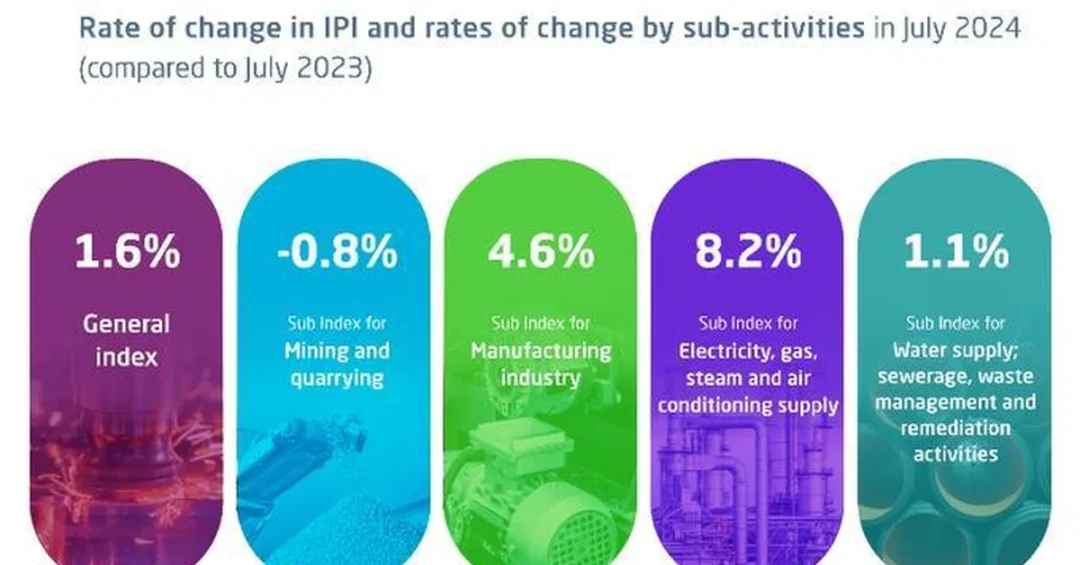
The General Authority for Statistics (GASTAT) has released the Industrial Production Index (IPI) results for July 2024, revealing a 1.6% increase compared to the same month in 2023. This growth reflects the Kingdom’s ongoing economic diversification and the resilience of its non-oil sectors, aligning with Saudi Vision 2030 objectives. The data, published on September 10, 2024, underscores the dynamic performance of Saudi Arabia’s industrial activities.
Context and Background
The Industrial Production Index is a key economic indicator that measures changes in the volume of industrial production over time. It is based on the Industrial Production Survey, which samples industrial establishments engaged in mining, manufacturing, electricity and gas supply, water supply, sanitation, waste management, and remediation activities. GASTAT publishes this index monthly, providing valuable insights into the Kingdom’s industrial performance and economic trends.
Key Details
In July 2024, the IPI rose by 1.6% year-on-year, driven by notable gains in several sub-indices. The manufacturing sector recorded a 4.6% increase, reflecting heightened activity and output. The electricity, gas, steam, and air conditioning supply sub-index surged by 8.2%, while water supply, sewerage, waste management, and remediation activities grew by 1.1%. Conversely, the mining and quarrying sub-index declined by 0.8%, and oil activities decreased by 1.1%. Non-oil activities showed robust growth, rising by 8.2% compared to July 2023.
Implications and Impact
The continued expansion of non-oil activities highlights the success of Saudi Arabia’s economic diversification efforts under Vision 2030. The strong performance in manufacturing and utilities signals increasing industrial capacity and infrastructure development. These trends contribute to job creation, attract foreign investment, and enhance the Kingdom’s global competitiveness. The decline in oil activities aligns with global market dynamics and Saudi Arabia’s strategic focus on reducing dependence on hydrocarbon revenues.
Vision 2030 Alignment
This positive IPI data reinforces Saudi Arabia’s progress toward Vision 2030 goals, particularly in diversifying the economy and boosting non-oil sectors. The growth in manufacturing and utilities demonstrates the Kingdom’s commitment to industrial development and sustainable economic growth. As Saudi Arabia continues to implement transformative initiatives, such indicators will play a crucial role in tracking and driving the nation’s prosperous future.
20 Questions
Q1. What is the Industrial Production Index (IPI)?
A1. The IPI is an economic indicator that tracks changes in the volume of industrial production quantities. It is based on the Industrial Production Survey, covering mining, manufacturing, electricity, gas, water supply, and waste management activities, and is published monthly by GASTAT.
Q2. When was the IPI data for July 2024 released?
A2. The General Authority for Statistics released the IPI data for July 2024 on September 10, 2024. The report provides insights into the Kingdom’s industrial performance and economic trends.
Q3. By how much did the IPI rise in July 2024 compared to July 2023?
A3. The IPI rose by 1.6% in July 2024 compared to the same month in 2023. This growth was driven by increased activity in manufacturing, electricity, gas, steam, air conditioning supply, and water supply activities.
Q4. Which sectors contributed to the IPI growth in July 2024?
A4. The growth was attributed to heightened activity in manufacturing, electricity, gas, steam, and air conditioning supply, as well as water supply, sewerage, waste management, and remediation activities. These sectors showed significant increases in their sub-indices.
Q5. What was the change in the manufacturing sub-index?
A5. The manufacturing sub-index increased by 4.6% in July 2024 compared to July 2023. This reflects strong performance and expanded output in the Kingdom’s manufacturing sector.
Q6. How did the mining and quarrying sub-index perform?
A6. The mining and quarrying sub-index decreased by 0.8% in July 2024 compared to the same month in 2023. This decline aligns with global market dynamics and strategic adjustments in oil production.
Q7. What was the percentage increase in electricity, gas, steam, and air conditioning supply?
A7. The sub-index for electricity, gas, steam, and air conditioning supply increased by 8.2% in July 2024. This notable growth indicates rising demand and expanded capacity in the utilities sector.
Q8. How much did water supply, sewerage, waste management, and remediation activities grow?
A8. This sub-index grew by 1.1% in July 2024 compared to July 2023. The increase reflects ongoing improvements in water infrastructure and environmental services.
Q9. What was the change in oil activities in July 2024?
A9. Oil activities decreased by 1.1% in July 2024 compared to the same period in 2023. This decline is consistent with Saudi Arabia’s efforts to diversify the economy and reduce reliance on oil revenues.
Q10. How did non-oil activities perform in July 2024?
A10. Non-oil activities increased by 8.2% in July 2024 compared to July 2023. This robust growth highlights the success of economic diversification initiatives under Vision 2030.
Q11. What is the source of the IPI data?
A11. The IPI data is derived from the Industrial Production Survey, conducted among a sample of industrial establishments involved in mining, manufacturing, electricity and gas supply, water supply, sanitation, waste management, and remediation activities.
Q12. How often is the IPI published?
A12. The IPI is published on a monthly basis by the General Authority for Statistics. This regular reporting provides timely insights into industrial performance and economic trends.
Q13. Why is the IPI important for Saudi Arabia’s economy?
A13. The IPI is a key economic indicator that tracks industrial production trends. It helps policymakers, investors, and analysts assess the health of the industrial sector and the overall economy, supporting informed decision-making.
Q14. What does the growth in non-oil activities signify?
A14. The 8.2% growth in non-oil activities signifies the successful diversification of Saudi Arabia’s economy. It indicates that sectors beyond oil are contributing significantly to economic growth, aligning with Vision 2030 goals.
Q15. How does the IPI data reflect Vision 2030 objectives?
A15. The IPI data reflects Vision 2030 objectives by showing strong growth in non-oil sectors such as manufacturing and utilities. This demonstrates progress in diversifying the economy and reducing dependence on oil revenues.
Q16. What are the implications of the decline in oil activities?
A16. The decline in oil activities aligns with global market conditions and Saudi Arabia’s strategic focus on economic diversification. It underscores the Kingdom’s commitment to reducing oil dependency and advancing non-oil sectors.
Q17. Which authority released the IPI data for July 2024?
A17. The General Authority for Statistics (GASTAT) released the IPI data for July 2024. GASTAT is the official statistical authority of Saudi Arabia, responsible for providing accurate and timely economic data.
Q18. What is the significance of the 8.2% increase in electricity and gas supply?
A18. The 8.2% increase in electricity and gas supply indicates growing industrial and residential demand. It reflects investments in energy infrastructure and the expansion of utility services to support economic growth.
Q19. How does the IPI data benefit international investors?
A19. The IPI data offers international investors valuable insights into Saudi Arabia’s industrial performance and economic trends. It helps assess investment opportunities and the overall business environment in the Kingdom.
Q20. What role does the IPI play in monitoring economic diversification?
A20. The IPI plays a crucial role in monitoring economic diversification by tracking the performance of various industrial sectors. It provides evidence of growth in non-oil activities, supporting the evaluation of Vision 2030 progress.
Reader Feedback
We value your thoughts. Please share your feedback on this article.
Your feedback helps us improve our coverage.
Related articles
 ZATCA Urges Excise Tax Filings for July and August by September 15
 Commerce Minister Attends Buraidah Dates Carnival
 Saudi Ministry Oversees 48 Fish Farming Agreements
 Folk Maritime Launches New India Red Sea Service from Jeddah
 Saudi Arabia Joins Startup 20 Summit in Brazil
 JCCI Hosts Indian Delegation to Boost Food Industry Ties