


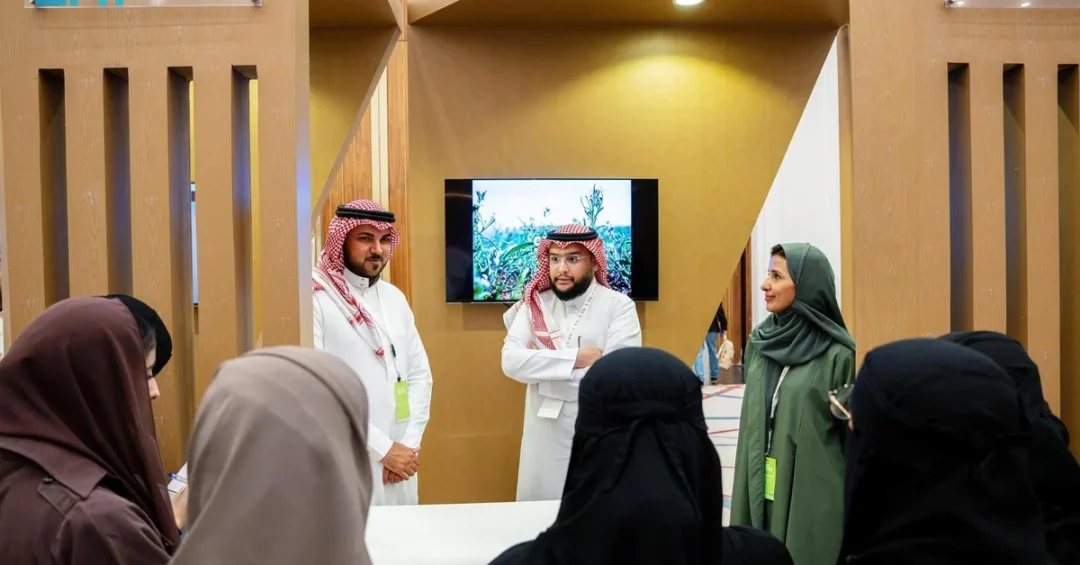
The Imam Turki Bin Abdullah Royal Reserve Development Authority is showcasing its environmental initiatives at the exhibition accompanying the 10th Regional Conservation Forum of the International Union for Conservation of Nature (IUCN) Regional Office for West Asia, held in Riyadh from September 10 to 11. The authority’s participation underscores Saudi Arabia’s commitment to biodiversity conservation and sustainable development, aligning with the Kingdom’s Vision 2030 goals.
Context and Background
The IUCN Regional Conservation Forum is a key gathering that brings together experts, policymakers, and environmentalists from across West Asia to discuss pressing conservation challenges and share best practices. This year’s forum, hosted in Riyadh, highlights Saudi Arabia’s growing role in global environmental stewardship. The accompanying exhibition provides a platform for organizations like the Imam Turki Bin Abdullah Royal Reserve Development Authority to display their contributions to environmental protection.
The Imam Turki Bin Abdullah Royal Reserve, one of Saudi Arabia’s largest reserves, is dedicated to preserving the Kingdom’s natural heritage. The authority’s work includes rehabilitating vegetation, protecting endangered species such as the Arabian leopard and sand gazelle, and employing cutting-edge technologies for environmental monitoring. These efforts are part of a broader national strategy to enhance biodiversity and achieve sustainable development.
Key Details
At the exhibition, the authority is presenting a range of innovative projects aimed at enhancing biodiversity and environmental sustainability. Visitors to the pavilion can learn about programs focused on vegetation cover rehabilitation, which involves planting native species and restoring degraded ecosystems. The authority is also highlighting its use of modern technologies, such as remote sensing and GPS tracking, to monitor wildlife and habitats in real-time.
These initiatives have positioned the Imam Turki Bin Abdullah Royal Reserve Development Authority at the forefront of conservation innovation in the region. By leveraging technology, the authority can make data-driven decisions to protect endangered species and manage natural resources effectively. The exhibition allows the authority to exchange ideas with international experts and explore potential collaborations.
Implications and Impact
The authority’s participation in the IUCN forum has significant implications for regional and international conservation efforts. It demonstrates Saudi Arabia’s proactive approach to environmental protection and its willingness to engage with global partners. The projects showcased can serve as models for other countries in West Asia and beyond, particularly in arid environments where biodiversity is under threat.
Furthermore, the forum facilitates knowledge transfer and capacity building, which are essential for addressing transboundary environmental challenges. By sharing its experiences, the authority contributes to the global dialogue on sustainable development and reinforces the Kingdom’s position as a leader in environmental stewardship.
Vision 2030 Alignment
The Imam Turki Bin Abdullah Royal Reserve Development Authority’s efforts are closely aligned with Saudi Vision 2030, which emphasizes environmental sustainability as a cornerstone of the Kingdom’s future. Vision 2030 includes goals to protect the environment, promote renewable energy, and enhance quality of life. The authority’s work on biodiversity conservation and sustainable development directly supports these objectives.
Through its participation in international forums like the IUCN Regional Conservation Forum, the authority also contributes to Saudi Arabia’s global engagement and reputation as a responsible global citizen. As the Kingdom continues to diversify its economy and invest in sustainable projects, the authority’s initiatives will play a vital role in preserving Saudi Arabia’s natural heritage for future generations.
20 Questions
Q1. What is the Imam Turki Bin Abdullah Royal Reserve Development Authority?
A1. The Imam Turki Bin Abdullah Royal Reserve Development Authority is a Saudi government body responsible for managing and protecting the Imam Turki Bin Abdullah Royal Reserve, one of the Kingdom’s largest natural reserves. It focuses on biodiversity conservation, sustainable development, and environmental education.
Q2. What is the 10th IUCN Regional Conservation Forum?
A2. The 10th IUCN Regional Conservation Forum is a gathering of environmental experts and policymakers from West Asia, organized by the International Union for Conservation of Nature. It aims to address regional conservation challenges and promote sustainable practices.
Q3. Where and when was the forum held?
A3. The forum was held in Riyadh, Saudi Arabia, from September 10 to 11, 2024.
Q4. What is the purpose of the exhibition accompanying the forum?
A4. The exhibition provides a platform for organizations to showcase their environmental projects and initiatives, facilitating knowledge exchange and collaboration among participants.
Q5. What is the Imam Turki Bin Abdullah Royal Reserve?
A5. It is a vast protected area in Saudi Arabia, dedicated to conserving wildlife and natural habitats. It is home to various species, including endangered ones, and is managed by the authority.
Q6. What innovative projects is the authority showcasing?
A6. The authority is showcasing projects on vegetation cover rehabilitation, protection of endangered species, and the use of modern technologies like remote sensing and GPS tracking for environmental monitoring.
Q7. How does the authority protect endangered species?
A7. The authority implements breeding programs, habitat restoration, and anti-poaching measures to protect species such as the Arabian leopard and sand gazelle.
Q8. What technologies are used for environmental monitoring?
A8. The authority uses remote sensing, GPS tracking, and data analytics to monitor wildlife movements, habitat health, and environmental changes in real-time.
Q9. How does the authority rehabilitate vegetation cover?
A9. It plants native species, restores degraded lands, and manages water resources to revive vegetation in the reserve.
Q10. What are the sustainable development goals?
A10. The Sustainable Development Goals are a set of 17 global goals adopted by the United Nations to end poverty, protect the planet, and ensure prosperity for all by 2030.
Q11. How does the authority contribute to these goals?
A11. By conserving biodiversity, promoting sustainable land management, and raising environmental awareness, the authority supports goals related to life on land, climate action, and sustainable communities.
Q12. What is the significance of the forum for Saudi Arabia?
A12. It demonstrates Saudi Arabia’s commitment to environmental protection, enhances its international standing, and provides opportunities for collaboration and knowledge exchange.
Q13. Who participates in the IUCN forum?
A13. Government officials, environmental experts, researchers, and representatives from non-governmental organizations from West Asia and beyond participate in the forum.
Q14. What are the benefits of the authority’s participation?
A14. It allows the authority to share its successes, learn from others, and build partnerships that can enhance its conservation efforts.
Q15. How does the authority engage with local communities?
A15. The authority involves local communities in conservation activities, provides environmental education, and promotes sustainable livelihoods that benefit both people and nature.
Q16. What challenges does the reserve face?
A16. Challenges include desertification, climate change, and human-wildlife conflict, which the authority addresses through scientific research and community engagement.
Q17. How does the authority measure success?
A17. Success is measured through biodiversity indicators, habitat quality, species population trends, and community satisfaction.
Q18. What role does technology play in the authority’s work?
A18. Technology enables efficient monitoring, data collection, and analysis, helping the authority make informed decisions and optimize conservation strategies.
Q19. How can the public support the authority’s mission?
A19. The public can support by respecting protected areas, participating in volunteer programs, and spreading awareness about the importance of conservation.
Q20. What is the future outlook for the authority?
A20. The authority aims to expand its conservation efforts, embrace new technologies, and strengthen partnerships to ensure a sustainable future for Saudi Arabia’s natural heritage.
Reader Feedback
We value your thoughts. Please share your feedback on this article.
Your feedback helps us improve our coverage.
Related articles
 GAIN Summit Discusses AI Future and Impacts on Humanity
 Elm CEO Highlights AI’s Role for Humanity at Global Summit
 GAIN Summit Discusses Advancing International AI Goals
 Aramco Unveils New Initiatives to Drive Digital Development
 THIQAH and KAUST Sign Strategic Tech Partnership
 DCO Launches GenAI Center of Excellence Led by Saudi Arabia