


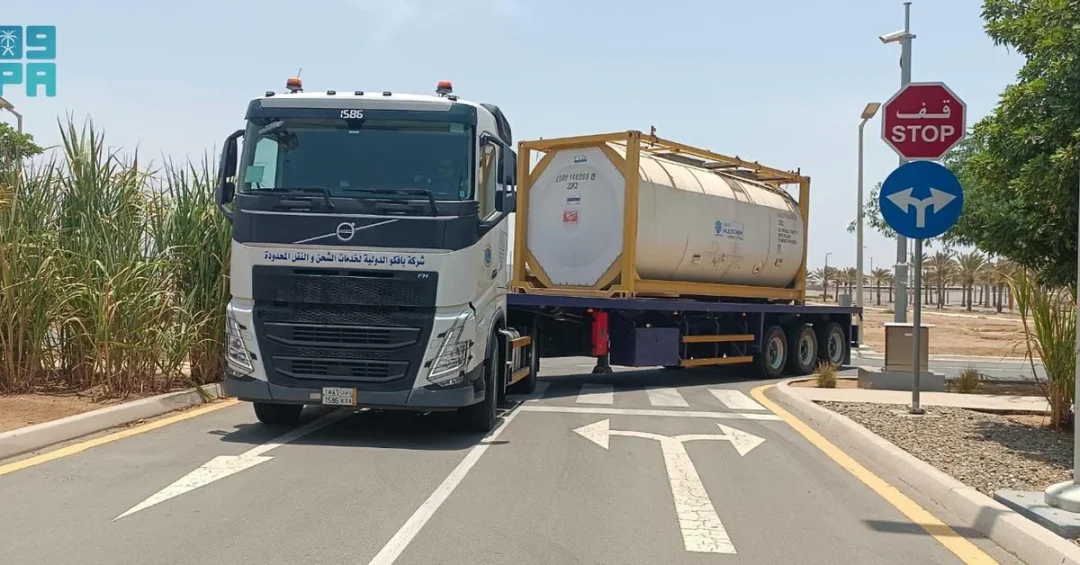
Aramco, one of the world’s leading integrated energy and chemicals companies, and Saudi Lithium Infinity (Lihytech), an innovative startup incubated by King Abdullah University of Science and Technology (KAUST), have announced a strategic collaboration to accelerate the development of Direct Lithium Extraction (DLE) technology in Saudi Arabia. The partnership, announced on September 17, 2024, in Thuwal, aims to support the Kingdom’s growing demand for lithium, a critical mineral essential for advancing Saudi Arabia’s electric vehicle (EV) initiatives as outlined in Vision 2030.
Context and Background
Saudi Arabia is aggressively pursuing economic diversification under Vision 2030, with a focus on developing new industries and reducing dependence on oil revenues. The electric vehicle sector is a key pillar of this strategy, with the Kingdom targeting significant EV adoption and local manufacturing. Lithium, a vital component in EV batteries, is currently sourced primarily from imports. The collaboration between Aramco and Lihytech seeks to unlock domestic lithium resources, leveraging the Kingdom’s abundant oilfield brines as a potential source. This initiative aligns with Saudi Arabia’s broader ambitions to secure critical minerals and build a sustainable, knowledge-based economy.
Lihytech, incubated by KAUST, brings cutting-edge research and innovation to the table. The startup’s mission is to empower Saudi Arabia with advanced DLE technology, enabling the Kingdom to fully leverage its lithium resources. Aramco’s role involves supplying brine from its oilfields to test Lihytech’s extraction technology at a pilot plant located at KAUST Research and Technology Park. This collaboration exemplifies the synergy between established industry leaders and academic innovation, a model that Vision 2030 actively promotes.
Key Details
The collaboration focuses on assessing and optimizing Lihytech’s DLE technology using brine sourced from Aramco’s oilfields. The pilot plant has already yielded highly encouraging results, and the next phase involves scaling the technology to field scale. “The mission of Lihytech is to empower Saudi Arabia with cutting-edge DLE technology, enabling the Kingdom to fully leverage its lithium resources,” said Lihytech chief strategy and commercial officer Ehab Abbas. “With Aramco being one of the largest oil producers globally, the oilfield brines are a promising source to contribute to the Kingdom’s lithium demands. Our pilot plant has yielded highly encouraging results, and with the expertise of Aramco’s team, we are confident in our ability to validate this technology under real-world conditions, optimizing it for various brine sources within the Kingdom.”
Aramco’s extensive experience in managing oilfield operations and its vast brine resources provide a unique advantage. The collaboration is expected to contribute to the Kingdom’s Vision 2030 by advancing sustainable resource extraction technologies and fostering the growth of a new, critical mineral industry in the region. If successful, this initiative could position Saudi Arabia as a key player in the global lithium market, reducing reliance on imports and supporting the growth of a domestic EV supply chain.
Implications and Impact
The development of domestic lithium extraction capabilities has significant implications for Saudi Arabia’s economy and its global standing. By harnessing its oilfield brines, the Kingdom can transform a byproduct into a valuable resource, enhancing economic diversification and creating new job opportunities in the technology and mining sectors. This move also supports the global transition to clean energy, as lithium is essential for electric vehicles and renewable energy storage. Furthermore, successful commercialization of DLE technology could attract international partnerships and investment, reinforcing Saudi Arabia’s position as a leader in sustainable resource innovation.
Regionally, the collaboration underscores Saudi Arabia’s commitment to technological leadership and environmental stewardship. It also aligns with the Kingdom’s efforts to localize advanced industries and develop a skilled workforce. The partnership between Aramco and Lihytech is a testament to the power of collaboration between industry and academia, driving innovation that can have far-reaching impacts beyond Saudi Arabia’s borders.
Vision 2030 Alignment
This collaboration directly supports Vision 2030’s objectives of economic diversification, sustainable development, and technological advancement. By developing a domestic lithium industry, Saudi Arabia can reduce its carbon footprint, create high-value jobs, and strengthen its position in the global electric vehicle market. The initiative also exemplifies the Kingdom’s commitment to fostering innovation and entrepreneurship, as championed by KAUST and other institutions. As Saudi Arabia continues to invest in cutting-edge technologies and sustainable practices, partnerships like this will play a crucial role in shaping a prosperous and diversified future for the Kingdom and the world.
20 Questions
Q1. What is the main goal of the collaboration between Aramco and Lihytech?
A1. The collaboration aims to accelerate the development of Direct Lithium Extraction (DLE) technology in Saudi Arabia, using oilfield brine to support the Kingdom’s growing lithium demand for electric vehicle initiatives.
Q2. What is Direct Lithium Extraction (DLE) technology?
A2. DLE is an advanced method to extract lithium from brine sources, offering a more sustainable and efficient alternative to traditional evaporation ponds, and is crucial for meeting global lithium demand.
Q3. Why is lithium important for Saudi Arabia?
A3. Lithium is essential for manufacturing electric vehicle batteries, and Saudi Arabia aims to grow its EV sector as part of Vision 2030, requiring a stable domestic supply of this critical mineral.
Q4. Who are the key partners in this collaboration?
A4. Aramco, a leading global energy and chemicals company, and Lihytech, a startup incubated by King Abdullah University of Science and Technology (KAUST), are the key partners.
Q5. Where is the pilot plant located?
A5. The pilot plant is located at KAUST Research and Technology Park in Thuwal, Saudi Arabia, where Lihytech’s technology is being tested using brine supplied by Aramco.
Q6. What did Ehab Abbas say about the collaboration?
A6. Ehab Abbas, Lihytech’s chief strategy and commercial officer, stated that the pilot plant has yielded encouraging results and expressed confidence in validating the technology with Aramco’s expertise.
Q7. How does this collaboration support Vision 2030?
A7. It advances sustainable resource extraction, fosters a new critical mineral industry, and supports economic diversification, aligning with Vision 2030’s goals of reducing oil dependence and promoting innovation.
Q8. What are the expected outcomes of this collaboration?
A8. The collaboration expects to validate and optimize DLE technology for various brine sources, potentially leading to a field-scale extraction operation and establishing a domestic lithium industry.
Q9. What is the significance of using oilfield brine for lithium extraction?
A9. Oilfield brine is a byproduct of oil production, and using it for lithium extraction transforms waste into a valuable resource, enhancing sustainability and resource efficiency.
Q10. How might this collaboration impact Saudi Arabia’s economy?
A10. It could create jobs, attract investment, reduce import reliance, and position Saudi Arabia as a key player in the global lithium market, contributing to economic diversification.
Q11. What role does KAUST play in this initiative?
A11. KAUST incubated Lihytech and provides research facilities at its Research and Technology Park, fostering innovation and supporting the development of cutting-edge technologies like DLE.
Q12. Is this technology already commercialized?
A12. No, the technology is currently in the assessment phase at a pilot plant; the next step is to advance to field scale after successful validation and optimization.
Q13. How does this collaboration align with global energy transition trends?
A13. It supports the global shift to clean energy by enabling domestic lithium production for EV batteries, reducing carbon emissions and promoting sustainable practices.
Q14. What are the potential environmental benefits of DLE?
A14. DLE is more environmentally friendly than traditional methods, using less water and land, and can operate with lower energy consumption, aligning with Saudi Arabia’s sustainability goals.
Q15. Will this collaboration lead to new regulations or policies?
A15. It may inform policies on critical mineral extraction and sustainable resource management, but specific regulatory changes are not detailed in the announcement.
Q16. How does this fit into Saudi Arabia’s mining strategy?
A16. It complements the Kingdom’s mining strategy by developing lithium as a critical mineral, diversifying the mining sector beyond traditional resources like gold and phosphate.
Q17. What is the timeline for field-scale implementation?
A17. The timeline is not specified; it depends on the successful completion of the assessment phase and optimization of the technology for various brine sources.
Q18. Can other companies benefit from this technology?
A18. Yes, if successful, the technology could be licensed or adapted by other companies, fostering a new industry and attracting further investment in Saudi Arabia.
Q19. How does this collaboration enhance Saudi Arabia’s global standing?
A19. It showcases Saudi Arabia as an innovator in sustainable resource extraction and strengthens its role in the global energy transition, enhancing its reputation as a forward-looking nation.
Q20. What support is Aramco providing to Lihytech?
A20. Aramco is supplying brine from its oilfields and providing technical expertise to help validate and optimize Lihytech’s DLE technology under real-world conditions.
Reader Feedback
We value your thoughts. Please share your feedback on this article.
Your feedback helps us improve our coverage.
Related articles
 Makeen Signs MoU to Enhance Saudi Maritime Industry
 Folk Maritime Enhances Training Programs in Maritime Navigation
 Aramco and CNBM Sign Strategic Materials Agreement
 stc Group, Ooredoo Group Ink MoU to Boost MENA ICT
 Ceer and EVIQ Sign MoU to Boost EV Charging in Saudi Arabia
 Saudi Artisanal Company and Saudi Coffee Company Sign Strategic Agreement