


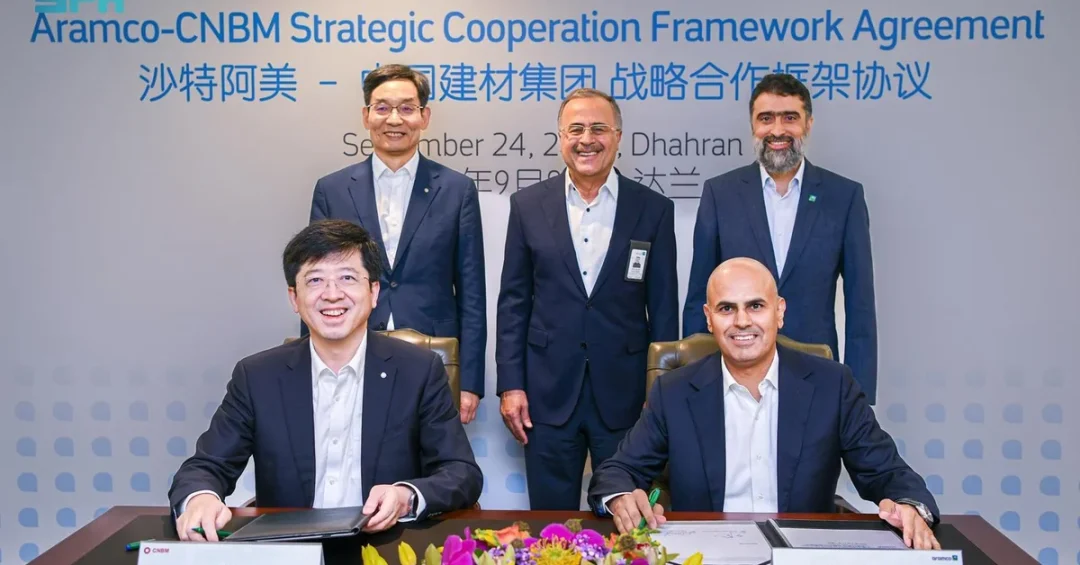
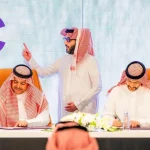
Aramco has signed a five-year Cooperation Framework Agreement (CFA) with China National Building Material Group Co., Ltd. (CNBM), one of the world’s largest producers of comprehensive building materials, to explore new opportunities in advanced materials and industrial development. The agreement, announced in Dhahran on September 24, 2024, via the Saudi Press Agency, aims to deepen collaboration in materials science and manufacturing, with a focus on establishing production facilities in Saudi Arabia for wind turbine blades, hydrogen storage tanks, lower-carbon building materials, and energy storage solutions. The partnership underscores Saudi Arabia’s commitment to economic diversification and technological innovation under Vision 2030.
Context and Background
This CFA builds on Aramco’s existing relationship with CNBM and follows the 2021 launch of the Nonmetallic Excellence and Innovation Center for Building Materials (NEXCEL) in Beijing, a collaboration between Aramco and the China Building Materials Academy (CBMA), the science and technology branch of CNBM. NEXCEL was established to advance nonmetallic materials in construction, and the new agreement expands this partnership into new areas, including manufacturing and technology development. The collaboration aligns with Saudi Arabia’s efforts to localize industries and attract foreign investment, key pillars of Vision 2030. It also reflects the strengthening ties between China and the Kingdom, as both nations seek to diversify their economies and foster innovation.
Key Details
Under the agreement, the companies have identified several areas for potential collaboration, including the possible establishment of manufacturing facilities in the Kingdom of Saudi Arabia to produce wind turbine blades, hydrogen storage tanks, lower-carbon building materials, and energy storage solutions. Other areas of focus include a potential new center for training, inspection, and accreditation, as well as a proposed joint technology development center and laboratory to promote innovation. Aramco Executive Vice President of Technical Services Wail Al Jaafari said: “We look forward to expanding our efforts with CNBM as we pursue new breakthroughs in materials science that have the potential to deliver tangible benefits for the building sector and beyond. From developing solutions that could reduce construction emissions to innovations that enhance product performance, our goal is to help drive the materials transition. By combining Aramco’s expertise in nonmetallic materials and CNBM’s industry know-how, we aim to identify groundbreaking advances and new business opportunities, as well as promote further development of manufacturing capabilities within the Kingdom of Saudi Arabia.” CNBM Chairman Zhou Yuxian added: “We attach great importance to strategic cooperation with Aramco. This agreement combines CNBM’s and Aramco’s respective strengths with the goal of win-win cooperation. CNBM is seeking to promote a low-carbon transition through the nonmetallic materials industry. By leveraging our work in low-carbon integrated solutions, CNBM aims to complement Aramco’s efforts to advance the materials transition. This agreement envisages a wide range of cooperation that has the potential to positively contribute to low-carbon development while supporting further strategic alignment between China and the Kingdom of Saudi Arabia.”
Implications and Impact
The collaboration between Aramco and CNBM is expected to have significant implications for Saudi Arabia’s industrial sector and its transition to a low-carbon economy. The establishment of manufacturing facilities for wind turbine blades and hydrogen storage tanks would support the Kingdom’s renewable energy ambitions and its growing hydrogen economy. Lower-carbon building materials and energy storage solutions align with global sustainability goals and could position Saudi Arabia as a leader in green technologies. The training and accreditation center would help develop local talent and ensure high standards in the industry. This partnership also strengthens economic ties between Saudi Arabia and China, two major global players, and could pave the way for further joint ventures in advanced materials and beyond.
Vision 2030 Alignment
This agreement is a clear example of how Saudi Arabia is advancing its Vision 2030 objectives by fostering international partnerships, diversifying the economy, and promoting sustainable development. By collaborating with global leaders like CNBM, Aramco is helping to build a knowledge-based economy, create high-skilled jobs, and enhance the Kingdom’s manufacturing capabilities. The focus on nonmetallic materials and low-carbon solutions supports the Vision 2030 goal of reducing carbon emissions and achieving environmental sustainability. As Saudi Arabia continues to transform, such strategic collaborations will be instrumental in driving innovation, economic growth, and global competitiveness.
20 Questions
Q1. What is the Cooperation Framework Agreement (CFA) signed by Aramco and CNBM?
A1. The CFA is a five-year agreement between Aramco and China National Building Material Group to explore collaboration in advanced materials and industrial development, including potential manufacturing facilities in Saudi Arabia.
Q2. When and where was the CFA announced?
A2. The agreement was announced on September 24, 2024, in Dhahran, Saudi Arabia, through the Saudi Press Agency.
Q3. What are the key areas of potential collaboration under the CFA?
A3. Key areas include manufacturing wind turbine blades, hydrogen storage tanks, lower-carbon building materials, and energy storage solutions, as well as training, inspection, accreditation, and joint technology development.
Q4. Who is CNBM and what is its role in the agreement?
A4. CNBM is one of the world’s largest producers of comprehensive building materials. It brings industry expertise and aims to promote a low-carbon transition through nonmetallic materials.
Q5. How does this agreement build on previous collaborations?
A5. It follows the 2021 launch of the Nonmetallic Excellence and Innovation Center for Building Materials (NEXCEL) in Beijing, a collaboration between Aramco and the China Building Materials Academy (CBMA).
Q6. What did Aramco’s Wail Al Jaafari say about the agreement?
A6. He expressed enthusiasm for expanding efforts with CNBM, pursuing breakthroughs in materials science, driving the materials transition, and promoting manufacturing capabilities in Saudi Arabia.
Q7. What did CNBM Chairman Zhou Yuxian say about the agreement?
A7. He emphasized the importance of strategic cooperation with Aramco, aiming for win-win cooperation, low-carbon transition, and strategic alignment between China and Saudi Arabia.
Q8. What is the significance of establishing manufacturing facilities in Saudi Arabia?
A8. It supports economic diversification, localizes advanced industries, creates jobs, and enhances Saudi Arabia’s manufacturing capabilities, aligning with Vision 2030.
Q9. How does this agreement contribute to Saudi Arabia’s renewable energy goals?
A9. By potentially producing wind turbine blades and hydrogen storage tanks, it supports the Kingdom’s renewable energy and hydrogen economy ambitions.
Q10. What are lower-carbon building materials and why are they important?
A10. Lower-carbon building materials reduce emissions in construction. They are important for sustainability and combating climate change, aligning with global environmental goals.
Q11. What is the role of the proposed training and accreditation center?
A11. It would develop local talent, ensure high standards in the industry, and support the growth of a skilled workforce in Saudi Arabia.
Q12. How does the joint technology development center promote innovation?
A12. It would facilitate research and development in advanced materials, fostering innovation and technological breakthroughs for commercial applications.
Q13. What is NEXCEL and how does it relate to this agreement?
A13. NEXCEL is the Nonmetallic Excellence and Innovation Center for Building Materials, launched in 2021 by Aramco and CBMA. It lays the foundation for this expanded collaboration.
Q14. How does this partnership strengthen China-Saudi relations?
A14. It enhances economic ties, promotes strategic alignment, and fosters cooperation in advanced materials, benefiting both nations’ development goals.
Q15. What are the potential economic benefits for Saudi Arabia?
A15. Economic benefits include job creation, technology transfer, industrial diversification, and increased foreign investment, supporting Vision 2030 objectives.
Q16. How does Aramco’s expertise in nonmetallic materials contribute?
A16. Aramco’s expertise enables the development of innovative nonmetallic solutions that can reduce emissions and improve product performance in construction and beyond.
Q17. What is the expected duration of the CFA?
A17. The CFA is a five-year agreement, allowing both companies to explore and implement collaborative projects over that period.
Q18. What are energy storage solutions and why are they important?
A18. Energy storage solutions store energy for later use, crucial for integrating renewables into the grid and ensuring energy reliability. They support Saudi Arabia’s clean energy transition.
Q19. How does this agreement align with Saudi Vision 2030?
A19. It aligns by promoting economic diversification, sustainability, local manufacturing, and international partnerships, all key pillars of Vision 2030.
Q20. What are the next steps for Aramco and CNBM?
A20. Next steps include detailed planning and feasibility studies for the identified areas of collaboration, with potential establishment of facilities and centers in Saudi Arabia.
Reader Feedback
We value your thoughts. Please share your feedback on this article.
Your feedback helps us improve our coverage.
Related articles
 stc Group, Ooredoo Group Ink MoU to Boost MENA ICT
 Ceer and EVIQ Sign MoU to Boost EV Charging in Saudi Arabia
 Saudi Artisanal Company and Saudi Coffee Company Sign Strategic Agreement
 PIF Forms Partnership with Central Group in Selfridges
 AviLease Acquires Nine Aircraft from Avolon
 stc Group Renews Platinum Sponsorship for Riyadh Season