


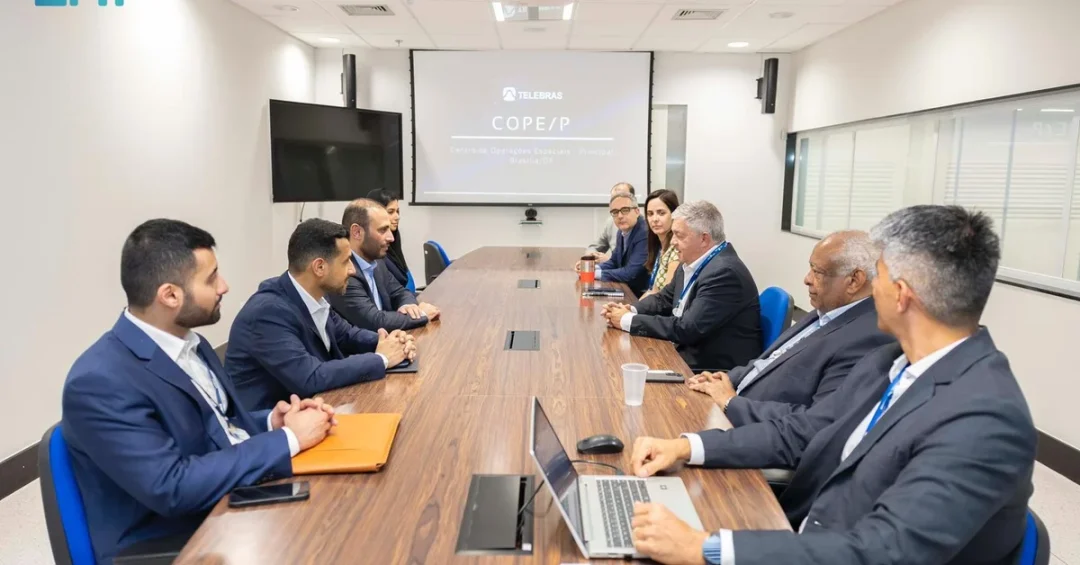
Riyadh, September 18, 2024 — Dr. Mohammed bin Saud Al-Tamimi, Governor of the Communications, Space, and Technology Commission (CST), held high-level bilateral meetings with officials from Telebras, Brazil’s state-owned telecommunications company, during his official visit to Brazil. The discussions focused on exchanging best practices in technology, space, and telecommunications, and exploring opportunities for collaborative solutions that would benefit both nations.
Context and Background
The meetings are part of CST’s ongoing efforts to strengthen Saudi Arabia’s telecommunications, space, and technology sectors, enhance national infrastructure, and contribute to the Sustainable Development Goals (SDGs). As the Kingdom accelerates its digital transformation under Vision 2030, international partnerships have become essential to building a resilient, future-ready ecosystem.
Telebras, a key player in Brazil’s telecommunications landscape, operates the Brazilian Space Operations Center (COPE), which manages satellite systems and supports Brazil’s space initiatives. Dr. Al-Tamimi’s visit to COPE allowed him to examine its functions in overseeing and managing satellite systems, with a focus on utilizing these insights to advance the space sector, improve satellite operational efficiency, and promote space sustainability initiatives.
Key Details
The bilateral meetings covered a range of topics, including best practices in technology, space, and telecommunications, and opportunities to create collaborative solutions. The two sides discussed how to leverage each other’s expertise to drive progress in the space sector, enhance satellite operations, and support sustainability efforts.
During the visit, Dr. Al-Tamimi visited the Brazilian Space Operations Center (COPE), operated by Telebras, to examine its functions in overseeing and managing satellite systems. The conversation focused on how to utilize these insights to make progress in the space sector, improve satellite operational efficiency, and promote space sustainability initiatives.
The meetings were part of CST’s efforts to enhance the telecommunications, space, and technology sectors, improve Saudi Arabia’s infrastructure, and achieve the sustainable development goals (SDGs).
Implications and Impact
This engagement underscores Saudi Arabia’s commitment to international cooperation in advanced technology sectors. By learning from Brazil’s experience in satellite operations and space management, the Kingdom aims to bolster its own capabilities, which are critical to its economic diversification and national security. The collaboration could lead to joint ventures, knowledge exchange, and enhanced technical standards, benefiting both nations’ telecommunications and space industries.
For Brazil, partnering with Saudi Arabia offers access to a growing market and potential investment opportunities, while for Saudi Arabia, it represents another step toward becoming a global hub for space and technology innovation. The discussions also align with global efforts to promote space sustainability, a priority for both countries.
Vision 2030 Alignment
Saudi Arabia’s Vision 2030 emphasizes economic diversification, technological advancement, and sustainable development. The CST’s international engagements, such as this visit to Brazil, are integral to achieving these goals by fostering partnerships that bring cutting-edge knowledge and practices to the Kingdom. As Saudi Arabia continues to invest in its space and telecommunications infrastructure, collaborations like this will play a pivotal role in positioning the Kingdom as a leader in the global digital economy.
20 Questions
Q1. Who is Dr. Mohammed bin Saud Al-Tamimi?
A1. Dr. Mohammed bin Saud Al-Tamimi is the Governor of the Communications, Space, and Technology Commission (CST) of Saudi Arabia, leading the Kingdom’s efforts in telecommunications, space, and technology sectors.
Q2. What is Telebras?
A2. Telebras is Brazil’s state-owned telecommunications company, responsible for managing satellite systems and operating the Brazilian Space Operations Center (COPE).
Q3. What was the purpose of Dr. Al-Tamimi’s visit to Brazil?
A3. The visit aimed to hold bilateral meetings with Telebras officials to exchange best practices in technology, space, and telecommunications, and explore collaborative opportunities.
Q4. What is COPE?
A4. COPE is the Brazilian Space Operations Center, operated by Telebras, which oversees and manages satellite systems.
Q5. What topics were discussed during the meetings?
A5. Discussions focused on best practices in technology, space, and telecommunications, collaborative solutions, satellite operational efficiency, and space sustainability.
Q6. How does this visit benefit Saudi Arabia?
A6. It allows Saudi Arabia to learn from Brazil’s expertise, enhance its space and telecommunications sectors, and advance its infrastructure and sustainable development goals.
Q7. What is CST?
A7. CST is the Communications, Space, and Technology Commission of Saudi Arabia, responsible for regulating and developing these sectors in line with Vision 2030.
Q8. Why is space sustainability important?
A8. Space sustainability ensures the long-term viability of space activities, reduces orbital debris, and promotes responsible use of space resources for future generations.
Q9. What are the Sustainable Development Goals (SDGs)?
A9. The SDGs are a set of 17 global goals adopted by the United Nations to end poverty, protect the planet, and ensure prosperity for all by 2030.
Q10. How does this collaboration align with Vision 2030?
A10. It supports Vision 2030’s goals of economic diversification, technological advancement, and sustainable development through international partnerships.
Q11. What is the significance of satellite operational efficiency?
A11. Improved efficiency ensures better communication, navigation, and Earth observation services, which are vital for economic and security purposes.
Q12. What other countries has CST partnered with?
A12. CST engages globally with various nations to share knowledge and build partnerships, though specific countries vary by initiative.
Q13. How does Brazil benefit from this collaboration?
A13. Brazil gains access to Saudi Arabia’s market, potential investments, and opportunities for joint technological development.
Q14. What is the role of telecommunications in Vision 2030?
A14. Telecommunications is a cornerstone of Vision 2030, enabling digital transformation, economic growth, and improved quality of life.
Q15. What are the key functions of COPE?
A15. COPE oversees and manages satellite systems, ensuring their proper operation and coordination for Brazil’s space activities.
Q16. How can space sustainability initiatives be promoted?
A16. Through international cooperation, responsible satellite design, debris mitigation, and adherence to global guidelines.
Q17. What is the expected outcome of these meetings?
A17. The meetings aim to foster collaboration, share best practices, and set the stage for future joint projects in space and telecommunications.
Q18. Why is international cooperation important in space?
A18. Space is a shared domain; cooperation allows countries to pool resources, share knowledge, and address common challenges like sustainability.
Q19. How does CST support Saudi Arabia’s infrastructure?
A19. CST enhances infrastructure by advancing telecommunications and space technologies, which are essential for modern economies.
Q20. What is the future outlook for Saudi-Brazil relations in technology?
A20. The future looks promising, with potential for deeper collaboration in space, telecommunications, and technology, benefiting both nations.
Reader Feedback
We value your thoughts. Please share your feedback on this article.
Your feedback helps us improve our coverage.
Related articles
 Riyadh Adds Smart Systems to Flood Drainage Networks
 Mishkat Interactive Center Hosts Energy-Focused 94th National Day Celebration
 SDAIA Seeks Public Input on Deepfakes Guidelines
 Saudi Arabia Ranked 14th in Global AI Index, 1st in Arab World
 KAUST and SFDA Develop NMR Method to Ensure Olive Oil Quality
 Saudi Arabia Ranks 2nd in G20 for UN Telecom Index