


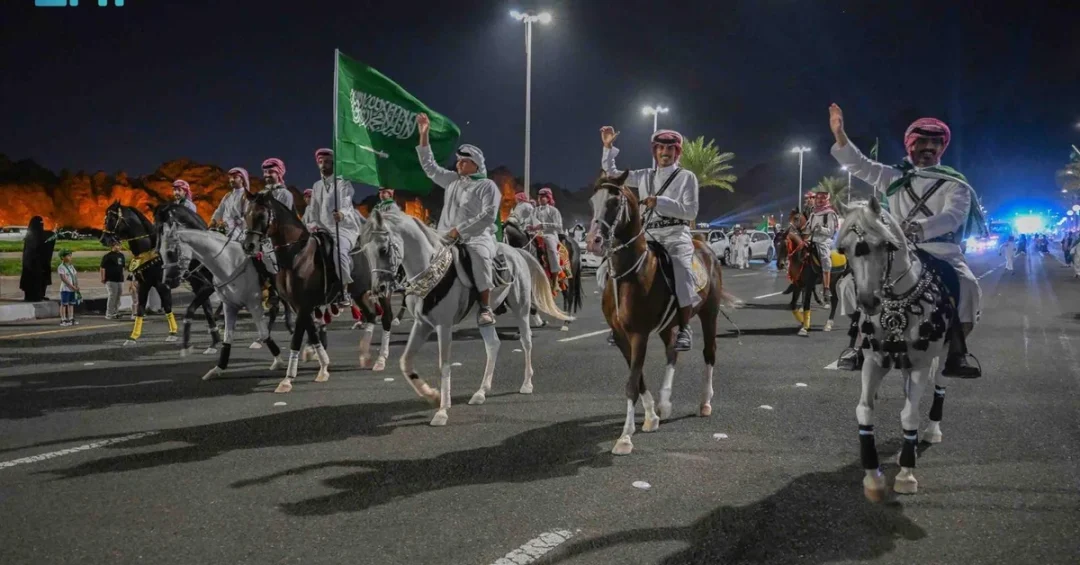
A vibrant Arabian horse march took place in Hail on September 20, 2024, to commemorate the 94th Saudi National Day. The event, reported by the Saudi Press Agency (SPA), featured a large group of young men and women proudly riding their horses through the city, fostering patriotism and honoring the pivotal role horses played in the Kingdom’s unification under the founder, King Abdulaziz.
Context and Background
The Arabian horse holds a special place in Saudi Arabia’s cultural and historical heritage. For centuries, these noble animals were integral to the region’s way of life, serving as companions in peace and war. The unification of the Kingdom by King Abdulaziz in 1932 was achieved with the help of Arabian horses, which carried his warriors across the desert. Today, the legacy of these horses is celebrated as a symbol of national identity and pride. The march in Hail is part of ongoing efforts to preserve this heritage and promote equestrian sports, aligning with the Kingdom’s Vision 2030 goals of enriching cultural and recreational activities.
Key Details
The march was held at Al Maghwah Park in Hail, a city known for its equestrian traditions. Participants carried flags and portraits of the wise leadership, expressing joy and pride on this special occasion. Security and health authorities provided support to ensure the event’s success, while a large crowd of citizens enthusiastically joined the festivities. The event highlighted the enduring bond between the Saudi people and their heritage, and it underscored the importance of horses in the Kingdom’s history. The Arabian horse, renowned for its beauty, endurance, and intelligence, remains a cherished symbol of Saudi Arabia’s past and future.
Implications and Impact
This celebration not only reinforces national unity but also promotes tourism and cultural awareness. Events like the Arabian horse march attract visitors and showcase Saudi Arabia’s rich traditions to the world. They also encourage youth participation in equestrian activities, fostering a healthy lifestyle and preserving intangible cultural heritage. The march reflects the Kingdom’s commitment to maintaining its cultural identity while embracing modernization. As Saudi Arabia opens up to international visitors, such events play a crucial role in presenting a positive image and highlighting the nation’s deep-rooted traditions.
Vision 2030 Alignment
The Arabian horse march exemplifies the objectives of Saudi Vision 2030, which seeks to diversify the economy, enhance quality of life, and celebrate national heritage. By promoting cultural events and equestrian sports, the Kingdom aims to boost tourism and create recreational opportunities for citizens and residents. This initiative also supports the preservation of Saudi Arabia’s historical legacy, ensuring that future generations remain connected to their roots. As the nation progresses towards a brighter future, such celebrations serve as a reminder of the values and traditions that define Saudi identity.
20 Questions
Q1. What was the purpose of the Arabian horse march in Hail?
A1. The march aimed to commemorate the 94th Saudi National Day, foster patriotism, and honor the role of horses in the Kingdom’s unification under King Abdulaziz.
Q2. When did the Arabian horse march take place?
A2. The march was held on September 20, 2024, as reported by the Saudi Press Agency.
Q3. Where did the march occur?
A3. The event took place at Al Maghwah Park in Hail, a city known for its equestrian heritage.
Q4. Who participated in the march?
A4. A large group of young men and women proudly rode their horses through the city, accompanied by a crowd of enthusiastic citizens.
Q5. What did the riders carry during the march?
A5. The riders carried flags and portraits of the wise leadership, expressing joy and pride on this special occasion.
Q6. How did security and health authorities contribute?
A6. Security and health authorities provided support to ensure the safety and well-being of participants and spectators throughout the event.
Q7. What is the historical significance of Arabian horses in Saudi Arabia?
A7. Arabian horses played a crucial role in the Kingdom’s unification, serving as loyal companions to King Abdulaziz and his warriors during the desert campaigns.
Q8. How does this event align with Saudi Vision 2030?
A8. It supports cultural preservation, promotes tourism, and enhances quality of life, all key objectives of Vision 2030.
Q9. What does the Arabian horse symbolize in Saudi culture?
A9. The Arabian horse symbolizes nobility, endurance, and national identity, reflecting the deep-rooted heritage of the Kingdom.
Q10. How does the march promote national unity?
A10. By bringing together citizens in celebration, the march reinforces a shared sense of pride and loyalty to the nation and its leadership.
Q11. What impact does the event have on tourism?
A11. It attracts visitors interested in cultural heritage and equestrian sports, showcasing Saudi Arabia’s traditions to a global audience.
Q12. How does the event encourage youth participation?
A12. Young men and women actively took part, inspiring peers to engage in equestrian activities and appreciate their cultural heritage.
Q13. What role do such events play in preserving heritage?
A13. They keep traditional practices alive, educate the public, and ensure that future generations value Saudi Arabia’s rich history.
Q14. How does the march reflect the Kingdom’s modernization?
A14. It blends cultural tradition with contemporary celebration, demonstrating Saudi Arabia’s ability to honor its past while embracing progress.
Q15. What message does the event send internationally?
A15. It presents Saudi Arabia as a nation proud of its heritage, open to the world, and committed to cultural exchange and tourism.
Q16. What is the significance of Al Maghwah Park as the venue?
A16. Al Maghwah Park is a prominent recreational space in Hail, providing an ideal setting for community events that celebrate national occasions.
Q17. How does the event honor King Abdulaziz?
A17. By highlighting the role of horses in unification, the march pays tribute to the founder’s leadership and the sacrifices made to establish the Kingdom.
Q18. What other activities are associated with equestrian sports in Saudi Arabia?
A18. The Kingdom hosts horse racing, endurance competitions, and equestrian festivals, promoting sports and preserving Arabian horse bloodlines.
Q19. How does the event contribute to community engagement?
A19. It brings together citizens from various backgrounds, fostering social cohesion and a collective spirit of celebration and patriotism.
Q20. What does the future hold for such cultural events in Saudi Arabia?
A20. With Vision 2030’s emphasis on culture and tourism, such events will likely expand, attracting more participants and visitors while preserving national heritage.
Reader Feedback
We value your thoughts. Please share your feedback on this article.
Your feedback helps us improve our coverage.
Related articles
 Saudi Cultural Development Fund Joins Fashion Investment Round in London
 Saudi Arabia Celebrates 2025 as Year of Handicrafts
 Arar Water Tower: A Green Beacon for National Day
 Imam Turki bin Abdullah Royal Reserve Celebrates National Day
 AOT’s Committees Start their Meeting
 Diriyah Celebrates 94th Saudi National Day with Grand Events