


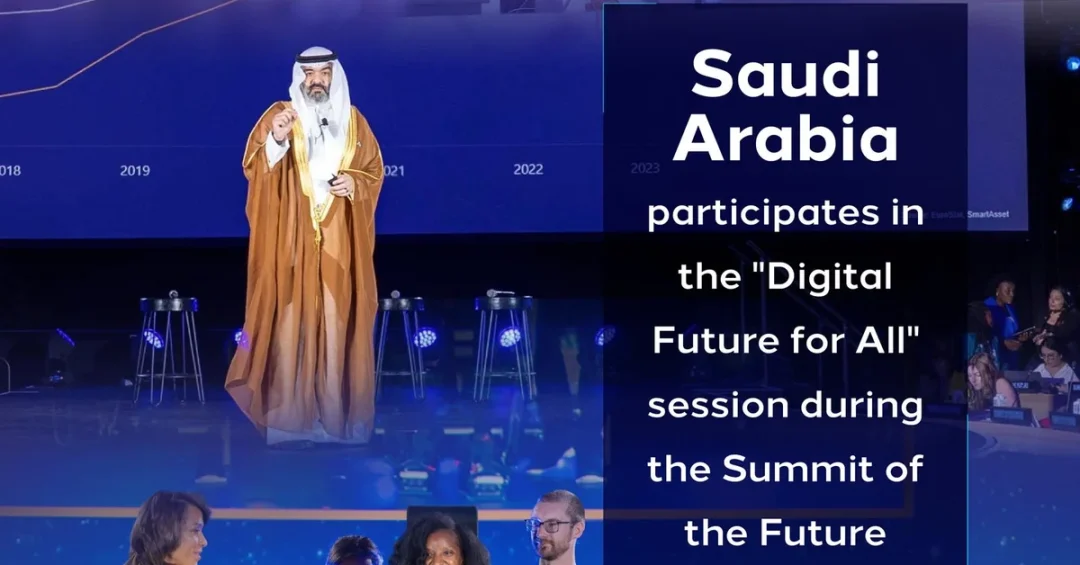
Saudi Arabia’s Minister of Communications and Information Technology, Eng. Abdullah Alswaha, participated in the ‘Digital Future for All’ session at the Summit of the Future in New York on September 22, 2024. The session, organized by the International Telecommunication Union (ITU) and the United Nations Development Programme (UNDP), aimed to prepare digital technologies for a more sustainable, inclusive, and responsible future. The event brought together government leaders, civil society representatives, private sector executives, academics, and youth to explore the trends, risks, and opportunities presented by digital and emerging technologies.
Context and Background
The Summit of the Future is a high-level United Nations event that convenes global leaders to forge a new international consensus on how to deliver a better present and safeguard the future. The ‘Digital Future for All’ session specifically addressed the transformative role of digital technologies in achieving the Sustainable Development Goals (SDGs). As the world becomes increasingly interconnected, the need for inclusive and responsible digital governance has never been greater. Saudi Arabia’s participation underscores its commitment to shaping a digital future that benefits all of humanity.
The Kingdom’s engagement in this session aligns with its broader efforts to advance the digital economy and leverage technology for social good. Under Vision 2030, Saudi Arabia has made significant strides in digital transformation, including the establishment of the Communications, Space and Technology Commission (CST) to regulate and promote the sector. The CST, led by Governor Dr. Mohammed bin Saud Al-Tamimi, who also attended the session, plays a pivotal role in fostering innovation and ensuring that digital technologies contribute to economic diversification and improved quality of life.
Key Details
During the session, Minister Alswaha highlighted Saudi Arabia’s pioneering initiatives in digital technology, such as the NEOM project, which aims to become a global hub for innovation and sustainability. He also emphasized the importance of international cooperation in bridging the digital divide and ensuring that no one is left behind in the digital age. The Minister’s participation reflects the Kingdom’s leading role and international standing in the communications and technology sector, aligning with the objectives of key international organizations to achieve sustainable development and economic and social well-being for people around the world.
The session featured discussions on a range of topics, including artificial intelligence, cybersecurity, digital infrastructure, and the ethical use of emerging technologies. Participants explored how digital tools can be harnessed to address global challenges such as climate change, poverty, and inequality. The event also provided a platform for youth representatives to share their perspectives on the digital future, underscoring the importance of intergenerational dialogue in shaping policies that are inclusive and forward-looking.
Implications and Impact
Saudi Arabia’s active involvement in the ‘Digital Future for All’ session demonstrates its commitment to multilateralism and its determination to play a constructive role in global digital governance. By sharing its experience and expertise, the Kingdom contributes to international efforts to create a digital environment that is safe, equitable, and conducive to sustainable development. This participation also strengthens Saudi Arabia’s position as a leader in the digital economy, attracting investment and fostering partnerships with other nations and international organizations.
Moreover, the session served as an opportunity for Saudi Arabia to showcase its progress in digital transformation, which has been accelerated by Vision 2030. The Kingdom’s investments in digital infrastructure, e-government services, and technology education have yielded tangible results, improving the ease of doing business and enhancing the delivery of public services. These achievements resonate with the global community and reinforce Saudi Arabia’s reputation as a forward-thinking nation that embraces innovation.
Vision 2030 Alignment
Saudi Arabia’s participation in the ‘Digital Future for All’ session is a clear reflection of Vision 2030, the Kingdom’s ambitious roadmap for economic diversification and social development. Vision 2030 emphasizes the importance of digital transformation as a key enabler of growth and prosperity. By engaging with international partners and contributing to global discussions on digital governance, Saudi Arabia is not only advancing its own development goals but also helping to shape a better future for the world. As the Kingdom continues to invest in technology and innovation, it is poised to play an increasingly influential role in the global digital landscape, driving progress towards a more inclusive, sustainable, and responsible digital future for all.
20 Questions
Q1. What was the ‘Digital Future for All’ session?
A1. It was a session at the Summit of the Future in New York, organized by the ITU and UNDP, to discuss preparing digital technologies for a sustainable, inclusive, and responsible future.
Q2. Who represented Saudi Arabia at the session?
A2. Minister of Communications and Information Technology Eng. Abdullah Alswaha participated, accompanied by CST Governor Dr. Mohammed bin Saud Al-Tamimi.
Q3. When and where did the session take place?
A3. The session was held on September 22, 2024, in New York, on the sidelines of the Summit of the Future.
Q4. What organizations hosted the session?
A4. The International Telecommunication Union (ITU) and the United Nations Development Programme (UNDP) organized the event.
Q5. What was the main goal of the session?
A5. To bring together diverse stakeholders to explore trends, risks, and opportunities of digital and emerging technologies for a better future.
Q6. Who attended the session besides government leaders?
A6. Civil society representatives, private sector executives, academics, and youth also participated in the discussions.
Q7. Why is Saudi Arabia’s participation significant?
A7. It reflects the Kingdom’s leading role and international standing in communications and technology, and its commitment to global sustainable development.
Q8. How does this align with Saudi Vision 2030?
A8. Vision 2030 prioritizes digital transformation and economic diversification, and this participation showcases Saudi Arabia’s progress and global engagement in technology.
Q9. What is the Communications, Space and Technology Commission (CST)?
A9. CST is a Saudi government body that regulates and promotes the communications, space, and technology sectors, and its governor attended the session.
Q10. What topics were discussed at the session?
A10. Topics included artificial intelligence, cybersecurity, digital infrastructure, and the ethical use of emerging technologies.
Q11. How does Saudi Arabia contribute to global digital governance?
A11. By sharing its expertise, fostering international partnerships, and promoting inclusive and responsible digital policies that benefit all nations.
Q12. What are some Saudi digital initiatives mentioned?
A12. NEOM, a futuristic mega-project, was highlighted as a global hub for innovation and sustainability.
Q13. What is the significance of youth participation in the session?
A13. It ensures intergenerational dialogue and incorporates young people’s perspectives into digital policies for a future that serves everyone.
Q14. How does the session address the digital divide?
A14. It emphasizes international cooperation to bridge the gap and ensure that no one is left behind in the digital age.
Q15. What outcomes are expected from the session?
A15. Enhanced global collaboration, policy recommendations, and a commitment to harness digital technologies for sustainable development.
Q16. What is the Summit of the Future?
A16. A UN event that convenes world leaders to forge a new international consensus on delivering a better present and safeguarding the future.
Q17. How does Saudi Arabia’s digital transformation benefit its economy?
A17. It diversifies the economy, attracts investment, improves public services, and creates opportunities in technology and innovation.
Q18. What role does CST play in Saudi Arabia’s digital progress?
A18. CST regulates and fosters growth in communications and technology, ensuring a conducive environment for innovation and investment.
Q19. What global challenges can digital technologies help address?
A19. They can help tackle climate change, poverty, inequality, and other issues by enabling smarter, more inclusive solutions.
Q20. How does this participation reflect Saudi Arabia’s global role?
A20. It demonstrates the Kingdom’s active engagement in multilateral forums and its commitment to shaping a prosperous and sustainable digital future for all.
Reader Feedback
We value your thoughts. Please share your feedback on this article.
Your feedback helps us improve our coverage.
Related articles
 Saudi Space CEO Joins UN Event on Space for SDGs
 Shuaibah Solar Plant: A Vision 2030 Milestone
 Apple Spotlights Saudi Graduates’ Award-Winning Apps
 Saudi Arabia Announces Blue Economy Challenge Winners
 King Salman Science Oasis Honors Astrolabe Inventor Mariam Al-Astrolabi
 KAUST, Abdul Latif Jameel Motors, Toyota Partner on Hydrogen Fuel Cells