


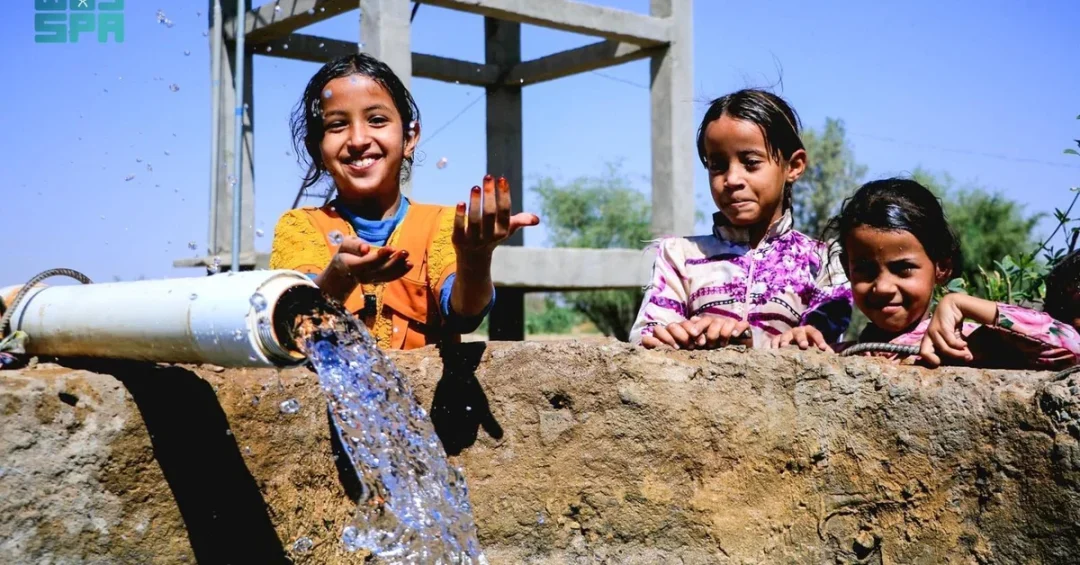
The Saudi Development and Reconstruction Program for Yemen (SDRPY) has launched two renewable energy-powered water security projects in Aden and Hadhramaut governorates, in partnership with the Selah Foundation for Development, to enhance water access for millions of Yemenis. The initiatives, announced on March 19, 2025, involve equipping wells with solar power systems to reduce operational costs and ensure sustainable water supply. In Aden, 10 wells in the Bi’r Ahmed field will be fitted with a 600-kilowatt solar station, expected to boost water production by 36% and serve approximately 800,000 beneficiaries. In Hadhramaut, the project will diversify water sources across nine districts, benefiting around 1.7 million people directly and indirectly.
Context and Background
Yemen has long faced severe water scarcity, exacerbated by conflict and economic challenges. SDRPY, a Saudi initiative established to support Yemen’s reconstruction and development, has been at the forefront of addressing these issues. Through 58 projects focused on the water sector—one of eight vital sectors supported by SDRPY—the program works to improve water resource management, diversify sources, and enhance distribution efficiency in both urban and rural areas. These efforts are part of Saudi Arabia’s broader commitment to stability and prosperity in Yemen, reflecting its humanitarian and developmental role in the region.
Key Details
In Aden, the project entails installing a solar power station with a production capacity of 600 kilowatts to operate 10 wells in the Bi’r Ahmed field. This will reduce reliance on grid electricity, lower water production costs, and increase the field’s water output by 36%, serving around 800,000 residents. In Hadhramaut, the initiative focuses on nine districts along the coast and valley, using solar energy systems to reduce fuel dependence for well operations. This project is set to benefit approximately 1.7 million people directly and indirectly. Both projects also include capacity-building for local personnel to operate and maintain solar energy systems, ensuring long-term sustainability. These efforts are carried out in partnership with the Selah Foundation for Development, a recognized partner in Yemen’s development landscape.
Implications and Impact
The implementation of these renewable energy-driven water projects has significant implications for Yemen’s recovery. By reducing operational costs and enhancing water production, they address immediate humanitarian needs while laying the groundwork for sustainable development. The projects also contribute to environmental sustainability by lowering carbon emissions associated with diesel-powered pumps. Furthermore, they demonstrate Saudi Arabia’s leadership in leveraging innovative solutions to tackle complex challenges, reinforcing its role as a key supporter of Yemen’s stability and growth. The success of these initiatives could serve as a model for other regions facing similar water crises.
Vision 2030 Alignment
These projects align with Saudi Arabia’s Vision 2030, which emphasizes sustainable development, renewable energy, and regional cooperation. By supporting Yemen’s water security through innovative, eco-friendly solutions, the Kingdom demonstrates its commitment to fostering stability and prosperity beyond its borders. This initiative also reflects Vision 2030’s focus on humanitarian aid and international partnerships, showcasing Saudi Arabia’s global leadership in addressing critical development issues. As SDRPY continues to implement projects across Yemen, it contributes to a brighter, more resilient future for the region.
20 Questions
Q1. What is SDRPY?
A1. SDRPY stands for the Saudi Development and Reconstruction Program for Yemen. It is a Saudi initiative aimed at supporting Yemen’s reconstruction and development across vital sectors such as water, education, health, energy, and infrastructure.
Q2. What are the two new projects launched by SDRPY?
A2. The projects are renewable energy-powered water security initiatives in Aden and Hadhramaut governorates. They involve equipping wells with solar power systems to improve water access and reduce operational costs.
Q3. Who is the partner for these projects?
A3. The Selah Foundation for Development is the partner for these projects. It is a recognized organization working on development issues in Yemen.
Q4. How many wells will be equipped in Aden?
A4. In Aden, 10 wells in the Bi’r Ahmed field will be equipped with a solar power station. The station will have a production capacity of 600 kilowatts.
Q5. What is the expected increase in water production in Aden?
A5. The project is expected to increase water production capacity by 36%. This will help serve around 800,000 beneficiaries in the governorate.
Q6. How many people will benefit from the Hadhramaut project?
A6. The Hadhramaut project is set to benefit around 1.7 million people directly and indirectly. It covers nine districts along the coast and valley.
Q7. What is the main goal of these projects?
A7. The main goal is to enhance water security using renewable energy. This ensures sustainability of water resources, reduces operational costs, and builds local capacity to maintain solar systems.
Q8. Why is renewable energy used in these projects?
A8. Renewable energy, specifically solar power, is used to reduce reliance on electricity and fuel for well operations. This lowers costs and promotes environmental sustainability.
Q9. How does SDRPY support Yemen’s water sector?
A9. SDRPY supports Yemen’s water sector through 58 projects and initiatives. These efforts aim to improve water resource management, diversify sources, and boost distribution efficiency.
Q10. What other sectors does SDRPY support in Yemen?
A10. SDRPY supports eight vital sectors, including education, health, water, energy, transportation, agriculture and fisheries, capacity building for the Yemeni government, and developmental programs.
Q11. How many total projects has SDRPY implemented in Yemen?
A11. SDRPY has implemented 264 projects and initiatives across various Yemeni governorates. These projects span multiple sectors to support reconstruction and development.
Q12. What is the significance of the Bi’r Ahmed field?
A12. The Bi’r Ahmed field is a key water source in Aden. Equipping its wells with solar power will enhance water production and reduce costs, benefiting a large population.
Q13. How will local capacity be built through these projects?
A13. The projects include training for local personnel to use, operate, and maintain solar energy systems. This ensures the sustainability of the initiatives beyond initial implementation.
Q14. What are the expected environmental benefits?
A14. The use of solar energy reduces carbon emissions from diesel-powered pumps. It also decreases reliance on fossil fuels, contributing to a cleaner environment.
Q15. How does this align with Saudi Arabia’s Vision 2030?
A15. It aligns with Vision 2030 by promoting sustainable development, renewable energy, and regional cooperation. It showcases Saudi Arabia’s commitment to humanitarian aid and global leadership.
Q16. What challenges does Yemen face regarding water?
A16. Yemen faces severe water scarcity due to conflict, economic instability, and limited infrastructure. These projects aim to address these challenges by improving access and sustainability.
Q17. How will the projects reduce operational costs?
A17. By using solar energy instead of electricity or fuel, the projects lower the cost of pumping water. This makes water production more affordable and sustainable.
Q18. What is the role of the Selah Foundation?
A18. The Selah Foundation for Development partners with SDRPY to implement these projects. It contributes local expertise and supports the execution of the initiatives on the ground.
Q19. How do these projects contribute to Yemen’s stability?
A19. By improving access to water, they address a basic need that can reduce tensions and support livelihoods. This contributes to overall stability and recovery in Yemen.
Q20. What is the long-term impact of these projects?
A20. They will ensure sustainable water supply, build local capacity, and serve as a model for other regions. This supports Yemen’s long-term development and resilience.
Reader Feedback
We value your thoughts. Please share your feedback on this article.
Your feedback helps us improve our coverage.
Related articles
 KSrelief Distributes 200 Food Baskets in Bangladesh
 Saudi Arabia Condemns Israeli Bombing of Syria
 Saudi Presidency Enhances Itikaf Experience at Two Holy Mosques
 KSrelief Distributes 685 Food Baskets in Lebanon
 Thunderstorms to Continue Across Saudi Arabia Until Sunday
 KSrelief Distributes 600 Food Baskets in Syria’s Daraa