


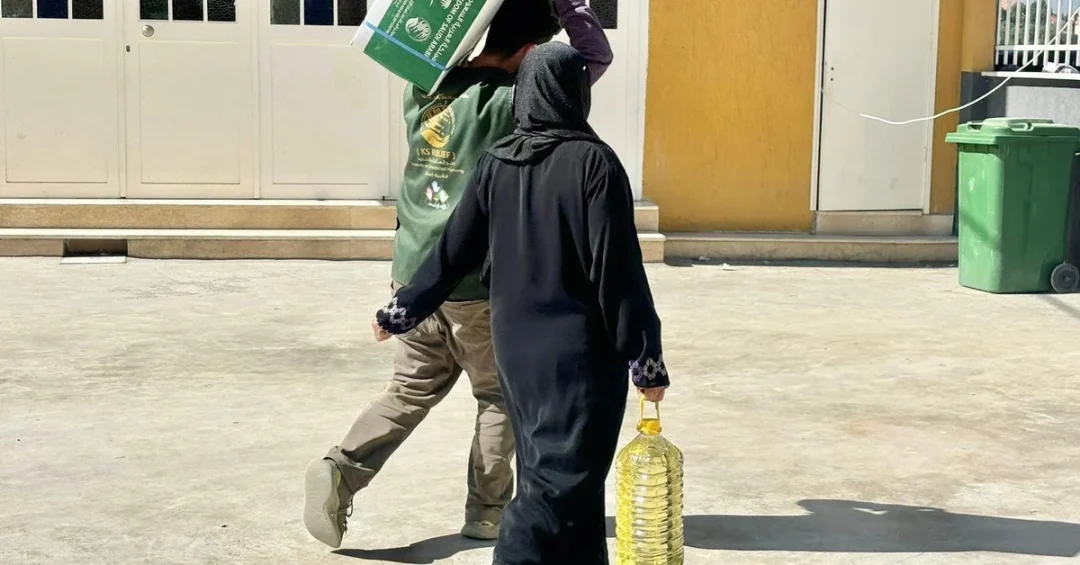
The King Salman Humanitarian Aid and Relief Center (KSrelief) distributed 685 food baskets to the neediest families in the Republic of Lebanon on Monday, benefiting 3,400 individuals as part of the “Etaam” Ramadan Food Basket Distribution Project in Lebanon for the year 1446 AH.
Context and Background
This humanitarian initiative comes as part of the Kingdom of Saudi Arabia’s ongoing commitment to provide food security and alleviate the suffering of vulnerable communities in brotherly and friendly countries around the world. The “Etaam” project, which operates during the holy month of Ramadan, reflects the Kingdom’s deep-rooted humanitarian values and its dedication to supporting those in need, particularly during times of crisis.
KSrelief, established in 2015 by Royal Order, has since become a leading international humanitarian organization, implementing thousands of projects in areas such as food security, health, education, and shelter. Its efforts are guided by the principles of humanity, impartiality, and neutrality, and it works in close coordination with local authorities and international partners to ensure aid reaches the most vulnerable.
Key Details
The distribution of 685 food baskets took place in Lebanon, targeting the neediest families and providing them with essential food items to help them observe Ramadan with dignity. Each basket is designed to meet the nutritional needs of a family for an extended period and includes staples such as rice, flour, oil, and other non-perishable goods. The total number of beneficiaries reached 3,400 individuals, underscoring the scale of the operation and the Kingdom’s far-reaching humanitarian reach.
This project is one of many implemented by KSrelief in Lebanon, where the Kingdom has consistently provided support to refugees and host communities. The aid is delivered in coordination with Lebanese authorities and humanitarian partners to ensure transparency and efficiency in distribution.
Implications and Impact
The distribution of food baskets in Lebanon is a testament to Saudi Arabia’s unwavering commitment to humanitarian causes worldwide. It strengthens the Kingdom’s role as a global leader in humanitarian aid and reinforces its bonds with the people of Lebanon. By addressing immediate food insecurity, the initiative also contributes to stability and social cohesion in the region, aligning with Saudi Arabia’s broader efforts to promote peace and prosperity.
Furthermore, this operation highlights the effectiveness of KSrelief’s rapid response mechanisms and its ability to implement projects in challenging environments. It also serves as a model for international humanitarian cooperation, demonstrating how nations can work together to address pressing global challenges.
Vision 2030 Alignment
Saudi Arabia’s Vision 2030 emphasizes the Kingdom’s commitment to being a responsible global citizen and a force for good in the world. Through KSrelief, the Kingdom is translating this vision into action by providing relief to those in need, regardless of nationality or religion. This humanitarian work not only saves lives but also enhances Saudi Arabia’s soft power and strengthens its diplomatic ties. As the Kingdom continues to advance its Vision 2030 goals, its humanitarian efforts will remain a cornerstone of its foreign policy and a source of pride for its people.
20 Questions
Q1. What is KSrelief?
A1. KSrelief is the King Salman Humanitarian Aid and Relief Center, a Saudi organization established in 2015 to provide international humanitarian assistance. It implements projects in food security, health, education, and shelter, working with partners to help vulnerable communities worldwide.
Q2. How many food baskets were distributed in Lebanon?
A2. KSrelief distributed 685 food baskets in Lebanon, benefiting 3,400 individuals. The aid was provided as part of the “Etaam” Ramadan Food Basket Distribution Project for the year 1446 AH, targeting the neediest families.
Q3. When did the distribution take place?
A3. The distribution took place on Monday, as reported on March 19, 2025, by the Saudi Press Agency. It was part of ongoing Ramadan humanitarian efforts by the Kingdom of Saudi Arabia through KSrelief.
Q4. What is the “Etaam” project?
A4. The “Etaam” project is a Ramadan food basket distribution initiative by KSrelief that provides essential food items to needy families in various countries during the holy month. It aims to ensure food security and support vulnerable communities.
Q5. Who benefits from this aid?
A5. The aid benefits the neediest families in Lebanon, including refugees and host communities. The 3,400 individuals who received food baskets are among the most vulnerable groups in the country.
Q6. What items are included in each food basket?
A6. Each food basket contains essential food items such as rice, flour, oil, and other non-perishable goods. These items are selected to meet the nutritional needs of a family for an extended period, especially during Ramadan.
Q7. Why is Saudi Arabia providing aid to Lebanon?
A7. Saudi Arabia provides aid to Lebanon as part of its commitment to humanitarian causes and its solidarity with the brotherly Lebanese people. The Kingdom aims to alleviate suffering and promote stability in the region through such initiatives.
Q8. How does KSrelief ensure aid reaches those in need?
A8. KSrelief coordinates with local authorities and humanitarian partners to identify the most vulnerable families and ensure transparent and efficient distribution. It conducts needs assessments and monitors the distribution process to guarantee aid reaches the intended recipients.
Q9. What other projects does KSrelief implement in Lebanon?
A9. KSrelief implements various projects in Lebanon, including food security, health care, education, and shelter assistance. These projects target both refugees and host communities, addressing their immediate and long-term needs.
Q10. How does this aid align with Vision 2030?
A10. This aid aligns with Vision 2030’s goal of positioning Saudi Arabia as a responsible global citizen. It reflects the Kingdom’s commitment to humanitarian work and enhances its soft power, contributing to its broader foreign policy objectives.
Q11. What is the significance of Ramadan in this context?
A11. Ramadan is a holy month of fasting, charity, and compassion. Providing food baskets during this time allows needy families to observe their religious duties with dignity. It also reflects the Islamic values of giving and solidarity.
Q12. How many countries does KSrelief operate in?
A12. KSrelief operates in numerous countries around the world, providing aid to millions of beneficiaries. Its projects span the Middle East, Africa, Asia, and other regions, making it one of the largest humanitarian organizations globally.
Q13. What is the total value of this project?
A13. The specific value of this project was not disclosed in the official report. However, KSrelief’s overall humanitarian efforts represent a significant investment by Saudi Arabia in global welfare and stability.
Q14. Who are the beneficiaries of this project?
A14. The beneficiaries are the neediest families in Lebanon, including Syrian and Palestinian refugees as well as vulnerable Lebanese households. The project targets those facing food insecurity and economic hardship.
Q15. How does Saudi Arabia’s aid compare to other countries?
A15. Saudi Arabia is one of the world’s largest donors of humanitarian aid, consistently ranking among the top contributors. Its aid is characterized by its impartiality, reach, and focus on sustainable development, setting a benchmark for others.
Q16. What is the role of the Saudi Press Agency in this news?
A16. The Saudi Press Agency (SPA) is the official news agency of Saudi Arabia. It reports on government activities, including humanitarian initiatives, providing accurate and timely information to the public and media outlets.
Q17. How can other organizations partner with KSrelief?
A17. Organizations can partner with KSrelief by contacting the center through official channels. KSrelief collaborates with UN agencies, international NGOs, and local partners to implement projects and welcomes partnerships that align with its humanitarian goals.
Q18. What is the impact of this aid on the ground?
A18. The aid provides immediate relief to vulnerable families, helping them meet their basic food needs during Ramadan. It also contributes to stability and social cohesion by reducing tension over scarce resources in host communities.
Q19. How does KSrelief monitor and evaluate its projects?
A19. KSrelief employs a robust monitoring and evaluation system to assess the impact of its projects. It uses field visits, beneficiary feedback, and third-party evaluations to ensure effectiveness and accountability in aid delivery.
Q20. What is the future of KSrelief’s humanitarian work?
A20. KSrelief will continue to expand its humanitarian efforts, driven by Saudi Arabia’s commitment to global welfare. It aims to reach more beneficiaries, innovate in aid delivery, and strengthen partnerships to address evolving humanitarian challenges worldwide.
Reader Feedback
We value your thoughts. Please share your feedback on this article.
Your feedback helps us improve our coverage.
Related articles
 Thunderstorms to Continue Across Saudi Arabia Until Sunday
 KSrelief Distributes 600 Food Baskets in Syria’s Daraa
 ICIEC Hosts Aon UK Delegation for Strategic Talks
 KSrelief Distributes 1,100 Food Baskets in Sudan
 Saudi Arabia Intensifies Crackdown on Violating Foreign Trucks
 Imam Turki Royal Reserve Marks Global Recycling Day