


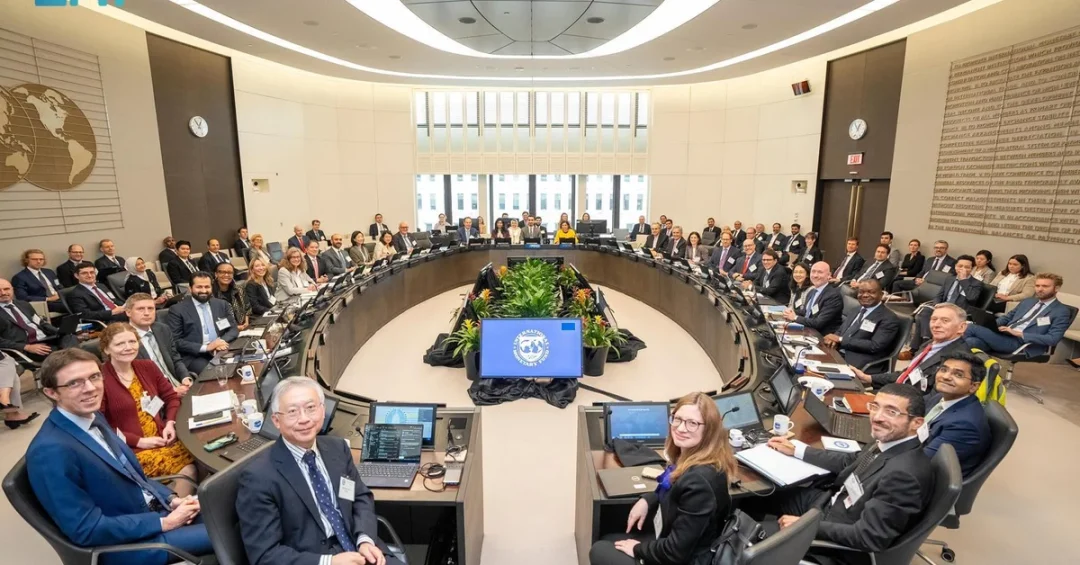
Dr. Ryadh Alkhareif, Deputy Chair of the International Monetary and Financial Committee (IMFC), headed the second Deputies Meeting under the Saudi IMFC Presidency in Washington, D.C. on October 3, 2024. The meeting, held on the 80th anniversary of the creation of the Bretton Woods Institutions, focused on enhancing multilateral cooperation and advising on the strategic direction of the IMFC, according to the Saudi Press Agency (SPA).
Context and Background
The IMFC is the primary advisory body to the IMF Board of Governors, providing strategic guidance on the international monetary and financial system. Saudi Arabia assumed the IMFC Presidency in 2024, with Dr. Ryadh Alkhareif serving as Deputy Chair. This leadership role underscores the Kingdom’s growing influence in global economic governance and its commitment to fostering international cooperation.
The meeting took place against the backdrop of significant global economic challenges, including inflationary pressures, geopolitical tensions, and the need for sustainable development. The 80th anniversary of the Bretton Woods Institutions—the IMF and the World Bank—provided a historic moment to reflect on the evolution of the global financial architecture and to chart a path forward.
Key Details
During the meeting, Dr. Alkhareif emphasized the importance of the IMFC in enhancing multilateral cooperation and advised on its strategic direction. The Deputies discussed significant global economic developments and provided recommendations on future priorities. On the sidelines, Dr. Alkhareif met with Ms. Gita Gopinath, First Deputy Managing Director of the IMF, and held several bilateral meetings with IMFC Deputies to discuss ways of enhancing cooperation and other important topics for the upcoming IMF-World Bank Annual Meetings, scheduled for October 21-26 in Washington, D.C.
The IMFC Deputies Meeting serves as a preparatory forum for the Annual Meetings, where finance ministers and central bank governors will convene to address pressing global economic issues. Saudi Arabia’s leadership in this process highlights its role as a bridge-builder between advanced and emerging economies.
Implications and Impact
Saudi Arabia’s stewardship of the IMFC comes at a critical time for the global economy. The Kingdom’s proactive engagement in multilateral forums reinforces its commitment to international financial stability and inclusive growth. By facilitating dialogue among member countries, Saudi Arabia is helping to shape policies that address shared challenges such as debt sustainability, climate finance, and digital transformation.
Dr. Alkhareif’s meetings with IMF leadership and other deputies also signal Saudi Arabia’s efforts to build consensus on key issues ahead of the Annual Meetings. This diplomatic engagement enhances the Kingdom’s soft power and positions it as a trusted partner in global economic governance.
Vision 2030 Alignment
Saudi Arabia’s active role in the IMFC and other international financial institutions aligns with Vision 2030’s goal of diversifying the economy and enhancing global partnerships. Under the leadership of Crown Prince Mohammed bin Salman, the Kingdom is not only transforming domestically but also contributing to global economic resilience. Saudi Arabia’s participation in these high-level discussions reflects its commitment to multilateralism and its aspiration to be a catalyst for positive change in the world economy.
20 Questions
Q1. What is the IMFC?
A1. The IMFC is the International Monetary and Financial Committee, the primary advisory body to the IMF Board of Governors. It provides strategic guidance on the international monetary and financial system and meets twice a year to discuss global economic issues.
Q2. Who is Dr. Ryadh Alkhareif?
A2. Dr. Ryadh Alkhareif is the Deputy Chair of the IMFC and a senior Saudi official. He represents Saudi Arabia in international financial forums and plays a key role in shaping global economic policies under the Saudi IMFC Presidency.
Q3. What was the purpose of the second Deputies Meeting?
A3. The meeting aimed to prepare for the upcoming IMF-World Bank Annual Meetings by discussing global economic developments, advising on the IMFC’s strategic direction, and enhancing multilateral cooperation among member countries.
Q4. When and where did the meeting take place?
A4. The meeting was held in Washington, D.C. on October 3, 2024, on the sidelines of the 80th anniversary of the Bretton Woods Institutions. It brought together IMFC deputies from around the world.
Q5. What is the significance of the 80th anniversary of the Bretton Woods Institutions?
A5. The 80th anniversary marks the creation of the IMF and World Bank in 1944. It is an occasion to reflect on the achievements of the global financial system and to discuss reforms needed to address current and future challenges.
Q6. What role does Saudi Arabia play in the IMFC?
A6. Saudi Arabia holds the IMFC Presidency for 2024, with Dr. Ryadh Alkhareif as Deputy Chair. The Kingdom uses this role to promote international cooperation and to advocate for policies that support global economic stability and growth.
Q7. Who did Dr. Alkhareif meet with on the sidelines?
A7. Dr. Alkhareif met with Ms. Gita Gopinath, First Deputy Managing Director of the IMF, and held several meetings with IMFC Deputies to discuss cooperation and preparations for the Annual Meetings.
Q8. What are the IMF-World Bank Annual Meetings?
A8. The Annual Meetings are a series of meetings held each fall where finance ministers, central bank governors, and other stakeholders discuss global economic issues, review IMF and World Bank policies, and provide guidance for the coming year.
Q9. When will the upcoming Annual Meetings be held?
A9. The upcoming IMF-World Bank Annual Meetings will be held in Washington, D.C. from October 21 to 26, 2024. They will bring together policymakers from around the world to address key economic challenges.
Q10. What key topics were discussed at the Deputies Meeting?
A10. The deputies discussed significant global economic developments, including inflation, growth prospects, and financial stability. They also advised on future priorities and recommendations for the IMFC’s work.
Q11. How does Saudi Arabia’s IMFC leadership benefit the Kingdom?
A11. It enhances Saudi Arabia’s influence in global economic governance, strengthens its diplomatic ties, and allows it to shape policies that affect its economic interests. It also aligns with Vision 2030’s goal of international engagement.
Q12. What is the Bretton Woods system?
A12. The Bretton Woods system is a monetary management system established in 1944 that created the IMF and the World Bank. It aimed to promote international economic cooperation and stability after World War II.
Q13. What is the role of the IMFC Deputies?
A13. The IMFC Deputies prepare the groundwork for the IMFC ministers’ meetings. They discuss technical issues, draft communiqués, and provide recommendations to the ministers on global economic and financial matters.
Q14. How does the IMFC promote multilateral cooperation?
A14. The IMFC provides a platform for member countries to discuss and coordinate economic policies. It fosters dialogue, builds consensus, and encourages collective action to address global challenges.
Q15. What are the strategic priorities of the IMFC under Saudi leadership?
A15. Under Saudi leadership, the IMFC focuses on enhancing multilateral cooperation, addressing global economic imbalances, promoting sustainable growth, and ensuring financial stability, especially in developing countries.
Q16. How does the meeting impact developing countries?
A16. The discussions help shape policies that affect developing countries, such as access to finance, debt relief, and technical assistance. Saudi Arabia advocates for inclusive growth and supports initiatives that benefit emerging economies.
Q17. What is the significance of Dr. Alkhareif’s meetings with other deputies?
A17. These meetings build bilateral relationships, facilitate consensus-building, and allow Saudi Arabia to promote its priorities and learn from other countries’ experiences, enhancing cooperation for the Annual Meetings.
Q18. How does Vision 2030 relate to Saudi Arabia’s international financial engagements?
A18. Vision 2030 aims to diversify the economy and increase international partnerships. Saudi Arabia’s active participation in the IMFC and other forums helps attract investment, share best practices, and position the Kingdom as a global economic player.
Q19. What outcomes are expected from the upcoming Annual Meetings?
A19. The Annual Meetings are expected to produce policy recommendations, endorse IMF and World Bank initiatives, and foster agreements on issues like climate finance, debt sustainability, and digital economy, guiding global economic policies.
Q20. How can the public follow the outcomes of these meetings?
A20. Outcomes are typically published on the IMF and World Bank websites, and official statements are released by the Saudi Press Agency. Media coverage provides summaries of key decisions and their implications.
Reader Feedback
We value your thoughts. Please share your feedback on this article.
Your feedback helps us improve our coverage.
Related articles
 Al-Baha Ships 12,000+ Pomegranate Cartons Across Saudi Arabia
 Coastal Highway Boosts Development, Tourism in Jazan
 Saudi Arabia Issues First Aeroponics License in Middle East
 Al-Baha Pomegranate Festival Concludes with SAR2 Million in Sales
 Madinah Dates Season 2024 Kicks Off with Workshops
 Saudi Commercial Registrations Surge 62% in Q3 2024