


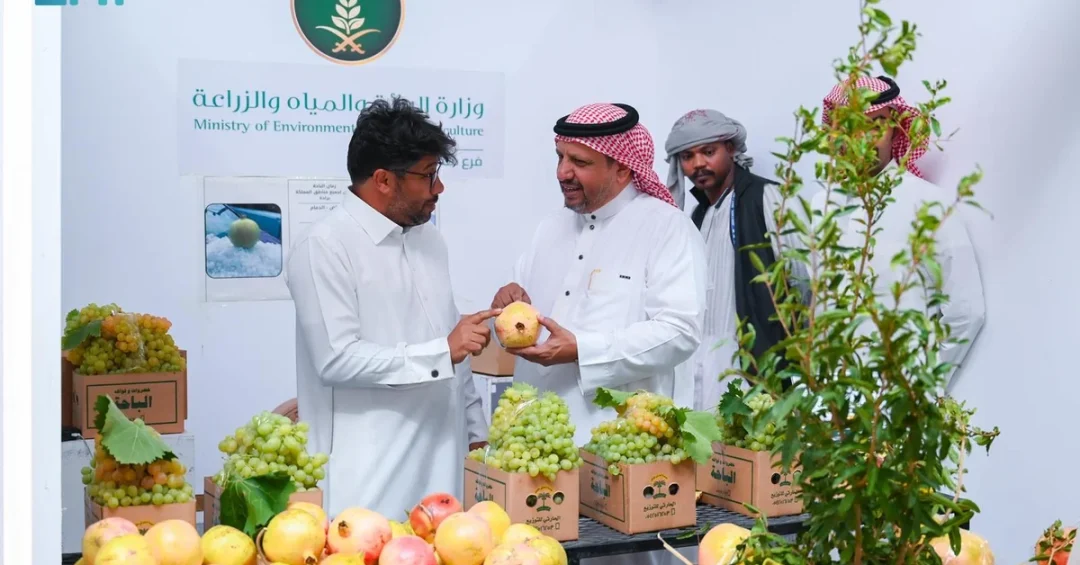
More than 12,000 cartons of premium Al-Baha pomegranates have been shipped to major Saudi cities including Riyadh, Jeddah, and Makkah within just four weeks, according to the Saudi Press Agency (SPA). The shipments, transported in dedicated refrigerated trucks, mark a standout season for the Kingdom’s growing agricultural sector and underscore the success of the 13th annual National Pomegranate Festival, organized by the Ministry of Environment, Water, and Agriculture in the Al-Baha region.
Context and Background
The National Pomegranate Festival, now in its 13th year, has become one of Saudi Arabia’s most anticipated agricultural events. Since its launch nearly 12 years ago, the festival has evolved into a platform that celebrates the region’s rich farming heritage while driving economic opportunity for local communities. Al-Baha, known for its fertile terraces and temperate climate, produces pomegranates prized for their taste and quality, earning a growing reputation across the Kingdom and beyond.
This year’s festival has drawn shoppers from major cities, with demand for Al-Baha pomegranates consistently exceeding supply. The event is organized by the Ministry of Environment, Water, and Agriculture, reflecting the Kingdom’s broader commitment to supporting sustainable agriculture and rural development under Saudi Vision 2030.
Key Details
According to SPA, a group of young people from Al-Baha is actively involved in harvesting and packaging operations. Anwar Ahmed Al-Zahrani, a festival participant, told SPA that he has been involved in packaging and transportation since the festival’s inception. “This year, we have shipped between 1,200 to 1,500 cartons to Riyadh and Dammam every Friday, over 500 cartons to Jeddah, and 150 to 200 cartons to Makkah every Tuesday using refrigerated and equipped vehicles,” he said.
Al-Zahrani noted that shipping prices remain affordable, ranging between SAR 25 to 30 per carton, and confirmed plans to expand packaging, shipping, and delivery operations to Gulf Cooperation Council (GCC) countries in the upcoming season. Farmer Mohsen Al-Zahrani added that between 50 to 150 cartons are packed daily from a single farm, with larger farms producing even more. “Each carton contains between 15 to 20 pomegranates, while larger cartons can hold up to 36,” he said.
Festival participants collectively agreed that demand this year exceeds supply due to the fruit’s high quality and the festival’s growing reputation. The event has also encouraged a new generation of youth to revive traditional agricultural practices that were on the verge of disappearing, helping preserve the region’s agricultural identity and localize a trade that serves as a key economic source for residents.
Implications and Impact
The success of this year’s pomegranate season carries significant implications for Saudi Arabia’s agricultural economy and regional trade. The efficient cold-chain logistics demonstrated by Al-Baha’s farmers and youth entrepreneurs highlight the Kingdom’s growing capacity to distribute fresh produce nationwide and eventually across the GCC. With plans to expand to neighboring Gulf markets, Al-Baha pomegranates could soon become a notable Saudi agricultural export, reinforcing the Kingdom’s position as a diversified economy.
Moreover, the festival’s ability to attract urban shoppers and create jobs for young people illustrates how targeted agricultural initiatives can stimulate rural development. By connecting local farms with major metropolitan markets, the initiative supports food security, reduces waste through proper refrigeration, and strengthens domestic supply chains.
Vision 2030 Alignment
The National Pomegranate Festival and the remarkable shipment of over 12,000 cartons align closely with Saudi Vision 2030’s goals of economic diversification, agricultural sustainability, and youth empowerment. By revitalizing traditional farming and creating new commercial opportunities, the initiative contributes to a vibrant rural economy and showcases the Kingdom’s rich cultural heritage. As Al-Baha’s pomegranates reach more homes across Saudi Arabia and potentially the Gulf, they embody the vision’s promise of a prosperous, self-reliant nation that honors its past while embracing its future.
20 Questions
Q1. How many cartons of Al-Baha pomegranates were shipped in four weeks?
A1. Over 12,000 cartons were shipped within approximately four weeks, according to the Saudi Press Agency (SPA).
Q2. Which cities received the Al-Baha pomegranate shipments?
A2. The shipments went to major Saudi cities including Riyadh, Jeddah, Dammam, and Makkah, as reported by SPA.
Q3. What is the name of the festival organized by the Ministry of Environment, Water, and Agriculture?
A3. The event is the 13th annual National Pomegranate Festival, held in the Al-Baha region.
Q4. How often are shipments sent to Riyadh and Dammam?
A4. Shipments to Riyadh and Dammam are sent every Friday, with between 1,200 to 1,500 cartons per trip, according to festival participant Anwar Ahmed Al-Zahrani.
Q5. What is the price range for shipping a carton of pomegranates?
A5. Shipping prices range between SAR 25 to 30 per carton, as stated by Anwar Ahmed Al-Zahrani.
Q6. How many pomegranates does a standard carton contain?
A6. Each carton contains between 15 to 20 pomegranates, while larger cartons can hold up to 36, according to farmer Mohsen Al-Zahrani.
Q7. How many cartons are packed daily from a single farm?
A7. Between 50 to 150 cartons are packed daily from a single farm, with larger farms producing even more, according to Mohsen Al-Zahrani.
Q8. What type of vehicles are used for shipping the pomegranates?
A8. Dedicated refrigerated and equipped vehicles are used to transport the pomegranates, ensuring freshness during transit.
Q9. Are there plans to export Al-Baha pomegranates to GCC countries?
A9. Yes, Anwar Ahmed Al-Zahrani confirmed plans to expand packaging, shipping, and delivery operations to Gulf Cooperation Council (GCC) countries in the upcoming season.
Q10. Who is Anwar Ahmed Al-Zahrani?
A10. Anwar Ahmed Al-Zahrani is a festival participant involved in packaging and transportation of Al-Baha pomegranates since the festival began.
Q11. Who is Mohsen Al-Zahrani?
A11. Mohsen Al-Zahrani is a farmer who provided details on daily packing volumes and carton sizes from his farm.
Q12. How has the festival impacted the local youth?
A12. The festival has encouraged a new generation of youth to revive agricultural practices that were on the verge of disappearing, helping preserve the region’s agricultural identity.
Q13. Why is demand for Al-Baha pomegranates exceeding supply this year?
A13. Demand exceeds supply due to the fruit’s high quality and the growing positive reputation of the festival, which attracts shoppers from major cities.
Q14. How long has the National Pomegranate Festival been running?
A14. The festival began nearly 12 years ago and is now in its 13th annual edition.
Q15. What is the economic significance of pomegranate farming for Al-Baha?
A15. Pomegranate farming is one of the main economic sources for residents, and the festival helps localize this trade and support the region’s economy.
Q16. How many cartons are shipped to Jeddah each week?
A16. Over 500 cartons are shipped to Jeddah every Tuesday, according to Anwar Ahmed Al-Zahrani.
Q17. How many cartons are shipped to Makkah each week?
A17. Between 150 to 200 cartons are shipped to Makkah every Tuesday, as stated by Anwar Ahmed Al-Zahrani.
Q18. What government body organizes the National Pomegranate Festival?
A18. The Ministry of Environment, Water, and Agriculture organizes the festival in the Al-Baha region.
Q19. What makes Al-Baha pomegranates unique?
A19. Al-Baha pomegranates are known for their high quality, which has earned them a growing positive reputation across the Kingdom and attracted shoppers from major cities.
Q20. How does this initiative align with Saudi Vision 2030?
A20. It supports economic diversification, agricultural sustainability, and youth empowerment, aligning with Vision 2030’s goals for a vibrant rural economy and preserved cultural heritage.
Reader Feedback
We value your thoughts. Please share your feedback on this article.
Your feedback helps us improve our coverage.
Related articles
 Coastal Highway Boosts Development, Tourism in Jazan
 Saudi Arabia Issues First Aeroponics License in Middle East
 Al-Baha Pomegranate Festival Concludes with SAR2 Million in Sales
 Madinah Dates Season 2024 Kicks Off with Workshops
 Saudi Commercial Registrations Surge 62% in Q3 2024
 AlUla Dates Festival Booms with High-Quality Produce