


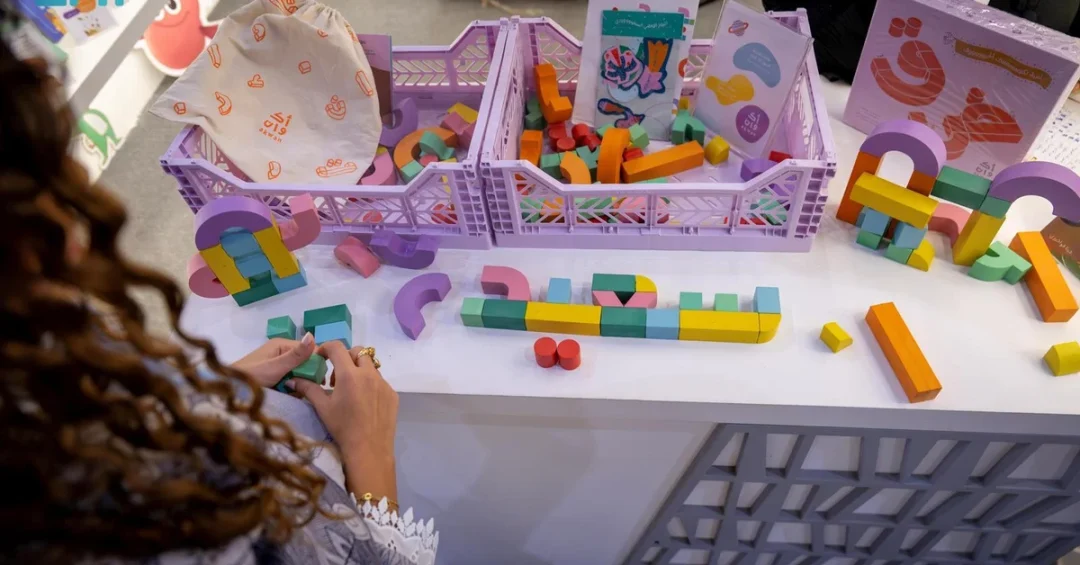
Riyadh, October 6, 2024 — Saudi designer Lujain Abulfaraj has created an innovative educational game called “Akwan” to make learning Arabic engaging for children, as reported by the Saudi Press Agency (SPA). Driven by her passion for the Arabic language and inspired by her son’s disinterest in learning it, Abulfaraj developed a set of magnetic bricks shaped like Arabic calligraphy that can be arranged into words and used for interactive play.
Context and Background
Abulfaraj’s journey began in 2015 when she enrolled in a design program dedicated to exploring the beauty of Arabic calligraphy and its potential as an educational tool. Recognizing that learning could be both entertaining and instructive, she created large Arabic letters that children could manipulate to form words. This initial concept evolved into a full-fledged venture aimed at enriching language learning for children.
In 2020, she officially introduced “Akwan” (meaning “universes” in Arabic), a set of magnetic bricks inspired by Arabic calligraphy. The game is designed to make learning interactive and enjoyable, allowing children to physically engage with the letters and form words, thereby enhancing their understanding and appreciation of the Arabic language.
Key Details
During the Riyadh International Book Fair, Abulfaraj spoke with an SPA reporter about the boundless creative possibilities that “Akwan” offers children. She praised the Ministry of Culture for its efforts in revitalizing Saudi culture, particularly the Arabic language, and for supporting young talent in the Kingdom. Her dedication and innovation have been recognized by the Ministry of Culture, which nominated her for the 2023 Cultural Awards in architecture and design. She emerged as one of the top three finalists in the Kingdom. Additionally, her work received the “Designed in Saudi” seal, a mark of quality and creativity.
Implications and Impact
Abulfaraj’s achievement highlights the growing emphasis on preserving and promoting the Arabic language in Saudi Arabia and beyond. By making learning fun and interactive, “Akwan” addresses a common challenge faced by parents and educators: keeping children engaged with language acquisition. The game not only fosters linguistic skills but also connects children to their cultural heritage through the art of Arabic calligraphy. This initiative aligns with broader efforts to enhance educational tools and methods, contributing to a more dynamic and creative learning environment.
Furthermore, the recognition from the Ministry of Culture underscores the importance of supporting local talent and innovative projects that contribute to the cultural landscape. It sets a precedent for other young entrepreneurs and designers to pursue creative solutions that have a positive social impact.
Vision 2030 Alignment
This initiative is closely aligned with Saudi Vision 2030, which aims to foster a vibrant society, a thriving economy, and an ambitious nation. By promoting the Arabic language and cultural heritage, “Akwan” supports the vision’s goal of strengthening national identity and values. Moreover, it exemplifies the vision’s emphasis on nurturing young talent, encouraging entrepreneurship, and enhancing the quality of education. Through such creative endeavors, Saudi Arabia continues to invest in its human capital and cultural enrichment, paving the way for a prosperous future.
20 Questions
Q1. Who is Lujain Abulfaraj?
A1. Lujain Abulfaraj is a Saudi designer and entrepreneur who created “Akwan,” an educational game to teach Arabic to children. She was inspired by her son’s disinterest in the language and has received recognition from the Ministry of Culture for her innovative work.
Q2. What is “Akwan”?
A2. “Akwan” is a set of magnetic bricks inspired by Arabic calligraphy that children can arrange to form words. Introduced in 2020, it aims to make learning Arabic interactive and enjoyable, fostering both linguistic skills and cultural appreciation.
Q3. When did Lujain Abulfaraj start working on this project?
A3. She began in 2015 by enrolling in a design program focused on Arabic calligraphy as an educational tool. This led to the creation of a game with large Arabic letters, which eventually evolved into “Akwan,” launched in 2020.
Q4. What inspired Lujain Abulfaraj to create this game?
A4. Her son’s disinterest in learning Arabic motivated her. She wanted to make the language more engaging for children and realized that calligraphy could be both entertaining and instructive, leading her to develop an interactive solution.
Q5. What recognition has Lujain Abulfaraj received?
A5. The Ministry of Culture nominated her for the 2023 Cultural Awards in architecture and design, where she was one of the top three finalists. Her work also received the “Designed in Saudi” seal, highlighting its quality and creativity.
Q6. Where did Lujain Abulfaraj speak about her work?
A6. She spoke to an SPA reporter during the Riyadh International Book Fair, where she highlighted the creative possibilities of “Akwan” and praised the Ministry of Culture for supporting young talent and revitalizing Saudi culture.
Q7. What is the Ministry of Culture’s role in this story?
A7. The Ministry of Culture has supported Lujain Abulfaraj by nominating her for the 2023 Cultural Awards and recognizing her work with the “Designed in Saudi” seal. It also plays a broader role in promoting cultural initiatives in the Kingdom.
Q8. How does “Akwan” help children learn Arabic?
A8. “Akwan” uses magnetic bricks shaped like Arabic letters that children can manipulate to form words. This hands-on approach makes learning interactive and fun, helping children develop language skills while engaging with the art of Arabic calligraphy.
Q9. What does “Akwan” mean in Arabic?
A9. “Akwan” means “universes” in Arabic, reflecting the boundless creative possibilities the game offers. The name suggests that through play, children can explore new worlds of language and imagination.
Q10. When was “Akwan” officially introduced?
A10. “Akwan” was introduced in 2020, following several years of development that began in 2015 when Lujain Abulfaraj started exploring Arabic calligraphy as an educational tool. Its launch marked a significant step in her mission.
Q11. What is the significance of the “Designed in Saudi” seal?
A11. The “Designed in Saudi” seal is a mark of quality and creativity awarded to products designed in the Kingdom. It recognizes innovation and supports local talent, reinforcing Saudi Arabia’s growing design industry and cultural exports.
Q12. How does this initiative align with Saudi Vision 2030?
A12. It supports Vision 2030 by promoting cultural heritage, enhancing education, and empowering young entrepreneurs. It contributes to a vibrant society and a thriving economy, aligning with the vision’s goals of fostering national identity and human capital development.
Q13. What challenges did Lujain Abulfaraj face?
A13. The main challenge was her son’s disinterest in Arabic, which motivated her to find a creative solution. She also had to develop the game from scratch, but her design background and passion for calligraphy helped her overcome obstacles.
Q14. How does “Akwan” preserve Arabic calligraphy?
A14. By incorporating Arabic calligraphy into the design of the magnetic bricks, “Akwan” introduces children to the art form in a playful way. This fosters appreciation for calligraphy and helps preserve this important cultural heritage for future generations.
Q15. What other support has Lujain Abulfaraj received?
A15. Beyond the Ministry of Culture’s recognition, she has received the “Designed in Saudi” seal. Her finalist position in the 2023 Cultural Awards also brought her significant attention and validation for her work.
Q16. What is the Riyadh International Book Fair?
A16. The Riyadh International Book Fair is a major cultural event in Saudi Arabia that showcases books, literature, and innovation. It provides a platform for authors, publishers, and creators like Lujain Abulfaraj to present their work to a wide audience.
Q17. How can parents purchase “Akwan”?
A17. While specific retail details are not provided in the source, “Akwan” is a commercially available product. Interested parents can likely find it through online platforms or at cultural events and stores in Saudi Arabia.
Q18. What are the educational benefits of “Akwan”?
A18. “Akwan” enhances Arabic language skills, including vocabulary and spelling, through hands-on play. It also boosts creativity and fine motor skills, making learning enjoyable and effective for children of various ages.
Q19. How does this story reflect Saudi Arabia’s cultural renaissance?
A19. It exemplifies the Kingdom’s cultural renaissance by highlighting innovation in education and design. The support from the Ministry of Culture and the recognition of young talent demonstrate Saudi Arabia’s commitment to nurturing creativity and preserving heritage.
Q20. What future plans might Lujain Abulfaraj have?
A20. While not specified, her success with “Akwan” suggests potential expansion into new educational products or markets. She may continue to innovate in language learning and cultural preservation, contributing further to Saudi Arabia’s creative economy.
Reader Feedback
We value your thoughts. Please share your feedback on this article.
Your feedback helps us improve our coverage.
Related articles
 Saudi Falcons Club, King Khalid University Sign Falconry Research MoU
 Saudi Falcons Club, Quality of Life Program Sign MoU to Support Falconry
 Saudi Book Fairs Drive Economic Diversification
 Thaqafeyah Channel Showcases Saudi Culture at Riyadh Book Fair
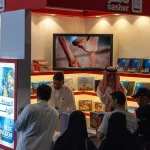 Nasher Lends Strong Support to Culture in Saudi Arabia
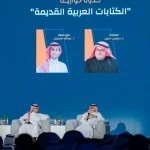 Ancient Arabs Migrated from Central Arabia: Historian