


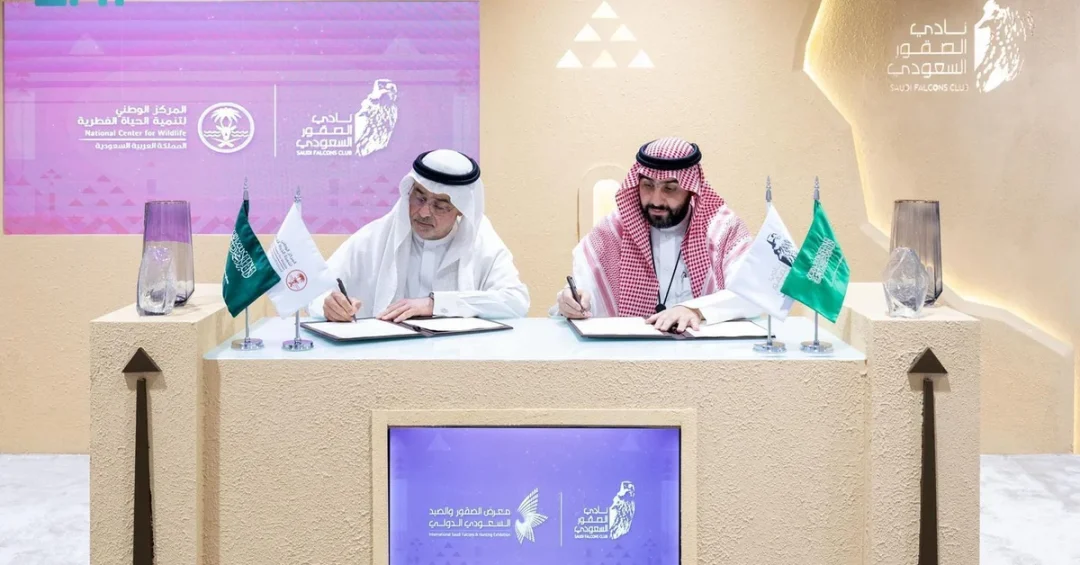
The Saudi Falcons Club and the National Center for Wildlife (NCW) signed a memorandum of understanding (MoU) on Sunday to preserve the cultural, heritage, and environmental legacy of falcons in Saudi Arabia, the Saudi Press Agency reported. The agreement establishes a strategic partnership aimed at safeguarding falcon populations, promoting sustainable falconry practices, and reinforcing the Kingdom’s position as a global leader in falcon conservation and cultural heritage.
Context and Background
Falconry is deeply embedded in Saudi Arabia’s cultural identity, representing centuries of tradition passed down through generations. The sport, recognized by UNESCO as intangible cultural heritage, remains a vital link between the Kingdom’s past and its modern aspirations. The Saudi Falcons Club, established to regulate and promote falconry, has been instrumental in organizing international exhibitions and competitions that draw participants from around the world. The National Center for Wildlife, a government body dedicated to biodiversity conservation, works to protect endangered species and restore ecological balance across the Kingdom.
The MoU reflects a growing synergy between cultural preservation and environmental stewardship, two pillars central to Saudi Vision 2030. By combining the club’s expertise in falconry with the NCW’s scientific and conservation capabilities, the partnership aims to address challenges such as habitat loss, illegal trade, and declining falcon populations. The collaboration also underscores Saudi Arabia’s commitment to international conservation agreements and its role in global environmental diplomacy.
Key Details of the MoU
Under the agreement, the two entities will collaborate on the “Hadad” program, which focuses on releasing falcons back into their natural habitats both within Saudi Arabia and internationally. The program seeks to rehabilitate falcons and ensure their survival in the wild, contributing to global biodiversity. Additionally, the MoU emphasizes documenting the numbers and species of falcons in Saudi Arabia, creating a comprehensive database that will inform future conservation strategies.
The partnership also aims to attract investors interested in falconry, recognizing the sport’s economic potential. By promoting responsible investment, the initiative could stimulate growth in related sectors such as tourism, hospitality, and event management. Furthermore, the MoU promotes the exchange of studies, statistics, and information related to falcons between the club and the NCW, and encourages the sharing of expertise and capacity building in falconry, conservation, and related activities.
This MoU aligns with the club’s goals of increasing the number of people practicing falconry, ensuring the sustainability of Saudi Arabia’s rich cultural heritage, instilling environmental awareness, and strengthening Saudi Arabia’s position as a global destination for falcons and falconers.
Implications and Impact
The agreement carries significant implications for regional and international conservation efforts. By releasing falcons into the wild, the Hadad program could help restore ecosystems and enhance biodiversity in areas where falcon populations have declined. This aligns with global conservation targets and positions Saudi Arabia as a responsible steward of natural resources. The documentation of falcon species and numbers will provide valuable data for researchers and policymakers, facilitating evidence-based conservation measures.
Economically, the MoU could boost falconry-related tourism, attracting enthusiasts and investors from around the world. Saudi Arabia already hosts the prestigious King Abdulaziz Falconry Festival, and this partnership could further elevate the Kingdom’s status as a hub for falconry. The exchange of expertise and capacity building will also empower Saudi professionals in the fields of wildlife management and conservation, contributing to job creation and knowledge transfer.
On the international stage, the MoU reinforces Saudi Arabia’s commitment to multilateral environmental agreements and its willingness to collaborate with global partners. It sends a positive signal about the Kingdom’s readiness to share best practices and lead by example in sustainable development.
Vision 2030 Alignment
This MoU is a clear reflection of Saudi Vision 2030’s objectives to diversify the economy, preserve cultural heritage, and promote environmental sustainability. By investing in falcon conservation and falconry, the Kingdom is nurturing a unique cultural asset while creating economic opportunities in tourism and related industries. The partnership between the Saudi Falcons Club and the NCW exemplifies how tradition and modernity can coexist, driving forward a future where Saudi Arabia thrives as a global leader in both heritage preservation and environmental stewardship. As the Kingdom continues to implement Vision 2030, initiatives like this will play a crucial role in shaping a sustainable and prosperous future for generations to come.
20 Questions
Q1. What was the purpose of the MoU signed between the Saudi Falcons Club and the National Center for Wildlife?
A1. The MoU aims to preserve the cultural, heritage, and environmental legacy of falcons in Saudi Arabia through collaborative conservation efforts and sustainable falconry practices.
Q2. When and where was the MoU signed?
A2. The MoU was signed on Sunday, October 6, 2024, in Riyadh, as reported by the Saudi Press Agency (SPA).
Q3. What is the “Hadad” program mentioned in the MoU?
A3. The Hadad program focuses on releasing falcons back into their natural habitats both within Saudi Arabia and internationally, aiming to rehabilitate and sustain falcon populations.
Q4. How does the MoU support falcon conservation?
A4. It includes documenting falcon numbers and species, exchanging studies and statistics, and building expertise in falconry and conservation to ensure sustainable populations.
Q5. Why are falcons important to Saudi culture?
A5. Falcons are a symbol of Saudi heritage, with falconry being a traditional sport passed down through generations and recognized by UNESCO as intangible cultural heritage.
Q6. What role does the Saudi Falcons Club play?
A6. The club regulates and promotes falconry, organizes international events, and works to increase participation while preserving the sport’s cultural significance.
Q7. What is the National Center for Wildlife’s mission?
A7. The NCW is dedicated to biodiversity conservation, protecting endangered species, and restoring ecological balance across Saudi Arabia.
Q8. How will the MoU attract investors?
A8. By promoting responsible investment in falconry, it aims to stimulate growth in tourism, hospitality, and event management sectors related to the sport.
Q9. What are the economic benefits of this partnership?
A9. It could boost falconry-related tourism, create jobs, and enhance Saudi Arabia’s position as a global destination for falconers and enthusiasts.
Q10. How does the MoU align with Saudi Vision 2030?
A10. It supports economic diversification, cultural preservation, and environmental sustainability, key pillars of Vision 2030.
Q11. What is the significance of releasing falcons into the wild?
A11. It helps restore ecosystems, enhance biodiversity, and contribute to global conservation efforts, positioning Saudi Arabia as a responsible environmental steward.
Q12. Will the MoU lead to new regulations for falconry?
A12. The MoU focuses on collaboration and information exchange; any regulatory changes would be developed through joint efforts to ensure sustainable practices.
Q13. How does falconry contribute to Saudi tourism?
A13. Falconry attracts international enthusiasts and investors, with events like the King Abdulaziz Falconry Festival drawing global attention and boosting tourism.
Q14. What kind of expertise will be shared between the two entities?
A14. They will exchange studies, statistics, and best practices in falconry, conservation, and capacity building to enhance both cultural and environmental outcomes.
Q15. Are there international implications of this MoU?
A15. Yes, it reinforces Saudi Arabia’s commitment to global conservation agreements and positions the Kingdom as a leader in environmental diplomacy.
Q16. How will the MoU document falcon species?
A16. It will establish a comprehensive database of falcon numbers and species in Saudi Arabia, informing future conservation strategies.
Q17. What is the expected impact on local communities?
A17. It may create economic opportunities in tourism and related sectors, while fostering environmental awareness and pride in cultural heritage.
Q18. Does the MoU have a timeline for implementation?
A18. The MoU outlines ongoing collaboration; specific timelines for programs like Hadad will be developed jointly by the club and NCW.
Q19. How does this partnership benefit falconers?
A19. It aims to increase participation, ensure sustainable practices, and provide resources and knowledge to support falconers in Saudi Arabia and beyond.
Q20. What message does this MoU send to the world?
A20. It demonstrates Saudi Arabia’s dedication to preserving cultural heritage and protecting wildlife, reinforcing its role as a responsible global leader.
Reader Feedback
We value your thoughts. Please share your feedback on this article.
Your feedback helps us improve our coverage.
Related articles
 Rare Butterfly Collection Shines at Saudi Falcons Exhibition
 Wrth: Preserving Saudi Artistic Heritage Through Education
 Wooden Doors: Aseer’s Artistic Heritage Endures
 Interior Ministry Offers E-Services at Saudi Falcons Exhibition
 Saudi Anime Asateer2 Trailer Released by Manga Productions
 Culinary Arts Commission Hosts Meeting on Innovation Centers