


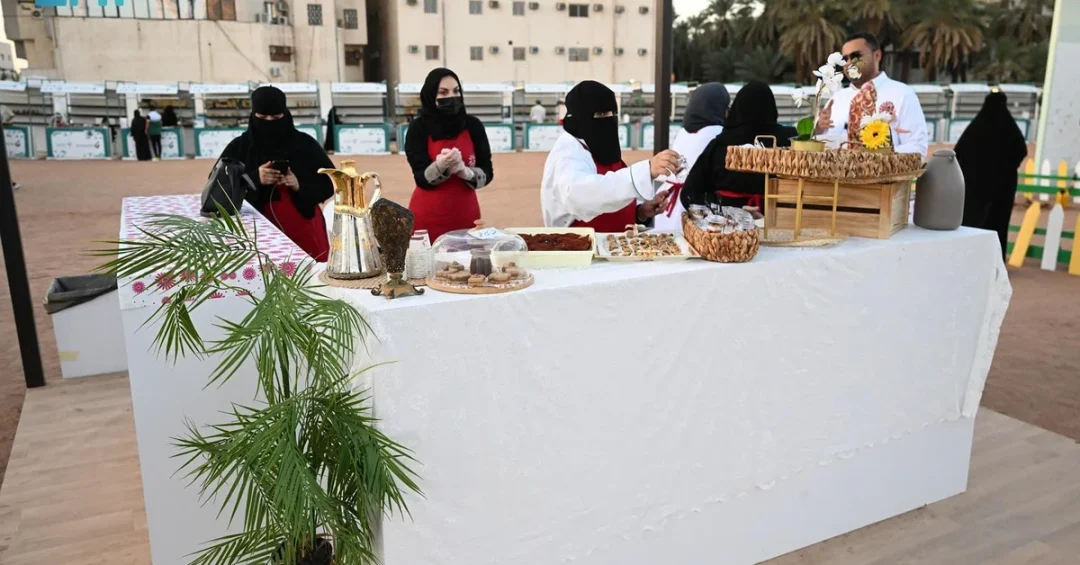
The Madinah Dates Season, an annual initiative organized by the Madinah Region Development Authority in cooperation with the National Center for Palms and Dates, continues to empower families working in the cottage industry by offering specialized workshops and seminars led by industry experts, with 35 families having benefited so far, as reported by the Saudi Press Agency (SPA). The program is designed to enhance skills in manufacturing industries and handicrafts related to the dates sector, providing participants with valuable knowledge to develop their projects and increase their contributions to the local economy. Running until the end of this year, the season features a comprehensive exhibition, a series of events, and competitions aimed at elevating the dates industry through innovation and creative solutions.
This initiative is part of Saudi Arabia’s broader efforts to preserve and promote its rich heritage while fostering economic growth in alignment with Vision 2030. By supporting small-scale producers and artisans, the Madinah Dates Season highlights the Kingdom’s commitment to sustainable development and cultural preservation. But what does this mean for the future of Saudi Arabia’s cottage industry? And how does it contribute to the national goal of economic diversification? The answers lie in the strategic support provided to these families, enabling them to thrive in a competitive market.
Context and Background
The Madinah Dates Season is a flagship event that showcases the Kingdom’s most prized agricultural product: dates. Saudi Arabia is one of the world’s largest producers of dates, with the Madinah region renowned for its high-quality varieties such as Ajwa, Safawi, and Sukkari. The season, which extends until the end of the year, is not merely a celebration of dates but a platform for economic empowerment and cultural exchange. It brings together farmers, producers, artisans, and entrepreneurs to share knowledge and innovate. Isn’t it remarkable how a single fruit can unite a community and drive economic progress? The event underscores the importance of the dates industry to Saudi heritage and its potential to contribute to the national economy.
The cottage industry, which involves small-scale, family-run production of goods and handicrafts, plays a vital role in preserving traditional skills and generating income for local families. In Madinah, many families have been involved in date-related crafts for generations, producing items such as date-based foods, cosmetics, and artisanal goods. However, with modernization and changing market dynamics, these families often face challenges in scaling their operations and reaching wider markets. The Madinah Dates Season addresses these challenges by providing training and resources. How often do we see such targeted support for traditional industries? This initiative is a testament to Saudi Arabia’s commitment to leaving no one behind in its journey toward prosperity.
Key Details
The workshops and seminars offered during the Madinah Dates Season cover a range of topics essential for cottage industry success. These include product development, packaging and branding, marketing strategies, and the use of modern technologies in date processing. Industry experts lead these sessions, sharing best practices and insights gained from years of experience. So far, 35 families have directly benefited from this training, gaining the skills needed to enhance their products and expand their reach. What kind of impact can such training have on a family’s livelihood? For many, it means the difference between subsistence and sustainable growth. The program also facilitates networking opportunities, connecting families with potential buyers and distributors, thereby opening new avenues for income.
In addition to training, the Madinah Dates Season features an exhibition where families and producers can display their products to a wider audience. This exposure is crucial for small businesses seeking to attract customers and build brand recognition. The exhibition also serves as a marketplace, allowing visitors to purchase unique, high-quality date products directly from the makers. Competitions are another key component, encouraging innovation and creativity in product development. These competitions reward excellence and inspire participants to push the boundaries of what is possible with dates. Isn’t it exciting to see tradition and innovation come together in such a dynamic way? The season’s comprehensive approach ensures that families receive holistic support, from skill development to market access.
International and Regional Impact
The Madinah Dates Season has implications beyond Saudi Arabia’s borders. As a major date producer, the Kingdom exports its products to markets around the world, and initiatives that strengthen the cottage industry can enhance the quality and variety of exports. This, in turn, boosts Saudi Arabia’s reputation as a source of premium dates and date-derived products. Regionally, the event fosters collaboration among Gulf Cooperation Council (GCC) countries, many of which share a rich tradition of date cultivation. By sharing expertise and promoting best practices, the Madinah Dates Season contributes to the broader regional economy. How does this impact global perceptions of Saudi Arabia? It showcases the Kingdom as a leader in agricultural innovation and cultural preservation, aligning with its Vision 2030 goals of diversifying the economy and enhancing international engagement.
Furthermore, the empowerment of families in the cottage industry has a ripple effect on local communities. When families prosper, they invest in education, health, and other sectors, driving overall community development. The Madinah Dates Season thus plays a role in social upliftment, reducing unemployment and fostering a sense of pride in traditional crafts. For international observers, this initiative demonstrates Saudi Arabia’s commitment to inclusive growth and sustainable development, values that resonate globally. Isn’t it inspiring to see a nation invest in its people and heritage simultaneously? The season serves as a model for other countries looking to support small-scale producers while preserving cultural identity.
Economic and Strategic Significance
Economically, the cottage industry represents a vital segment of Saudi Arabia’s non-oil economy. By empowering families to improve their products and access new markets, the Madinah Dates Season contributes to the Kingdom’s gross domestic product (GDP) and creates jobs. The dates industry alone employs thousands of people across the value chain, from farming to processing to retail. Supporting the cottage industry enhances the resilience of this value chain, making it more competitive and sustainable. What does this mean for Saudi Arabia’s economic future? It means a more diversified economy, less reliant on hydrocarbons, and more resilient to global market fluctuations. This aligns with Vision 2030’s objective of fostering a vibrant private sector and increasing the contribution of small and medium-sized enterprises (SMEs) to the economy.
Strategically, the Madinah Dates Season reinforces the Kingdom’s position as a global leader in date production and innovation. It also supports the development of human capital by equipping families with modern skills. The program encourages entrepreneurship, particularly among women and youth, who are often key drivers of cottage industries. By providing training and market access, the season helps these groups turn their crafts into viable businesses. Isn’t it strategic to invest in the potential of all citizens? This holistic approach not only preserves heritage but also drives economic progress, making the Madinah Dates Season a cornerstone of Saudi Arabia’s development strategy.
Vision 2030 Alignment
The Madinah Dates Season is a clear embodiment of Vision 2030, Saudi Arabia’s ambitious roadmap for economic diversification and social development. Vision 2030 aims to increase the contribution of SMEs to GDP from 20% to 35% by 2030, and initiatives like this directly support that goal by empowering small-scale producers. Additionally, the season aligns with the Vision’s focus on preserving cultural heritage and promoting national identity. By investing in the dates industry, the Kingdom honors its past while building a prosperous future. How does this fit into the bigger picture? It shows that Vision 2030 is not just about mega-projects but also about grassroots empowerment, ensuring that all segments of society benefit from progress.
Moreover, the Madinah Dates Season supports the Vision’s goal of enhancing the quality of life for citizens and residents. By creating economic opportunities, it improves living standards and fosters a sense of community. The season also promotes sustainable agricultural practices, which are essential for environmental stewardship. As Saudi Arabia continues to implement Vision 2030, initiatives like the Madinah Dates Season will play a crucial role in achieving its targets. Isn’t it heartening to see such tangible progress? The Kingdom’s commitment to its people and heritage is unwavering, and the Madinah Dates Season is a shining example of that commitment in action.
20 Questions
Q1. What is the Madinah Dates Season?
A1. The Madinah Dates Season is an annual initiative organized by the Madinah Region Development Authority in cooperation with the National Center for Palms and Dates. It features workshops, seminars, an exhibition, events, and competitions aimed at elevating the dates industry and empowering families in the cottage industry.
Q2. How many families have benefited from the training so far?
A2. According to the Saudi Press Agency, 35 families working in the cottage industry have benefited from the training workshops and seminars offered during the Madinah Dates Season.
Q3. What types of skills are being taught in the workshops?
A3. The workshops cover a range of skills including manufacturing industries, handicrafts related to dates, product development, packaging, branding, marketing strategies, and the use of modern technologies in date processing.
Q4. Who is organizing the Madinah Dates Season?
A4. The season is organized by the Madinah Region Development Authority in cooperation with the National Center for Palms and Dates, with support from various government entities.
Q5. How long will the Madinah Dates Season last?
A5. The Madinah Dates Season will extend until the end of this year, featuring a variety of activities and events throughout its duration.
Q6. What is the cottage industry in the context of dates?
A6. The cottage industry refers to small-scale, family-run production of date-related goods and handicrafts, such as date-based foods, cosmetics, and artisanal products, often using traditional methods passed down through generations.
Q7. Why is the Madinah Dates Season important for Saudi Arabia?
A7. It promotes economic diversification, preserves cultural heritage, and empowers local families, aligning with Vision 2030 goals of increasing SME contributions to GDP and enhancing quality of life.
Q8. What role do dates play in Saudi culture?
A8. Dates are a staple of Saudi hospitality and nutrition, and Madinah is famous for premium varieties like Ajwa. They are deeply embedded in Saudi traditions and are a symbol of generosity and heritage.
Q9. How does the season support women and youth?
A9. The season provides training and market access, encouraging entrepreneurship among women and youth, who are often key drivers of cottage industries. This support helps them turn traditional crafts into viable businesses.
Q10. What are the economic benefits of the Madinah Dates Season?
A10. It boosts the non-oil economy, creates jobs, and enhances the competitiveness of the dates value chain. By empowering small producers, it contributes to GDP and fosters sustainable development.
Q11. Are there competitions during the season?
A11. Yes, competitions are a key component, encouraging innovation and creativity in date product development. They reward excellence and inspire participants to push the boundaries of traditional practices.
Q12. How does the exhibition benefit participants?
A12. The exhibition provides a platform for families and producers to display and sell their products to a wider audience, building brand recognition and connecting with potential buyers and distributors.
Q13. What is the significance of Madinah in the dates industry?
A13. Madinah is renowned for its high-quality date varieties, particularly Ajwa, which holds special religious and cultural significance. It is a major hub for date production and innovation in Saudi Arabia.
Q14. How does the season align with Vision 2030?
A14. It supports Vision 2030 by empowering SMEs, preserving heritage, promoting sustainable agriculture, and enhancing economic diversification, all of which are core objectives of the national transformation plan.
Q15. Can international visitors participate in the Madinah Dates Season?
A15. Yes, the season is open to international visitors, offering them a chance to experience Saudi hospitality, purchase unique date products, and learn about the Kingdom’s rich heritage.
Q16. What kind of products are made from dates in the cottage industry?
A16. Products include date-based foods like maamoul and date syrup, cosmetics, handicrafts, and innovative items such as date powder and energy bars, all crafted by local families.
Q17. How does the season contribute to sustainability?
A17. By promoting sustainable agricultural practices and supporting local production, the season reduces carbon footprint and encourages environmentally friendly methods in date cultivation and processing.
Q18. What role does the National Center for Palms and Dates play?
A18. The center supports the palm and dates sector through research, development, and marketing initiatives, and it cooperates with the Madinah Region Development Authority to organize the season.
Q19. How can families join the cottage industry program?
A19. Families can join by registering with the Madinah Region Development Authority or the National Center for Palms and Dates. The program is open to those involved in date-related crafts and production.
Q20. What is the future outlook for the Madinah Dates Season?
A20. The season is expected to grow, with more families benefiting and increased international participation. It will continue to play a vital role in Saudi Arabia’s economic and cultural landscape, in line with Vision 2030.
Reader Feedback
We value your thoughts. Please share your feedback on this article.
Your feedback helps us improve our coverage.
Related articles
 Japanese Stock Index Closes Higher Amid Global Market Watch
 Mawani, Hamburg Port Authority Sign MoU to Boost Efficiency
 Qassim’s Mineral Wealth Valued at SAR122.3 Billion
 Financial Academy Forum Concludes with Focus on Talent Growth
 SAMA Licenses BOUABA TSHIL for FinTech Microfinance
 Pakistani President Receives Saudi Investment Minister